
Key Takeaways:
- Pilot Company and Tesla are jointly developing over a dozen Megacharger stations for electric semi trucks across the U.S.
- The first operational site is located in Ellabell, Georgia, with a dozen more under construction, primarily along major freight corridors like I-5 and I-10.
- Each Megacharger stall delivers up to 1.2 megawatts of power, enabling a 60% charge for a Tesla Semi in approximately 30 minutes.
- This initiative integrates high-power charging with essential trucker amenities, significantly advancing heavy-duty fleet electrification and sustainable logistics.
- Pilot is also aggressively expanding its fast-charging network for passenger EVs, aiming for 2,000 chargers at 500 locations soon.
Revolutionising Heavy-Duty Electric Vehicle Charging Across America
In a significant stride towards the electrification of commercial transport, Pilot Company, North America’s largest travel centre network, and Tesla have announced a substantial collaboration to establish a network of high-powered electric semi truck charging stations across critical freight routes in the United States. This strategic alliance aims to support the burgeoning demand for electric heavy-duty vehicles, specifically catering to the Tesla Semi.

This initiative marks a pivotal moment for the logistics sector, offering robust electric semi truck charging infrastructure at locations already integral to truckers’ daily routines. The partnership underscores a shared commitment to sustainable transportation and addresses one of the primary challenges for electric heavy-duty trucks: accessible and rapid charging.
Powering the Future: The Tesla-Pilot Alliance
The joint venture between Pilot and Tesla is set to deploy over a dozen megawatt-capable charging stations, fundamentally altering the landscape for long-haul electric trucking. These advanced charging hubs are strategically integrated within Pilot’s extensive network of travel centres, leveraging existing facilities that provide essential services and amenities for professional drivers.
The selection of Pilot’s travel centres as charging hubs is crucial. These locations are well-established stops for truckers, offering convenience, safety, and a range of services from quick-service restaurants to restrooms. This integration ensures that electric semi truck drivers can efficiently recharge their vehicles while also addressing their personal needs, optimising operational downtime.

Strategic Locations for Heavy-Duty Charging
The deployment focuses on critical freight corridors, including Interstate 5 (I-5) and Interstate 10 (I-10), along with other key routes spanning California, Indiana, Nevada, and Texas. These corridors represent the backbone of America’s commercial transportation network, making them ideal for establishing a reliable electric semi truck charging infrastructure.
By positioning Megachargers at these high-traffic arteries, Pilot and Tesla are directly tackling range anxiety and logistical challenges associated with long-distance electric freight hauling. The deliberate choice of locations maximises accessibility for fleets operating across vast distances, facilitating the transition to zero-emission transportation.
Unpacking Megacharger Technology
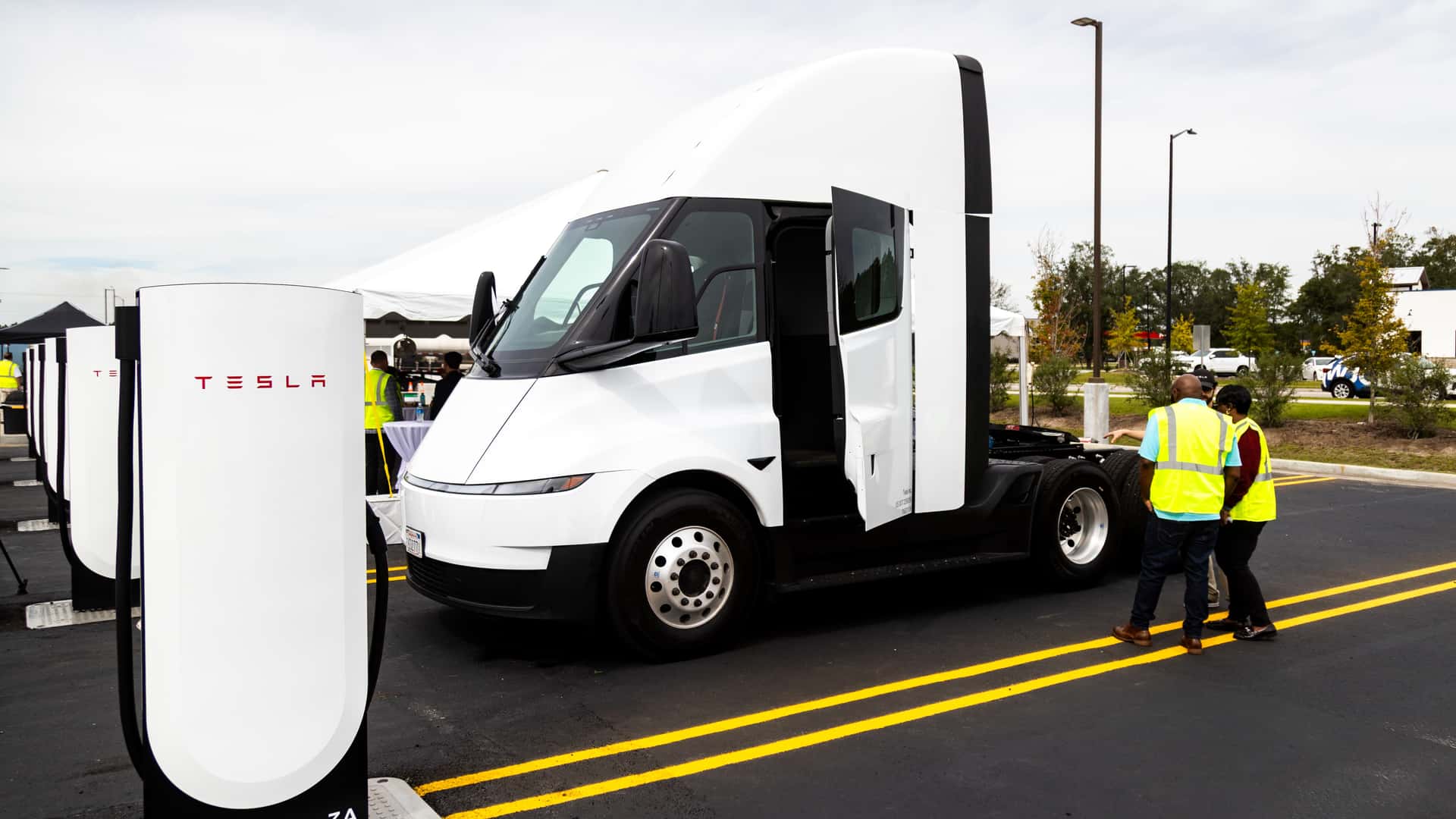
Central to this expansive network are the Tesla Megachargers, specifically engineered for the high-power requirements of the Tesla Semi electric truck. Each station is designed to host between four and eight Megacharger stalls, providing unparalleled charging capacity for heavy-duty electric vehicles.
The first fully operational Tesla Megacharger station under this partnership is now online at a Pilot location in Ellabell, Georgia. This pioneering site features six charging stalls, each capable of delivering an impressive 1.2 megawatts of power. Such high-output charging capability is essential for minimizing downtime for commercial vehicles.
Accelerating Long-Haul Operations
The immense power output of 1.2 megawatts per stall is a game-changer for electric semi truck operations. This technology allows for rapid energy replenishment, with a 30-minute top-up boosting the Tesla Semi’s state of charge by a substantial 60%. This efficiency ensures that long-haul routes remain viable and competitive for electric fleets.
For fleet operators, faster charging translates directly into improved operational efficiency and reduced idle times. The ability to quickly recharge at strategic points along their routes makes electric heavy-duty trucks a more practical and attractive option for modern logistics, supporting faster turnaround times and tighter delivery schedules.
Operational Insights: Charging Bay Design
The design of charging bays at these initial stations varies, impacting the driver experience. For instance, the Ellabell, Georgia, Megacharger station requires drivers to back up their Tesla Semis into the charging bay. This specific layout contrasts with some other dedicated Tesla Semi stations, such as the one recently energised in Conley, Georgia, which is not affiliated with Pilot and features pull-through stalls for potentially easier manoeuvrability.
Understanding these design nuances is important for drivers and fleet managers in optimising their charging stops. As the network expands, further standardisation or diversification in bay design may be observed to cater to various operational preferences and site constraints.
A National Network Takes Shape
The Ellabell, Georgia, station serves as the initial benchmark for this ambitious rollout. Following closely, the second Pilot-Tesla Semi charging station is set to become operational at the Flying J location on E. Paige Ave. in Tulare, California. This rapid deployment signals the accelerating pace of infrastructure development.
Further expansion plans include a Megacharger station at another Flying J in Fort Stockton and a Pilot Travel Center in North Las Vegas, both slated for activation soon. Beyond these announced locations, an additional nine sites are currently under active construction, although their specific geographical details have not yet been disclosed.
Key Corridors and Phased Rollout
The strategic selection of locations along major freight corridors like I-5 and I-10, encompassing states such as California, Indiana, Nevada, and Texas, is critical for establishing a seamless electric semi truck charging network. This phased rollout ensures that high-demand routes receive priority infrastructure, progressively building out a comprehensive ecosystem for electric heavy-duty transport.
Shannon Sturgil, senior vice president of alternative fuels at Pilot, affirmed the company’s commitment, stating, “Pilot is proud to bring heavy-duty charging directly to key trucking routes and pair it with the services and amenities drivers rely on. With these initial locations, we’re making fleet electrification a more accessible option for long-haul transportation and are excited to continue working with Tesla to move at the pace and preference of our customers.” This statement highlights the dual focus on advanced technology and driver comfort.
Pilot’s Broader EV Infrastructure Vision
The development of electric semi truck charging infrastructure is part of Pilot’s broader, long-term commitment to supporting electric mobility across various vehicle segments. Beyond the Megachargers for Tesla Semis, Pilot has made significant investments in general electric vehicle (EV) fast-charging solutions for passenger cars.
The company has partnered with General Motors and EVgo, successfully energising 1,300 fast-charging stalls at 300 locations nationwide. This comprehensive strategy demonstrates Pilot’s dedication to building a versatile and widespread EV charging network, aiming to offer no fewer than 2,000 chargers across 500 Pilot travel centres in the near future, accommodating a diverse range of electric vehicles.
Driving Fleet Electrification Forward
The establishment of this robust electric semi truck charging network by Pilot and Tesla is a crucial accelerator for fleet electrification initiatives across the logistics and transportation industries. By providing reliable, high-speed charging options at strategically chosen sites, the partnership addresses a significant barrier to the widespread adoption of heavy-duty electric trucks.
This infrastructure development supports companies looking to transition their fleets to more sustainable, zero-emission vehicles. It offers practical solutions for long-haul operations, helping businesses reduce their carbon footprint, manage fuel costs more effectively, and comply with evolving environmental regulations, positioning electric commercial transport as a viable and increasingly attractive alternative.
Conclusion
The collaboration between Pilot Company and Tesla to expand electric semi truck charging infrastructure marks a transformative period for the heavy-duty transport sector. With the first Megacharger station in Ellabell, Georgia, now operational and many more under construction across key U.S. freight corridors, the foundation for a sustainable and efficient electric logistics network is rapidly being laid.
This initiative not only delivers cutting-edge charging technology but also integrates it within the familiar and amenity-rich environment of Pilot travel centres, ensuring a smooth transition for electric semi truck drivers and fleet operators. As this network grows, it will undoubtedly play a critical role in accelerating the adoption of electric heavy-duty vehicles, paving the way for a greener future in transportation.
FAQ
What is a Tesla Megacharger?
A Tesla Megacharger is a high-power charging system specifically designed for the Tesla Semi electric truck. It is capable of delivering up to 1.2 megawatts of power, enabling rapid charging for heavy-duty commercial vehicles, significantly reducing downtime during long-haul operations.
Where are the new Tesla Megacharger stations being built?
The Megacharger stations are being built at select Pilot and Flying J travel centres along major U.S. freight corridors, including I-5 and I-10. Key states for deployment include California, Indiana, Nevada, and Texas, ensuring coverage for critical long-haul routes.
How fast can a Tesla Semi charge at a Megacharger?
A Tesla Semi can receive a substantial charge in a short period. A 30-minute top-up at a Megacharger can boost the truck’s state of charge by approximately 60%, allowing drivers to quickly get back on the road and maintain tight delivery schedules.
What amenities are available at Pilot Megacharger locations?
Pilot travel centres are well-equipped with amenities catering to professional drivers. These include quick-service restaurants, restrooms, and other conveniences. This integration allows electric semi truck drivers to recharge their vehicles and attend to their personal needs simultaneously.
Is Pilot Company only focusing on Tesla Semi charging?
No, Pilot Company has a broader vision for electric vehicle infrastructure. In addition to the Tesla Megachargers, Pilot is actively expanding its fast-charging network for regular passenger EVs, partnering with General Motors and EVgo, aiming for 2,000 chargers across 500 locations soon.
What is the significance of these new charging stations for fleet electrification?
These new high-powered charging stations are crucial for accelerating fleet electrification by addressing critical infrastructure gaps. They make electric heavy-duty trucks a more viable option for long-haul transportation, helping companies reduce emissions, manage operational costs, and transition to sustainable logistics practices.