
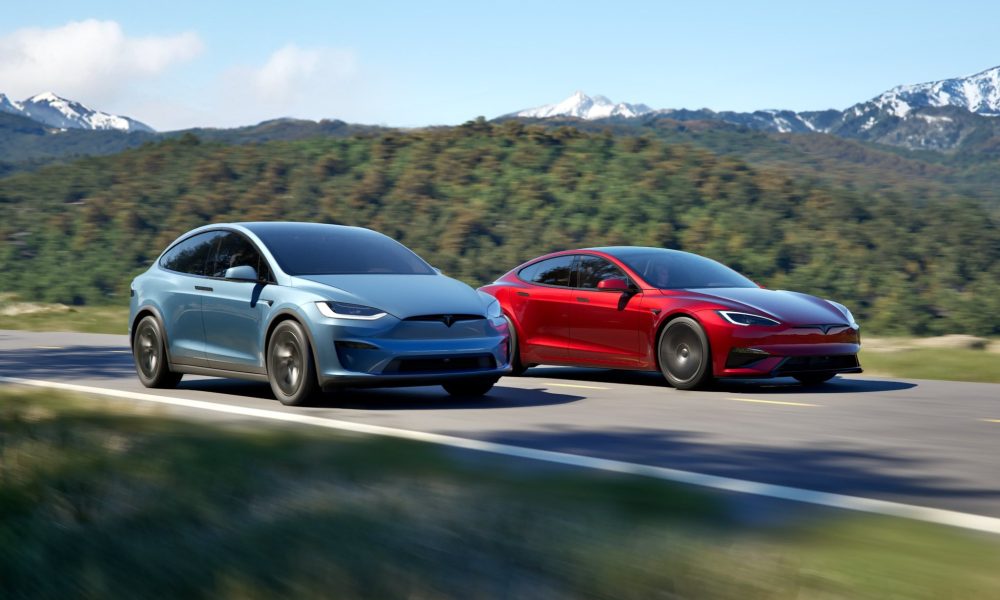
Acknowledging a Pioneering Era: Production Wind-Down Initiated
Tesla has officially initiated the process of phasing out production for its revered Model S sedan and Model X SUV in the United States. Owners of these long-standing flagship vehicles were recently informed via email that the manufacturing of these iconic electric cars would soon conclude, marking a significant transition in the company’s product strategy.
The notification, dispatched to U.S. customers on March 27, 2026, conveyed a message of gratitude before delivering the pivotal news. The email began by acknowledging the profound impact of the vehicles, stating, “Model S and Model X marked the beginning of the world’s transition to electric transportation.” It further highlighted their foundational role, adding, “These vehicles also made it possible for Tesla to develop the technology that would move our world toward autonomy.”

This communication directly followed previous statements made by Tesla CEO Elon Musk. During the Q4 2025 earnings call in late January, Musk had described the impending cessation of Tesla Model S and Model X production as an “honorable discharge” for the two vehicles, indicating that the wind-down would occur in Q2 2026. The email to customers succinctly delivered the finality of the decision: “As we make way for this autonomous future, Model S and Model X production will be ending. If you’d like to bring home a new Model S or Model X, order yours soon from our limited inventory.” The message concluded with a simple yet poignant, “Thank you for being part of our journey.”
Tesla just sent out a new email thanking Model S/X owners.
“These vehicles made it possible for Tesla to develop the technology that would move our world toward autonomy. As we make way for this autonomous future, Model S and Model X production will be ending. If you’d like to… pic.twitter.com/IeUhZ3iDnX

— Sawyer Merritt (@SawyerMerritt) March 27, 2026
The End of an Era: Tracing the Legacy of Tesla’s Flagship Models
The Model S, introduced in 2012, and the Model X, which followed in 2015, were far more than just new cars for Tesla; they were foundational pillars that established the company’s reputation as a disruptor in the automotive world. These vehicles swiftly became known as Tesla’s original ‘halo cars,’ a term in the industry denoting models that embody a brand’s ultimate aspirations in terms of performance, technology, and luxury, drawing customers to the entire product line.
At their launch, these premium electric vehicles shattered conventional perceptions of what EVs could achieve. They definitively demonstrated that electric cars could not only compete with but also significantly outperform traditional gasoline-powered luxury vehicles across critical metrics, including blistering acceleration, impressive long-range capabilities, and cutting-edge technological features. Their introduction effectively redefined the benchmarks for the luxury automotive segment.
Beyond performance, the Model S and Model X were pioneers in integrating advanced software and connectivity into the driving experience. They pioneered revolutionary features such as over-the-air (OTA) software updates, which allowed the vehicles to receive significant improvements and new functionalities post-purchase, much like a smartphone. Furthermore, they were instrumental in the deployment and continuous development of early autonomy hardware, laying the groundwork for Tesla’s ambitious full self-driving (FSD) capabilities.
While the Tesla Model S and Model X production figures never reached the immense volumes seen with the more accessible Model 3 sedan and Model Y SUV, their impact was arguably more profound in shaping the industry. The engineering breakthroughs and technological innovations first introduced in these models became the bedrock upon which Tesla’s entire subsequent lineup and its ongoing pursuit of advanced autonomous driving systems were built.
Strategic Repurposing: Fremont’s Shift Towards Next-Gen Innovation
The decision to wind down production of these celebrated models is not merely an ending but a calculated strategic pivot for the Palo Alto-based automaker. This move is fundamentally geared towards freeing up valuable factory floor space at Tesla’s primary manufacturing facility in Fremont, California. This reallocation of resources is critical for enabling the company to accelerate its focus on next-generation manufacturing initiatives that represent the future core of its business.
Foremost among these future endeavors are the production scale-up of the Optimus humanoid robots and the advancement of the highly anticipated Robotaxi platform. Both projects signify Tesla’s aggressive expansion beyond traditional vehicle manufacturing into the broader fields of artificial intelligence, robotics, and autonomous mobility services. By consolidating production areas, Tesla aims to streamline operations and dedicate more engineering and manufacturing prowess to these strategic growth areas.
Elon Musk has consistently emphasized that autonomy and robotics are central to Tesla’s long-term vision. The gradual cessation of Model S and Model X production underscores this commitment, clearing the path for intensive development and potential mass production of vehicles designed specifically for autonomous ride-hailing and humanoid robots capable of diverse tasks. This strategic shift reflects a bold move to secure a leadership position in emerging technological frontiers.
Market Response and Consumer Outlook for Limited Inventory
The announcement has naturally elicited a mixed response from the Tesla community and the broader automotive market. For many early adopters, the Model S and Model X were not just vehicles but symbols of a technological revolution that convinced them to invest not only in Tesla stock but also in the broader electric vehicle movement. These cars fostered a loyal fanbase drawn to their groundbreaking performance and innovative spirit.
The email notification, confirmed by some U.S. owners, has also highlighted a degree of mild frustration among those who had not yet received the direct communication. Furthermore, international customers have noted that the outreach regarding the winding down of Tesla Model S and Model X production has, for the time being, remained exclusively U.S.-focused, suggesting a phased global approach or region-specific inventory management.
For prospective buyers still considering a new Model S or Model X, the window of opportunity is rapidly narrowing. Tesla has explicitly stated that inventory for both models is now limited, signaling an imminent scarcity. This urgency is further underscored by actions in other key markets, such as Tesla’s Korean division, which has already imposed a March 31 cutoff date for new orders of the Model S and Model X in that specific market. The email therefore serves as both a respectful farewell to pioneering models and a final sales impetus for remaining stock.
Future Product Speculation Amidst Strategic Reorientation
As the curtains begin to close on the Model S and Model X, a vacuum of speculation naturally emerges regarding potential replacements or new offerings in Tesla’s premium segment. To date, Tesla has not provided specific details on an exact final production date beyond the Q2 2026 target, nor has it confirmed any immediate successor vehicles.
Industry observers and enthusiasts continue to speculate about various possibilities, including the potential development of a Cybertruck-derived SUV that could fill a future high-end niche. However, the company’s public pronouncements and strategic focus has unequivocally shifted. Tesla’s leadership has made it clear that the immediate and overwhelming priority is centered squarely on the advancement of autonomy and the commercialization of robotics.
Reinforcing Tesla’s Vision: Beyond Traditional Automotive
The winding down of Tesla Model S and Model X production represents more than just a product lifecycle decision; it is a profound reinforcement of Tesla’s long-term strategic vision. From its inception, Tesla has sought to be more than just an automotive manufacturer; it has consistently positioned itself as a technology company dedicated to accelerating the world’s transition to sustainable energy and, increasingly, to artificial intelligence and robotics.
By phasing out its pioneering premium sedans and SUVs, Tesla is making a clear declaration about its future priorities. The resources, engineering talent, and manufacturing capacity previously allocated to these models will now be channeled into ambitious projects like the Optimus robot and the Robotaxi network. These ventures promise to redefine not only transportation but also labor and daily life, extending Tesla’s influence far beyond personal vehicle ownership.
This strategic shift, while acknowledging the immense legacy of the Model S and Model X, signals Tesla’s unwavering commitment to innovation and disruption. It underscores the company’s belief that the next frontier of growth lies in fully autonomous solutions and advanced robotics, which are poised to unlock unprecedented value and fundamentally transform global industries. The “honorable discharge” is thus not an end, but a necessary step in the continuous evolution of a company that remains at the forefront of technological change.