
In a significant development for the electric vehicle (EV) battery industry, Coperion K-Tron has announced the launch of its RF400 Roller Feeder. This innovative feeding system is specifically engineered to enhance the consistency and efficiency of dry-electrode processing, particularly at the crucial laboratory and pilot scales of battery manufacturing.
The introduction of the RF400 comes at a time when the global focus on sustainable and cost-effective battery production methods is intensifying. Dry-electrode manufacturing stands out as a promising alternative to conventional wet coating processes, primarily due to its potential for reduced energy consumption and minimal reliance on hazardous solvents.

Addressing Key Challenges in Dry-Electrode Production
While dry-electrode manufacturing offers substantial advantages, it also presents unique material handling complexities. Achieving uniform deposition of electrode dry blends has historically been a significant hurdle, leading to production variability and increased material waste.
The RF400 Roller Feeder is meticulously designed to counteract these challenges. Its core objective is to deliver a uniform deposition of electrode dry blends, which is critical for the performance and longevity of EV batteries. By streamlining this vital step, the system aims to improve overall production quality and reduce the economic and environmental footprint associated with manufacturing inconsistencies.
Precision Engineering for Enhanced Consistency
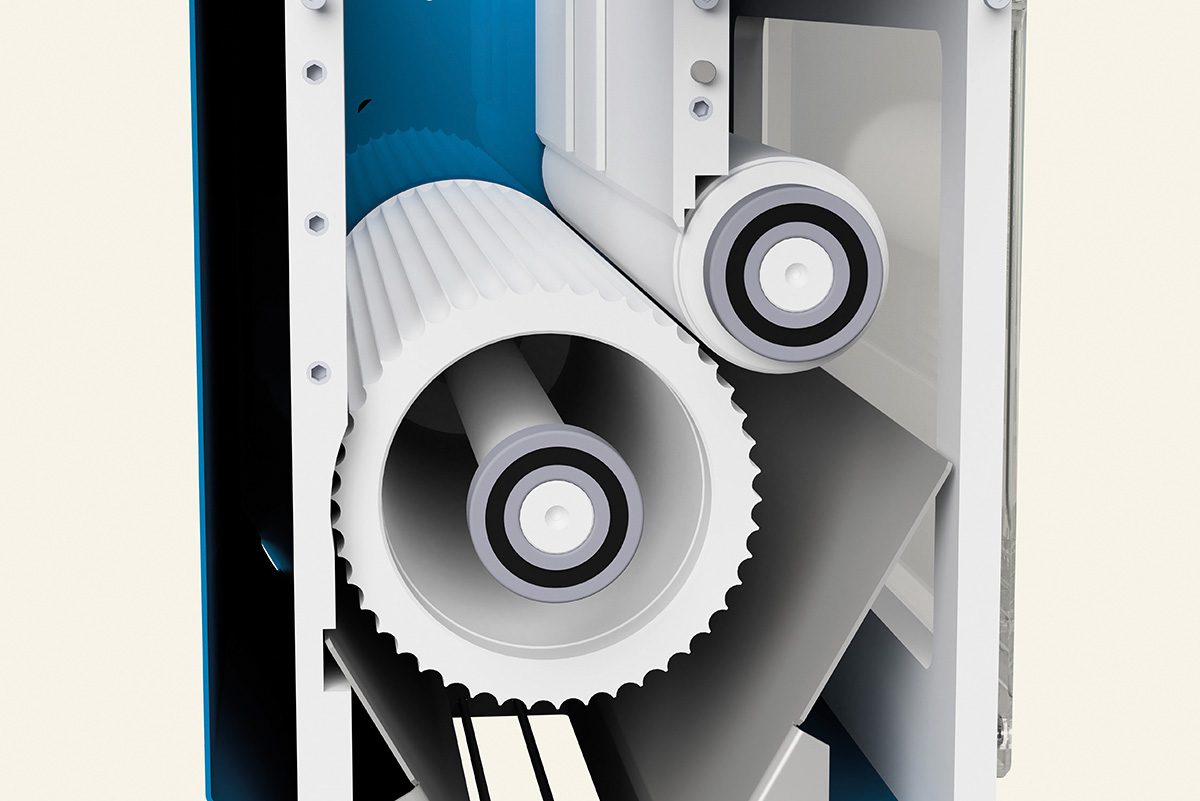
At the heart of the RF400’s design lies a sophisticated mechanism that combines a grooved feed roller with a smooth scraper roller. This synergistic pairing is fundamental to the feeder’s ability to handle material gently yet consistently, a critical factor for sensitive electrode dry blends.
The grooved feed roller is engineered to guide the material effectively, preventing common issues such as bridging at the outlet, which can disrupt material flow and lead to uneven deposition. Concurrently, the smooth scraper roller ensures that the material is distributed evenly across its width, preparing it optimally for the subsequent processing step—the calender roller below. This meticulous control over material flow is instrumental in achieving the high degree of uniformity required for advanced battery electrodes.
Scalability and Integration for Development Lines
Recognizing the diverse needs of battery research and development, Coperion K-Tron has designed the RF400 to be highly adaptable. The system supports a coating width that is adjustable up to 400 mm, making it exceptionally well-suited for a variety of laboratory and pilot-scale battery production setups. This flexibility allows researchers and developers to test and refine processes with different electrode dimensions, accelerating the innovation cycle.
Furthermore, the RF400 integrates seamlessly with Coperion K-Tron’s established control architecture, including its KCM-III controls and proprietary Smart Force Transducer weighing technology. This integration empowers operators with real-time monitoring capabilities, enabling precise feed-rate control and immediate adjustments in response to changing material characteristics.
The ability to finely tune feeding parameters in real-time is crucial for maintaining consistent quality, especially when working with novel materials or optimizing existing formulations during early-stage development. This level of control minimizes trial-and-error, saving valuable time and resources in the battery development pipeline.
The Strategic Importance of Dry-Electrode Technology
The shift towards dry-electrode manufacturing is gaining considerable traction within the battery industry. This method offers compelling advantages over traditional wet coating, which typically involves dissolving active materials in solvents and then drying the electrode, a process that is both energy-intensive and environmentally taxing due to solvent handling and recovery.
By contrast, dry processing significantly reduces energy consumption and eliminates the need for large quantities of solvents, contributing to a more sustainable and cost-efficient production paradigm. However, the absence of a liquid binder necessitates more precise material handling and more robust techniques for achieving uniform deposition of the dry components. This is where specialized equipment like the RF400 becomes indispensable.
Setting a New Industry Benchmark
Industry experts are keenly observing the impact of such technological advancements. Jay Daniel, Head of R&D Feeders and Feeding Systems at Coperion K-Tron, underscored the significance of the new feeder, stating, “The RF400 will set a new standard in the industry.” This statement reflects the potential of the RF400 to elevate the capabilities of dry-electrode deposition processes, fostering greater consistency and efficiency across the board.
The launch of the RF400 Roller Feeder represents a strategic step forward in refining battery manufacturing processes. By addressing critical challenges in dry-electrode deposition, Coperion K-Tron is contributing to the development of more advanced, cost-effective, and environmentally friendly battery technologies, ultimately supporting the broader transition to electric mobility.