
News
Tesla’s Model 3 and Model Y Lead JD Power’s 2026 EV Satisfaction Rankings
Published February 19, 2026, by Joey Klender
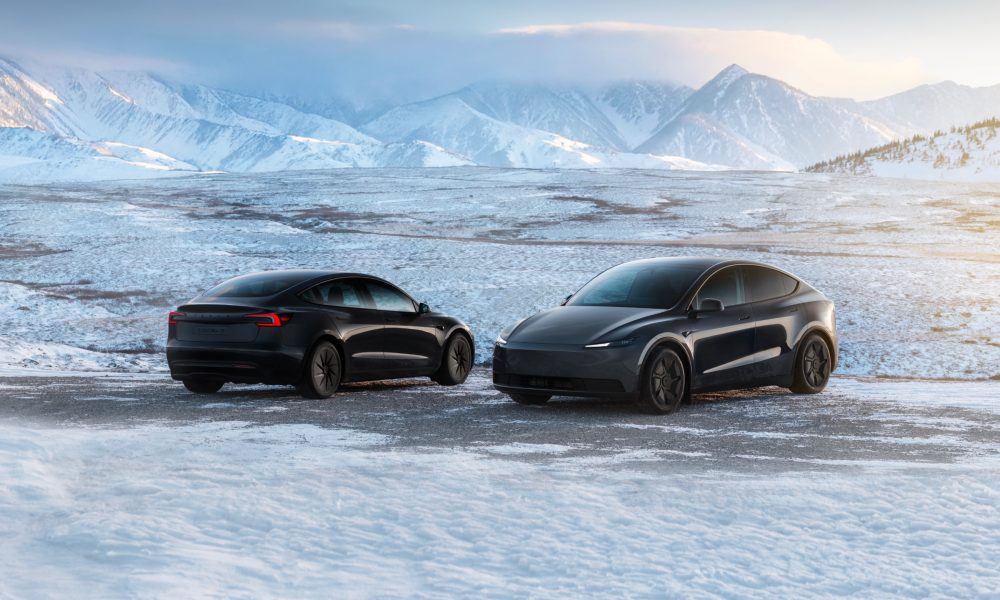
Tesla has once again demonstrated its strong appeal to electric vehicle owners, securing the top two positions in the highly anticipated 2026 JD Power Electric Vehicle Satisfaction Study. The Model 3 and Model Y, Tesla’s flagship sedans and SUVs, respectively, were lauded by owners for their performance and overall ownership experience.

The Model 3 achieved the highest ranking among all electric vehicles evaluated, scoring an impressive 804 out of a possible 1,000 points. Close behind was the Model Y, which garnered a score of 797. These results underscore Tesla’s continued dominance in customer satisfaction within the rapidly evolving EV market.
EV Market Trends and Owner Sentiment
The study highlights significant shifts and growing confidence in the electric vehicle sector. Brent Gruber, Executive Director of JD Power’s EV practice, noted a divergence between market share trends and owner satisfaction levels.
“EV market share has declined sharply following the discontinuation of the federal tax credit program in September 2025, but that dip belies steadily growing customer satisfaction among owners of new EVs,” Gruber stated. He added, “Improvements in battery technology, charging infrastructure, and overall vehicle performance have driven customer satisfaction to its highest level ever.”

Gruber further emphasized the long-term commitment of EV owners to the technology: “What’s more, the vast majority of current EV owners say they will consider purchasing another EV for their next vehicle, regardless of whether they benefited from the now-expired federal tax credit.”
Key Findings from the JD Power Study
JD Power’s comprehensive analysis revealed three critical trends shaping the EV landscape:
- Public Charging Satisfaction Surges: The availability and reliability of public charging infrastructure have reached all-time highs, significantly boosting owner sentiment.
- Premium BEV Quality Improvements: Electric vehicles in the premium segment have seen marked enhancements in overall quality, meeting and exceeding owner expectations.
- BEV Satisfaction Holds Steady: Battery Electric Vehicles (BEVs) maintained strong satisfaction ratings, comparable to their Plug-in Hybrid Electric Vehicle (PHEV) counterparts.
Tesla Leads Premium EV Segment
In the premium battery electric vehicle category, Tesla’s strong showing with the Model 3 and Model Y reinforces its market leadership. The Model 3’s score of 804 and the Model Y’s 797 placed them firmly ahead of key competitors.
Other premium EVs evaluated included the BMW i4, which secured the third spot with a score of 795, followed closely by the BMW iX at 794. The segment average for premium BEVs stood at 786.
Several other models finished below the segment average, indicating areas for improvement for these manufacturers. These included the Cadillac OPTIQ (762), Rivian R1S (758), Lucid Air (740), Rivian R1T (739), and Audi Q6 e-Tron (690).
Mass Market EV Performance
Shifting to the mass market segment, the Ford Mustang Mach-E emerged as the highest-rated EV, achieving a score of 760. This figure comfortably surpassed the segment average for mass market BEVs, which was recorded at 727.
Supercharger Network Boosts Public Charging Experience
A significant driver of the improved public charging satisfaction, according to JD Power, is the ongoing expansion and enhancement of the Tesla Supercharger Network. The study identified the availability of public charging as “by far the most improved index factor.”
The consistent growth in publicly accessible charging stations has positively influenced consumer perceptions of EV ownership. Furthermore, the study noted that Tesla owners are increasingly satisfied with the charging infrastructure, partly due to the network’s expanded access to non-Tesla electric vehicles.
The results of the 2026 JD Power Electric Vehicle Satisfaction Study highlight Tesla’s sustained success in delivering high-satisfaction EV ownership experiences, while also pointing to broader improvements across the industry in critical areas like charging infrastructure and vehicle quality.