
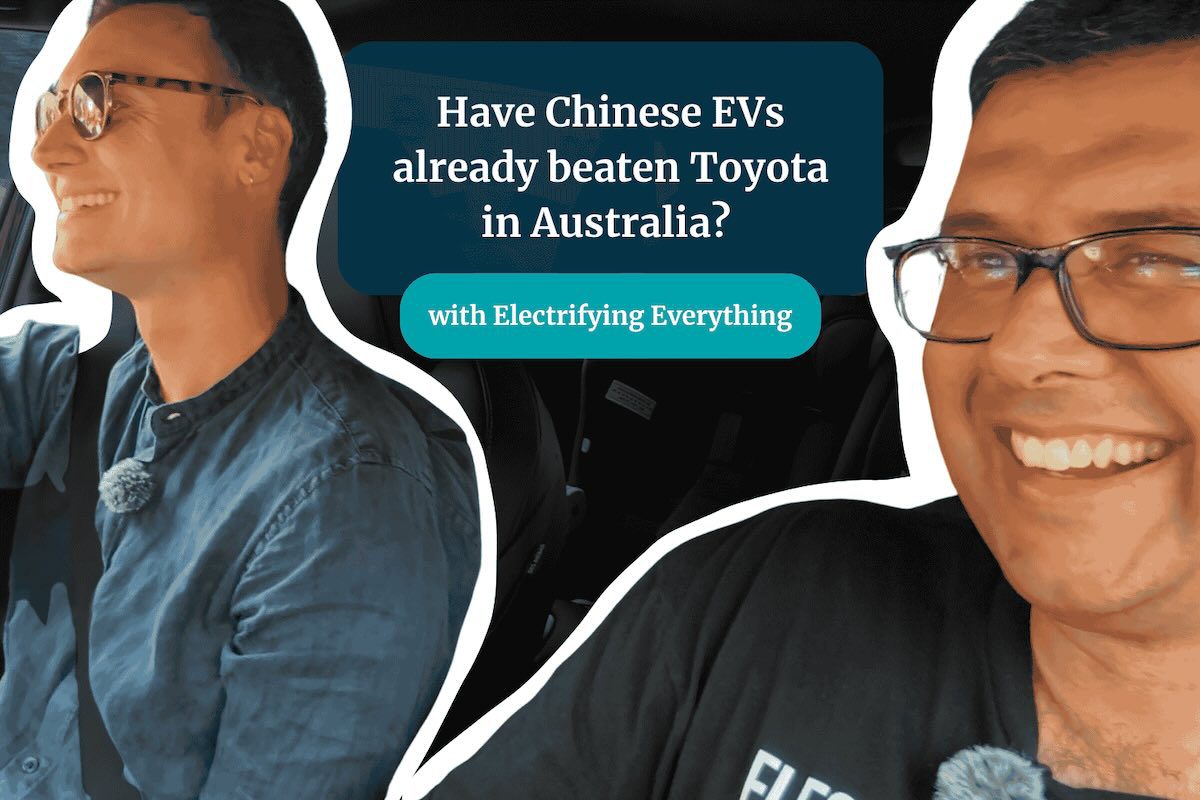
Australia’s automotive market is witnessing a profound transformation, particularly within the electric vehicle (EV) segment. A recent analysis highlights a significant shift, indicating that Chinese carmakers are now outselling their Japanese counterparts in the Australian market. This development marks a pivotal moment for an industry long dominated by established global players, prompting experts to delve into the underlying factors driving this change.
The discussion underscores a dynamic competitive environment where traditional automotive powerhouses are contending with agile new entrants. This emerging trend signals evolving consumer preferences, technological advancements, and strategic market positioning that are reshaping the vehicle landscape Down Under.

Unpacking the Market Shift
The observation that Chinese EV manufacturers are gaining significant traction in Australia against long-standing Japanese brands is a topic of considerable interest. This phenomenon is not merely a statistical anomaly but reflects deeper shifts in the global automotive supply chain, manufacturing capabilities, and consumer adoption patterns for electric vehicles.
For decades, Japanese automakers, renowned for their reliability, fuel efficiency, and established dealer networks, have held a formidable position in the Australian market. Their transition to electric vehicles, however, has presented unique challenges and opportunities that Chinese manufacturers appear to be capitalizing on with remarkable speed.
The Conversation Between Experts
Insights into this market dynamic were recently shared during a discussion between Neerav from Electrifying Everything and Sam, who was notably present in an updated Toyota BZ4X. Their conversation explored the multifaceted reasons behind Chinese carmakers’ ascendancy in the Australian market, offering a comprehensive look at the factors contributing to this significant shift.

The dialogue likely delved into aspects ranging from product development cycles and pricing strategies to technological integration and market responsiveness. Such expert perspectives are crucial for understanding the intricate interplay of forces driving the current competitive landscape.
Key Factors Driving Chinese EV Success
The ascent of Chinese EVs in Australia can be attributed to several strategic advantages and market conditions. These factors collectively contribute to their growing appeal among Australian consumers and their ability to challenge the market share of traditional players.
The discussion between Neerav and Sam pinpointed various elements that are empowering Chinese brands to forge ahead in this competitive environment, reflecting a calculated and aggressive market entry strategy coupled with an understanding of evolving consumer demands.
Competitive Pricing and Value Proposition
One of the most frequently cited reasons for the success of Chinese EVs is their highly competitive pricing. These manufacturers have demonstrated an ability to offer electric vehicles at price points that are often more accessible to a broader segment of the Australian population compared to many established rivals.
This aggressive pricing strategy is frequently paired with a compelling value proposition, where vehicles come equipped with advanced features, modern aesthetics, and respectable performance metrics. Consumers are increasingly discerning, seeking not only affordability but also a comprehensive package that delivers on technology and quality.
Rapid Innovation and Technology Integration
Chinese EV brands have been at the forefront of rapid innovation, particularly in battery technology, software integration, and intelligent driving systems. Their ability to quickly develop, test, and bring new technologies to market gives them a significant edge in a fast-evolving sector.
The discussion between the experts likely highlighted how these manufacturers are not merely adapting existing technologies but are actively pioneering new solutions that resonate with tech-savvy buyers. This commitment to cutting-edge innovation allows them to continuously refresh their product lines and stay ahead of the curve.
Diverse Model Offerings and Consumer Appeal
The range of Chinese EV models entering the Australian market is remarkably diverse, catering to various consumer needs and preferences. From compact city cars and family SUVs to commercial vans, these brands are offering a broad spectrum of electric vehicles that meet different lifestyle requirements.
This wide array of choices, combined with appealing designs and modern interiors, helps attract a diverse customer base. The ability to provide bespoke solutions and respond to specific market demands quickly is a strong differentiator that the experts would have noted.
Navigating the EV Transition: The Japanese Perspective
For Japanese automakers, the rapid pivot to electric vehicles presents a complex set of challenges and strategic considerations. While they have historically excelled in hybrid technology, the full-electric transition requires a different approach to manufacturing, supply chains, and market positioning.
The conversation between Neerav and Sam, held within a Toyota BZ4X, implicitly underscored the strategic focus and potential hurdles faced by a brand like Toyota as it expands its dedicated EV offerings.
Toyota’s Strategy Amidst Evolving Preferences
Toyota, a global leader in automotive innovation and a pioneer in hybrid technology, is actively expanding its footprint in the pure EV market with models such as the BZ4X. However, the speed of market shift, particularly in regions like Australia, necessitates agile responses.
The discussion likely touched upon how traditional brands are balancing their established strengths with the urgent need to accelerate EV development and market penetration. Their strategies involve leveraging existing manufacturing expertise while simultaneously investing heavily in new electric vehicle platforms and battery technologies.
The Hybrid Legacy and Future EV Hurdles
Japanese automakers, particularly Toyota, have built an unparalleled reputation through their successful hybrid models, which paved the way for more fuel-efficient and environmentally conscious driving. This legacy, while valuable, also influences their EV rollout strategy.
The experts might have explored how the strong reliance on hybrid technology in the past could be perceived as both an advantage and a challenge in the current rapidly electrifying market. The hurdle often involves transitioning consumer perception and manufacturing focus from highly efficient internal combustion and hybrid systems to entirely new electric architectures.
Broader Implications for the Australian Market
The increasing prominence of Chinese EVs carries significant implications for the broader Australian automotive market. This shift not only affects consumer choices but also influences industry trends, infrastructure development, and competitive dynamics among various carmakers.
The insights shared by Neerav and Sam point towards a future where market share will be increasingly contested, leading to heightened innovation and potentially greater value for consumers.
Impact on Consumer Choices and Industry Trends
With a greater variety of competitively priced and technologically advanced Chinese EVs entering the market, Australian consumers stand to benefit from more choices. This intense competition is likely to drive down prices across the board and encourage all manufacturers to enhance their EV offerings.
Furthermore, this trend could accelerate the adoption of electric vehicles in Australia, pushing for greater investment in charging infrastructure and related services. The industry as a whole is likely to respond with accelerated EV development and more aggressive market strategies.
Looking Ahead: The Future of Automotive Competition
The Australian automotive landscape is undergoing a significant evolution, with Chinese EVs emerging as powerful contenders challenging the long-held dominance of Japanese brands. The analysis provided by experts like Neerav and Sam underscores a pivotal moment where adaptability, technological prowess, and strategic pricing are key determinants of success.
As the global automotive industry continues its march towards electrification, the competitive dynamics observed in Australia serve as a microcosm of broader global shifts. The future will likely see continued innovation and fierce competition, ultimately benefiting consumers through a wider array of advanced, accessible electric vehicles.
The ongoing dialogue between industry specialists will be crucial in tracking these developments and understanding the full scope of how this changing guard impacts the future of mobility in Australia and beyond.