
Key Takeaways
- Lithium-ion batteries face significant safety and longevity challenges during fast charging, primarily due to lithium plating.
- Lithium plating occurs when lithium-ions fail to intercalate into the anode, depositing as metallic lithium, leading to capacity loss and critical safety hazards.
- Consequences include capacity degradation, thickening of the solid electrolyte interphase (SEI), internal short circuits, and potential thermal runaway.
- Traditional two-electrode battery testing setups are insufficient, as they combine anode and cathode data, obscuring the precise mechanisms of plating.
- Advanced three-electrode testing is crucial for independently analyzing anode and cathode behavior, offering vital insights for solving lithium plating risks.
- Understanding and mitigating lithium plating is essential for advancing electric vehicle (EV) technology and other high-performance energy storage applications.
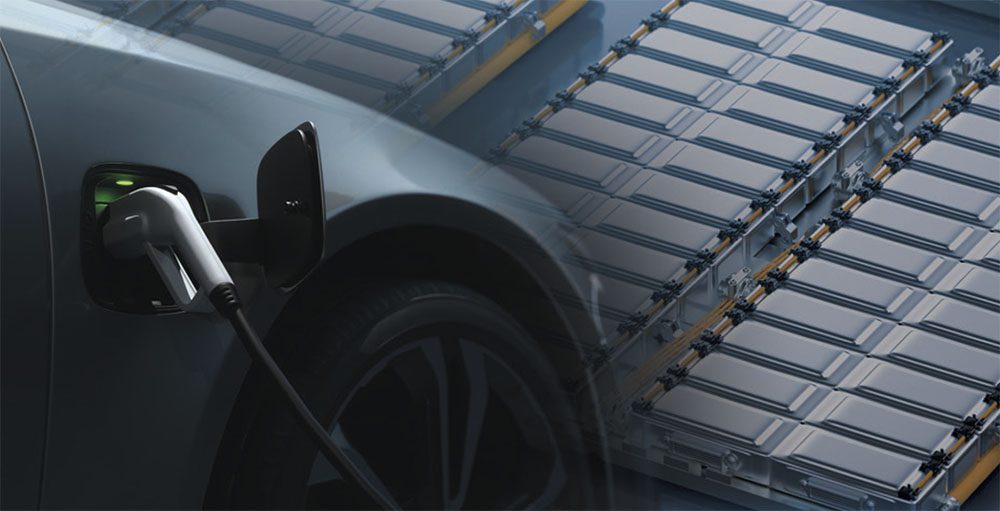
The relentless pursuit of faster charging capabilities for lithium-ion batteries, particularly in the burgeoning electric vehicle (EV) market and portable electronics, presents a critical dichotomy: convenience versus safety and longevity. As consumers demand quicker turnaround times for their devices and vehicles, battery technology is pushed to its electrochemical limits. This intensified operational stress unveils a significant challenge known as lithium plating, a phenomenon that poses substantial risks to battery performance and safety.
Understanding and effectively mitigating these risks is paramount for the sustainable growth of Li-ion battery applications. While high-rate charging offers undeniable advantages, it simultaneously exacerbates the conditions under which metallic lithium can undesirably deposit on the anode, initiating a cascade of detrimental effects.

The Intricacies of Lithium Plating During Fast Charging
Lithium plating represents a fundamental electrochemical failure mode within lithium-ion batteries. It occurs under specific, often extreme, conditions, primarily when the charging current is excessively high, or the ambient temperature drops significantly. In an ideal charging scenario, lithium-ions migrate from the cathode and intercalate, or embed themselves, smoothly into the graphite structure of the anode.
However, when the charge rate outpaces the anode’s ability to absorb these ions, or when the electrochemical kinetics are slowed by low temperatures, lithium-ions fail to intercalate effectively. Instead of integrating into the graphite lattice, these ions deposit as metallic lithium on the surface of the graphite anode. This unwanted deposition initiates a series of irreversible reactions and structural changes that compromise the battery’s integrity.
Key Factors Driving Lithium Plating
The dual culprits behind lithium plating are high charging currents and low temperatures. High currents overwhelm the anode’s intercalation kinetics, leaving excess lithium-ions stranded. Similarly, low temperatures drastically reduce the mobility of lithium-ions and slow down the intercalation process, making the anode less receptive even at moderate charge rates. Both scenarios create an environment ripe for metallic lithium formation.
This challenge is particularly acute for the electric vehicle industry, where demands for rapid charging infrastructure are continually increasing. Engineers and researchers are actively engaged in developing sophisticated battery management systems and advanced materials to address these complex electrochemical dynamics, all while striving for efficient and safe power delivery.
Profound Consequences for Battery Performance and Safety
The formation of metallic lithium on the anode surface is not merely an inconvenience; it triggers a cascade of severe consequences, impacting both the immediate performance and long-term safety of lithium-ion batteries. These microscopic electrochemical reactions have macro-level implications, ranging from reduced operational efficiency to catastrophic failures.
Capacity Degradation: A Direct Hit to Longevity
One of the most immediate and tangible effects of lithium plating is capacity degradation. When lithium-ions deposit as metallic lithium, they are no longer available for reversible electrochemical reactions. This effectively reduces the amount of active lithium that can shuttle between the anode and cathode during charge and discharge cycles, leading to a permanent loss in the battery’s ability to store energy.
Over repeated fast charging cycles, this accumulation of inactive lithium significantly diminishes the battery’s total usable capacity, shortening its overall lifespan. This directly impacts user experience and necessitates more frequent battery replacements, incurring economic and environmental costs.
Solid Electrolyte Interphase (SEI) Layer Thickening
The solid electrolyte interphase (SEI) layer is a crucial component formed on the anode surface during the initial charging cycles. It acts as a passivation layer, allowing lithium-ions to pass through while preventing direct contact between the electrolyte and the active anode material, thereby preserving the electrolyte and preventing further decomposition.
However, lithium plating can lead to the continuous growth and thickening of this SEI layer. The deposited metallic lithium is highly reactive and consumes electrolyte as it forms new SEI components. An excessively thick SEI layer increases the internal resistance of the battery, hinders lithium-ion transport, and further impedes charging efficiency, exacerbating the problem of capacity loss and reducing power delivery.
The Looming Threat of Internal Short Circuits
Perhaps the most dangerous consequence of lithium plating is the potential for internal short circuits. The deposited metallic lithium often does not form a uniform layer but instead grows in dendritic, tree-like structures, sometimes referred to as lithium dendrites. These sharp, needle-like formations can penetrate the separator, the thin insulating layer that separates the anode and cathode.
Once a dendrite bridges the gap between the electrodes, it creates a direct electrical pathway, leading to an internal short circuit. This short circuit generates localized heat, which can quickly escalate, leading to the ultimate safety concern: thermal runaway.
Thermal Runaway: The Ultimate Safety Hazard
Thermal runaway is a critical safety issue where an uncontrolled self-heating process occurs within the battery, leading to extremely high temperatures, often resulting in fire or explosion. Internal short circuits caused by lithium dendrites are a major trigger for thermal runaway.
The rapid discharge of energy through the short generates immense heat. This heat, in turn, can cause the electrolyte to decompose, releasing flammable gases and further increasing the temperature. This vicious cycle can quickly lead to catastrophic failure, posing significant safety risks to users and surroundings, especially in high-energy applications like electric vehicles.
The Diagnostic Dilemma: Limitations of Conventional Testing
Investigating the complex, microscopic electrochemical reactions underlying lithium plating presents significant challenges for battery researchers and engineers. The conventional two-electrode structure of lithium-ion batteries, while standard for many applications, proves inadequate for pinpointing the exact mechanisms of plating.
This traditional setup provides only combined voltage-capacity data for the entire cell. In essence, it offers a holistic view of the battery’s performance but fails to disaggregate the individual contributions or distinct behaviors of the anode and the cathode. This limitation means that subtle anomalies, such as the initial stages of lithium deposition on the anode, are often masked by the overall cell voltage, making it exceedingly difficult to identify the precise mechanism of lithium plating.
Without the ability to independently monitor the potentials of both electrodes, researchers struggle to differentiate between voltage drops caused by cathode degradation versus those stemming from anode-related issues like plating. This lack of granular data significantly hampers diagnostic efforts and the development of targeted solutions for solving lithium plating risks effectively.
Pioneering Solutions: The Power of Three-Electrode Testing
Recognizing the limitations of conventional diagnostic methods, the battery research community has increasingly turned to advanced techniques, with the three-electrode testing setup emerging as a particularly significant advantage. This sophisticated approach addresses the shortcomings of the two-electrode system by introducing a crucial additional component: a reference electrode.
The reference electrode, ideally one with a stable and known electrochemical potential, allows for the independent measurement of the potential of both the working electrode (anode) and the counter electrode (cathode) against a common, unchanging reference point. This capability transforms battery analysis from a combined cell perspective to a detailed, individual electrode assessment.
Unlocking Independent Electrode Insights
With a three-electrode setup, researchers can precisely monitor how the anode’s potential changes during charging and discharging, separate from the cathode’s behavior. This granular data is invaluable for identifying the exact conditions and electrochemical signatures associated with lithium plating.
For instance, an anomalously low anode potential during charging, particularly at high C-rates or low temperatures, can be a direct indicator of lithium deposition rather than proper intercalation. By isolating and analyzing these individual electrode responses, scientists and engineers can gain unprecedented clarity into the underlying mechanisms that drive capacity degradation, SEI layer growth, and the initiation of internal shorts due to plating.
This detailed understanding is not merely academic; it is foundational for developing effective strategies for solving lithium plating risks. It enables the design of more robust anode materials, optimized charging protocols, and smarter battery management systems that can dynamically adjust to prevent plating, thereby enhancing both the safety and lifespan of high-performance lithium-ion batteries.
Advancing Battery Technology for a Safer Future
The imperative to move towards safer, more durable, and higher-performing lithium-ion batteries is undeniable. As the global reliance on these energy storage devices grows, particularly within the automotive and renewable energy sectors, the challenges posed by phenomena like lithium plating become increasingly critical to address. The ongoing research and development into advanced diagnostic techniques, such as the three-electrode testing setup, represent a crucial step forward.
By providing the necessary tools to precisely identify and understand the complex electrochemical processes at play, these innovations empower engineers to craft more resilient battery designs and intelligent charging strategies. The commitment to understanding and solving lithium plating risks will ultimately pave the way for a new generation of Li-ion batteries that not only meet the demands for fast charging but do so with uncompromising safety and extended operational life.
For a deeper dive into these advanced diagnostic methods and comprehensive strategies for mitigating plating issues, industry experts often compile detailed analyses. Such resources typically provide in-depth technical explanations and practical applications for researchers and developers working to push the boundaries of battery technology.
The continuous evolution of battery technology relies heavily on foundational research and the application of precise analytical tools. As the industry strives for ever-increasing energy density and faster charging speeds, the ability to pinpoint and address electrochemical challenges at their source becomes the cornerstone of innovation and reliability.
Frequently Asked Questions About Lithium Plating Risks
What is lithium plating in Li-ion batteries?
Lithium plating is an undesirable electrochemical reaction where lithium-ions, instead of intercalating into the anode, deposit as metallic lithium on its surface. This typically occurs during fast charging or at low temperatures, hindering efficient energy storage.
Why is fast charging a risk factor for lithium plating?
During fast charging, the rate at which lithium-ions arrive at the anode can exceed the anode’s ability to absorb them. This surplus of ions then preferentially forms metallic lithium deposits on the surface rather than intercalating into the anode structure.
What are the main consequences of lithium plating?
Lithium plating leads to several critical issues, including irreversible capacity degradation, increased thickness of the solid electrolyte interphase (SEI) layer, and the potential formation of dendrites that can cause internal short circuits and thermal runaway.
How does lithium plating lead to thermal runaway?
Metallic lithium can grow into sharp dendrites that penetrate the battery separator, creating an internal short circuit between the anode and cathode. This short generates intense localized heat, which can initiate an uncontrolled self-heating process known as thermal runaway, potentially causing fire or explosion.
Why are two-electrode testing setups insufficient for studying lithium plating?
Conventional two-electrode setups provide only combined voltage-capacity data for the entire battery cell. This aggregated data cannot distinguish between the independent electrochemical behaviors of the anode and cathode, making it difficult to precisely identify and monitor the mechanisms of lithium plating at the individual electrode level.
How does a three-electrode setup help in solving lithium plating risks?
A three-electrode testing setup incorporates a reference electrode, allowing for the independent measurement of the anode and cathode potentials. This provides detailed, isolated data for each electrode, enabling researchers to precisely identify the onset and progression of lithium plating and develop targeted mitigation strategies.
What measures can be taken to prevent lithium plating?
Preventative measures include optimizing charging protocols to avoid excessive current or very low temperatures, developing advanced anode materials with improved lithium-ion intercalation kinetics, and implementing sophisticated battery management systems (BMS) that can monitor and adjust charging parameters in real-time.
What is the impact of lithium plating on electric vehicle batteries?
For electric vehicles, lithium plating can severely reduce battery lifespan and range, compromise safety through thermal runaway risks, and increase the total cost of ownership due to premature battery degradation. Effective mitigation is crucial for widespread EV adoption.