
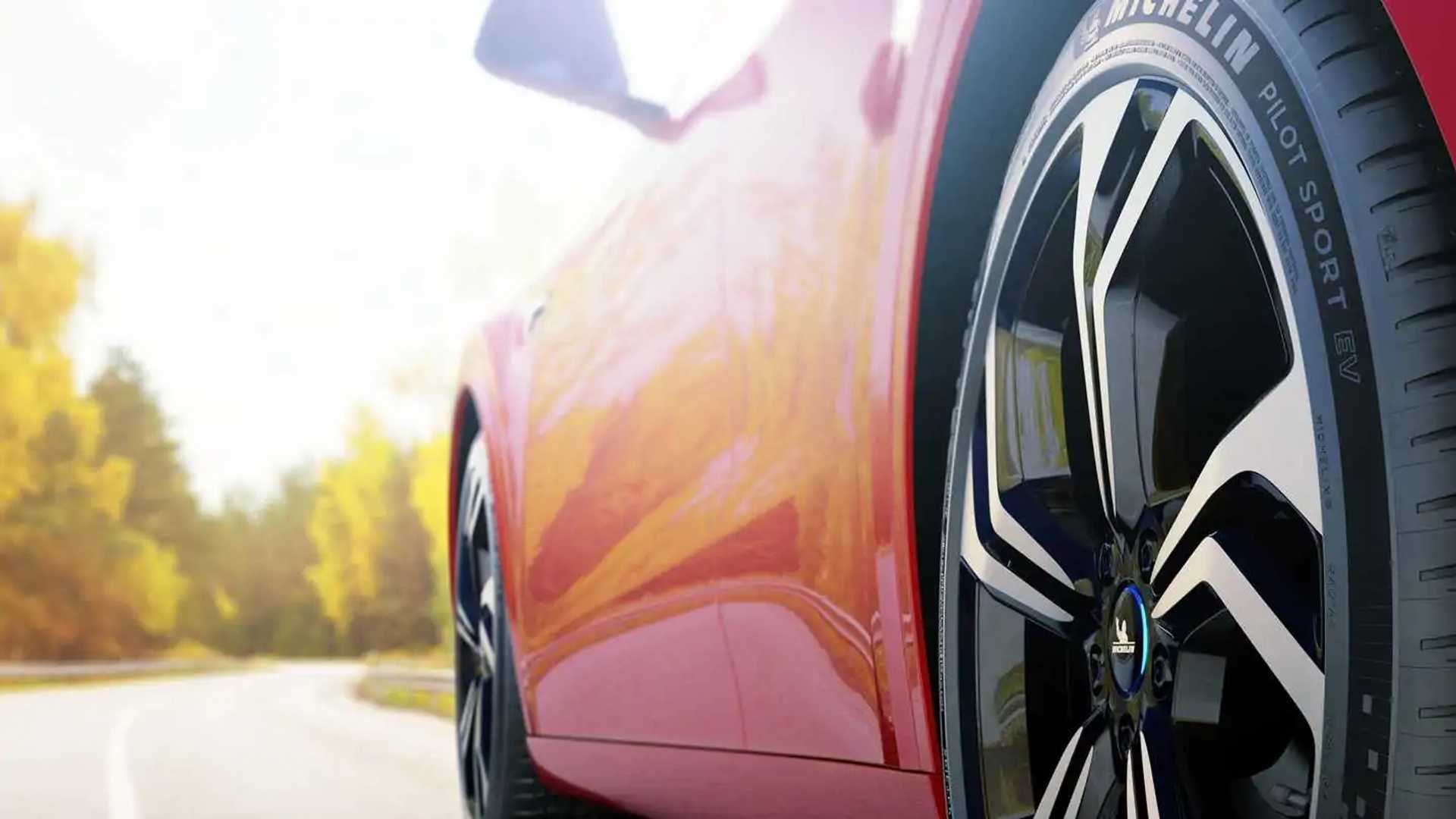
The rapid ascent of electric vehicles (EVs) is transforming the automotive landscape, promising reduced emissions and lower operational costs. However, a prevailing concern among prospective and current EV owners is the potential for accelerated tire wear compared to their internal combustion engine (ICE) counterparts. This phenomenon, often attributed to the inherent characteristics of electric propulsion, warrants a detailed examination.
While EVs eliminate many traditional maintenance tasks associated with gasoline cars, such as oil changes and spark plug replacements, the expenditure on tire replacement might emerge sooner than anticipated for some owners. This has led to a crucial question: is the notion of faster EV tire wear a persistent myth, or does scientific evidence and real-world data substantiate this claim?

Key Takeaways
- Electric Vehicles generally experience faster tire wear due to increased weight and instant torque delivery.
- Multiple studies, including controlled experiments and fleet data analyses, confirm higher wear rates for EVs, ranging from 20% to over 30%.
- Vehicle weight is consistently identified as a primary factor contributing to accelerated tire degradation in EVs.
- Driving style significantly impacts tire longevity, often more so than the vehicle type itself.
- EV-specific tires are engineered to mitigate these challenges, focusing on durability, load capacity, low rolling resistance, and noise reduction.
- Proper tire maintenance, including correct pressure and rotation, is crucial for maximising the lifespan of EV tires.
The Physics Behind Accelerated Tire Wear in EVs
At the heart of the debate lies fundamental physics. Electric vehicles are inherently heavier than similarly sized combustion-engine cars, primarily due to their large battery packs. This increased mass places greater demands on tires during acceleration, braking, and cornering maneuvers. The additional weight translates directly into higher friction and stress on the tire compound, leading to more rapid material erosion.
Beyond weight, many EVs boast an almost instantaneous and substantial power delivery, often referred to as ‘instant torque’. This brutal surge of power, while exhilarating for drivers, can subject tires to immense stress, particularly during aggressive acceleration. When a driver ‘floors’ the accelerator, the tires struggle to maintain traction, resulting in increased slippage and frictional wear against the road surface.
Germany’s ADAC, a prominent automobile association, has acknowledged that both vehicle weight and aggressive driving behavior are significant contributors to increased tire wear. Interestingly, ADAC’s analysis does not explicitly list an EV’s prodigious torque as a standalone reason for accelerated wear. Instead, the association posits that while EVs possess ample torque, drivers do not consistently exploit its full potential. The emphasis, therefore, shifts heavily towards individual driving style as a critical determinant of how quickly tires wear out.

Empirical Evidence: What The Studies Show About EV Tire Longevity
Several studies and real-world observations have attempted to quantify the difference in tire wear between electric and conventional vehicles, offering a clearer picture of this complex issue. These investigations provide crucial insights, albeit with varying methodologies and scopes.
Controlled Experiments Offer Direct Comparisons
A notable 2022 study, published in *Science of the Total Environment*, provided direct empirical evidence by measuring average tread wear on a controlled route. Korean researchers meticulously tracked the wear rates of an EV, a gasoline car, and a diesel car over a consistent 550-kilometer (341-mile) route. The findings indicated a significant difference: the tested EV showed an average tread wear of 201.7 milligrams per kilometer. This contrasted sharply with the gasoline car’s 158.9 mg/km and the diesel car’s 167.4 mg/km.
These figures translate to the EV experiencing approximately 27% higher wear than the gasoline car and 20% higher wear than the diesel vehicle under the specific test conditions. While this controlled environment offers robust data for the vehicles and conditions tested, it serves as a baseline rather than a universal forecast for general tire life across all EVs.
Fleet Data Points to Shorter Replacement Cycles
Real-world tire replacement records from fleet management companies also lend credence to the faster wear hypothesis. A report from fleet management company Epyx indicated that electric company cars required their first tire replacement at an average of approximately 23,100 kilometers (14,352 miles). This was notably shorter than the 29,500 km (18,333 miles) observed for comparable combustion cars in their fleet.
This data suggests roughly a 22% reduction in mileage between tire changes for EVs. However, Epyx itself acknowledged a key caveat: their EV sample tended to include a higher proportion of larger, heavier vehicles, which are intrinsically prone to faster tire wear irrespective of their powertrain. This demographic skew means the observed difference cannot be solely attributed to the electric powertrain.
Particle Emissions vs. Tire Lifespan
Another study, published in *Environmental Research*, focused on a different aspect of tire degradation: particle emissions. This 2026 study compared electric and combustion versions of the same car model. On average, it concluded that EVs released approximately 31% more particles from their tires and the road surface during operation. It is critical to understand that while higher particle release indicates greater material loss, this study specifically measured particulate matter and does not directly translate to a 31% reduction in the tire’s overall lifespan.
Challenges in Direct Comparisons and Driving Patterns
A 2026 study featured in *Mechanika* estimated that EV tires might last 35–62% fewer kilometers than those on combustion cars. However, this comparison was not conducted under identical conditions. The EVs in this study were observed to undertake more city driving and traverse different routes. Stop-and-go traffic, frequent acceleration, and braking inherent in urban environments are notoriously harder on tires than sustained cruising at constant speeds. Therefore, it becomes challenging to isolate how much of the accelerated wear was due to the electric powertrain versus the demanding urban driving patterns.
Weight as the Primary Differentiator: The UTAC Findings
Perhaps one of the most compelling pieces of evidence comes from testing conducted by UTAC for the automotive industry groups ACEA and OICA. This particular test involved one electric BMW iX1 and five combustion X1s, all driving concurrently over an extensive 15,000-kilometer (9,300-mile) distance. The results indicated that the iX1 EV indeed lost more rubber per kilometer than its combustion-powered X1 counterparts.
However, once researchers factored in the additional weight of the electric iX1, the observed difference in tire wear largely dissipated. This significant finding suggests that, at least in this specific, controlled comparison, the increased vehicle weight was the primary underlying reason for the EV’s additional tire wear, rather than the electric powertrain itself or its instant torque delivery.
The Role of EV-Specific Tires in Mitigating Wear
In response to the unique demands of electric vehicles, tire manufacturers have developed specialized tires designed specifically for EVs. These advanced tires aim to address several challenges simultaneously, offering a tailored solution to enhanced performance and longevity.
EV-specific tires are engineered from the ground up to handle the substantial extra weight of electric vehicles. Their robust constructions and reinforced sidewalls are designed to support the heavier loads without compromising structural integrity. Furthermore, their unique rubber compounds and tread designs are formulated to enhance durability and resist the higher forces encountered during aggressive acceleration and regenerative braking.
Beyond durability, these tires also prioritise low rolling resistance. This feature is crucial for preserving the EV’s battery range, as it reduces the energy lost to friction between the tire and the road. Another critical aspect is noise suppression. The near-silent operation of electric vehicles means that road and tire noise becomes far more noticeable inside the cabin. To counter this, many EV tires incorporate acoustic foam inside the tire structure, significantly reducing interior noise levels.
Michelin, a leading tire manufacturer, highlights that these various features serve distinct purposes. While quieter tires improve cabin comfort, they are not automatically longer-lasting. However, Michelin reports significant durability improvements across its newer tire lines, specifically engineered to withstand the increased weight and torque characteristics of modern EVs.
It is important to note that owning an EV does not necessarily mandate the exclusive use of EV-specific tires. Germany’s ADAC advises that conventional tires without specific EV markings can be perfectly suitable, provided they meet the vehicle’s required specifications. These specifications include ensuring the tire’s dimensions, speed rating, and, crucially, its load capacity are appropriate for the electric vehicle’s heavier curb weight.
Practical Strategies to Extend Your EV’s Tire Life
While the evidence suggests that EVs can indeed wear tires faster, the extent of this effect is highly variable and significantly influenced by driver behaviour and maintenance practices. Owners can adopt several practical strategies to maximise the lifespan of their electric vehicle’s tires:
- Smooth Driving Inputs: The single most impactful factor on tire longevity is driving style. Smooth and gradual acceleration, gentle braking, and controlled cornering minimise stress on the tires. Avoiding aggressive ‘jackrabbit’ starts, particularly with an EV’s instant torque, can drastically reduce premature wear.
- Maintain Recommended Tire Pressures: Properly inflated tires ensure an even distribution of weight and contact with the road. Under-inflated tires lead to increased rolling resistance, higher temperatures, and accelerated wear on the shoulders, while over-inflation causes excessive wear in the centre of the tread. Regularly checking and adjusting tire pressure according to the manufacturer’s specifications is paramount.
- Regular Tire Rotation: Tires on different axles and positions on a vehicle wear at different rates. Regular tire rotation, typically every 8,000 to 12,000 kilometres (5,000 to 7,500 miles) or as per manufacturer guidance, helps to equalise wear across all four tires. This practice ensures that all tires reach the end of their usable life around the same time, extending the overall set’s lifespan.
- Wheel Alignment and Balancing: Misaligned wheels can cause uneven and rapid tire wear, impacting handling and fuel efficiency (or range in EVs). Similarly, unbalanced wheels lead to vibrations and premature wear. Periodic checks and adjustments of wheel alignment and balancing are essential for optimal tire performance and longevity.
- Monitor for Uneven Wear: Regularly inspect your tires for any signs of uneven wear patterns, such as feathering, cupping, or excessive wear on one side of the tread. Early detection of such issues can prompt corrective action, such as an alignment check or suspension inspection, preventing further damage and extending tire life.
Tire care guidance from Michelin further highlights that driving style and consistent tire rotation intervals contribute significantly to extending tire life. When purchasing new tires for an EV, consumers should consider multiple factors: how long they are rated to last (treadwear rating), their grip capabilities (traction rating), their stopping performance, and how their rolling resistance might affect the EV’s range.
Conclusion
The notion that electric vehicles wear tires faster is not a myth; it is a reality underpinned by physics and substantiated by a growing body of evidence. The increased weight of EV battery packs and the immediate, powerful torque delivery contribute to higher rates of tire degradation. However, the degree to which this affects an individual EV owner is highly nuanced and depends heavily on a confluence of factors, including the specific vehicle model, the type of tires used, and, most critically, the driver’s habits.
Ultimately, much like with any vehicle, the frequency with which an EV owner needs to replace tires is a direct function of the vehicle’s design, the quality and type of rubber installed, and how diligently they adhere to proper driving techniques and maintenance schedules.
Frequently Asked Questions (FAQ)
Q1: Why do EVs generally wear tires faster than gasoline cars?
EVs tend to wear tires faster due to their heavier battery packs, which increase overall vehicle weight and stress on tires. Additionally, the instantaneous torque delivery of electric motors can lead to more aggressive acceleration and increased tire friction if not driven smoothly.
Q2: How much faster do EV tires wear out compared to ICE vehicle tires?
Studies indicate varying rates, but evidence suggests EVs can wear tires approximately 20% to over 30% faster. However, this depends significantly on the specific vehicle, driving conditions, and tire type, with weight being a major contributing factor.
Q3: Are EV-specific tires necessary for electric vehicles?
While not always mandatory, EV-specific tires are highly recommended. They are engineered to handle the increased weight and torque, offer lower rolling resistance for better range, and incorporate noise reduction features to enhance comfort in quiet electric cabins. Standard tires meeting load specifications can also be used.
Q4: What role does driving style play in EV tire wear?
Driving style is a crucial factor. Aggressive acceleration, hard braking, and sharp cornering significantly increase tire wear, regardless of the powertrain. Smooth and gradual inputs can substantially extend the lifespan of EV tires, even with their inherent characteristics.
Q5: What are the best practices for extending the life of EV tires?
Key practices include maintaining correct tire pressure, performing regular tire rotations, ensuring proper wheel alignment and balancing, and adopting a smooth driving style. These preventative measures help distribute wear evenly and reduce stress on the tire compounds.
Q6: Does the regenerative braking in EVs affect tire wear?
Regenerative braking can potentially reduce wear from friction brakes, but if implemented very aggressively, it can still exert significant forces on the tires during deceleration, contributing to wear. Smooth, modulated regenerative braking is less impactful.
Q7: Can standard tires be used on an EV?
Yes, standard tires can be used on an EV provided they meet the vehicle’s specific requirements for load capacity, speed rating, and size. It is crucial to ensure the tire can safely support the EV’s greater weight. However, they may not offer the same longevity or efficiency as EV-specific designs.