
The rapid adoption of electric vehicles (EVs) has brought numerous advantages, from reduced emissions to lower fuel costs. However, a persistent question among current and prospective EV owners concerns the longevity of their tires. A common perception suggests that electric cars may wear out their tires at an accelerated rate compared to their internal combustion engine (ICE) counterparts. This raises a crucial inquiry: is this merely an automotive myth, or do EVs genuinely consume rubber faster?
Preliminary observations and anecdotal evidence from some EV owners indicate that tire replacement expenses might arrive sooner than anticipated. This concern is not unfounded, as the fundamental physics governing vehicle dynamics suggests several factors inherent to EVs could contribute to increased tire degradation.

Key Takeaways: Understanding EV Tire Longevity
- Increased Wear is Real: Multiple studies and real-world data indicate that electric vehicles generally experience higher tire wear compared to gasoline or diesel cars.
- Weight is a Primary Factor: EVs are often significantly heavier due to their battery packs, which places greater stress on tires during acceleration, braking, and cornering.
- Instant Torque’s Impact: The immediate, high torque delivery of electric motors can contribute to increased tire spin and wear, particularly with aggressive driving.
- Driving Style Matters Most: Experts, including Germany’s ADAC, emphasize that an individual’s driving habits – rapid acceleration and harsh braking – are the biggest determinants of tire longevity, regardless of vehicle type.
- EV-Specific Tires Help: Manufacturers are developing specialized EV tires designed to handle extra weight, torque, and reduce noise, while also aiming for improved durability.
- Maintenance is Crucial: Proper tire maintenance, including maintaining correct pressure, regular rotation, and checking for uneven wear, can significantly extend an EV tire’s lifespan.
The Physics Behind Accelerated EV Tire Degradation
At the core of the discussion around EV tire wear are fundamental principles of physics. Electric vehicles typically carry a substantial battery pack, which adds considerable mass. This extra weight directly impacts the tires, as they must bear a greater load during everyday driving maneuvers, including accelerating, braking, and navigating turns.
Beyond weight, many EVs boast formidable, instantaneous torque delivery. Unlike gasoline engines that build power progressively, electric motors can unleash maximum torque from a standstill. This brutal, immediate power can exert significant stress on the tires, particularly during aggressive acceleration, leading to increased friction and wear on the tread.
Germany’s prominent automobile association, ADAC, has observed that both vehicle weight and prevailing driving behaviour are primary contributors to increased tire wear. While acknowledging the high torque capabilities of EVs, ADAC’s analysis suggests that the mere availability of extreme power does not automatically translate into constant usage. The organisation places greater emphasis on driver habits, asserting that an aggressive driving style is a more significant factor in accelerating tire wear.

Empirical Evidence: What Scientific Studies and Fleet Data Reveal
To move beyond common perceptions, it is essential to examine empirical evidence from various studies and real-world fleet data concerning electric vehicle tires.
Korean Tread Wear Study (2022)
A notable 2022 study published in the journal *Science of the Total Environment* provided direct evidence of differing tread wear rates. Researchers in Korea meticulously measured the average tread wear of a tested electric vehicle at 201.7 milligrams per kilometre. In comparison, a gasoline car recorded 158.9 mg/km, and a diesel car showed 167.4 mg/km.
These findings suggest that the tested EV experienced approximately 27% higher tread wear than the gasoline car and 20% higher than the diesel vehicle under the specific conditions of the study. It is important to note that this controlled experiment involved a 550-kilometre (341-mile) route, meaning the results are applicable to those particular vehicles and conditions rather than serving as a universal forecast for all EV tire life.
Epyx Fleet Management Report (2025)
Real-world data from fleet management companies also offers insights into EV tire wear. Epyx, a fleet management firm, reported in 2025 that electric company cars required their first tire replacement significantly sooner than their combustion-engine counterparts. On average, EVs underwent their initial tire change at approximately 23,100 kilometres (14,352 miles), whereas ICE vehicles managed around 29,500 kilometres (18,333 miles).
This data translates to roughly 22% fewer miles between tire changes for electric fleet vehicles. However, Epyx itself acknowledged that this was not a controlled experiment. The EV sample within their dataset skewed towards larger, heavier electric vehicles, which are inherently prone to faster tire wear than smaller cars. This nuance is crucial for a balanced understanding of the data.
Particle Emission Research (2026)
A 2026 study featured in *Environmental Research* investigated the particle emissions from tires and roads. By comparing electric and combustion versions of the same car model, the study found that EVs, on average, released about 31% more particles. However, the researchers noted considerable variability in these results.
It is critical to distinguish between particle emissions and tire longevity. While higher particle release might indicate more material loss from the tire, it does not directly correlate to a 31% shorter tire lifespan. The study measured particulate matter, not the overall endurance or mileage achieved by the tires.
Mechanika’s Tire Life Estimation (2026)
Another study published in *Mechanika* in 2026 estimated that electric vehicle tires might last 35–62% fewer kilometres than tires on combustion cars. However, this comparison was not conducted under identical conditions. The EVs in this study were observed undertaking more city driving, which typically involves frequent stopping and starting.
Such stop-and-go driving patterns are inherently harder on tires than continuous cruising. Consequently, it becomes challenging to isolate how much of the estimated accelerated wear was attributable to the vehicles themselves and how much stemmed from the differing routes and driving styles. This highlights the difficulty in achieving a true apples-to-apples comparison in real-world driving scenarios.
UTAC Testing for Industry Groups ACEA and OICA
More controlled testing was carried out by UTAC, an automotive testing and certification group, on behalf of leading car industry organisations ACEA (European Automobile Manufacturers’ Association) and OICA (International Organization of Motor Vehicle Manufacturers). This test involved one electric BMW iX1 and five combustion BMW X1s, all driven together over an extensive 15,000-kilometre (9,300-mile) route.
The results indicated that the iX1 EV did lose more rubber per kilometre than its combustion X1 counterparts. Nevertheless, researchers identified a critical factor: the iX1 EV was also significantly heavier. Once this additional weight was mathematically accounted for, the difference in tire wear between the electric and combustion models largely disappeared. This suggests that the extra vehicle weight was the predominant reason for the observed increased tire wear in this specific, controlled comparison.
Addressing EV Tire Wear: The Role of Specialised Tires
In response to the unique demands of electric vehicles, tire manufacturers have begun developing specialised EV-specific tires. These tires are engineered from the ground up to address several key challenges simultaneously.
They are constructed with reinforced materials and designs to withstand the extra weight of EV battery packs. Their rubber compounds and tread patterns are specifically formulated to enhance durability, ensuring a longer lifespan despite the increased forces at play. Furthermore, these designs often incorporate low rolling resistance technologies, which are crucial for preserving an EV’s driving range.
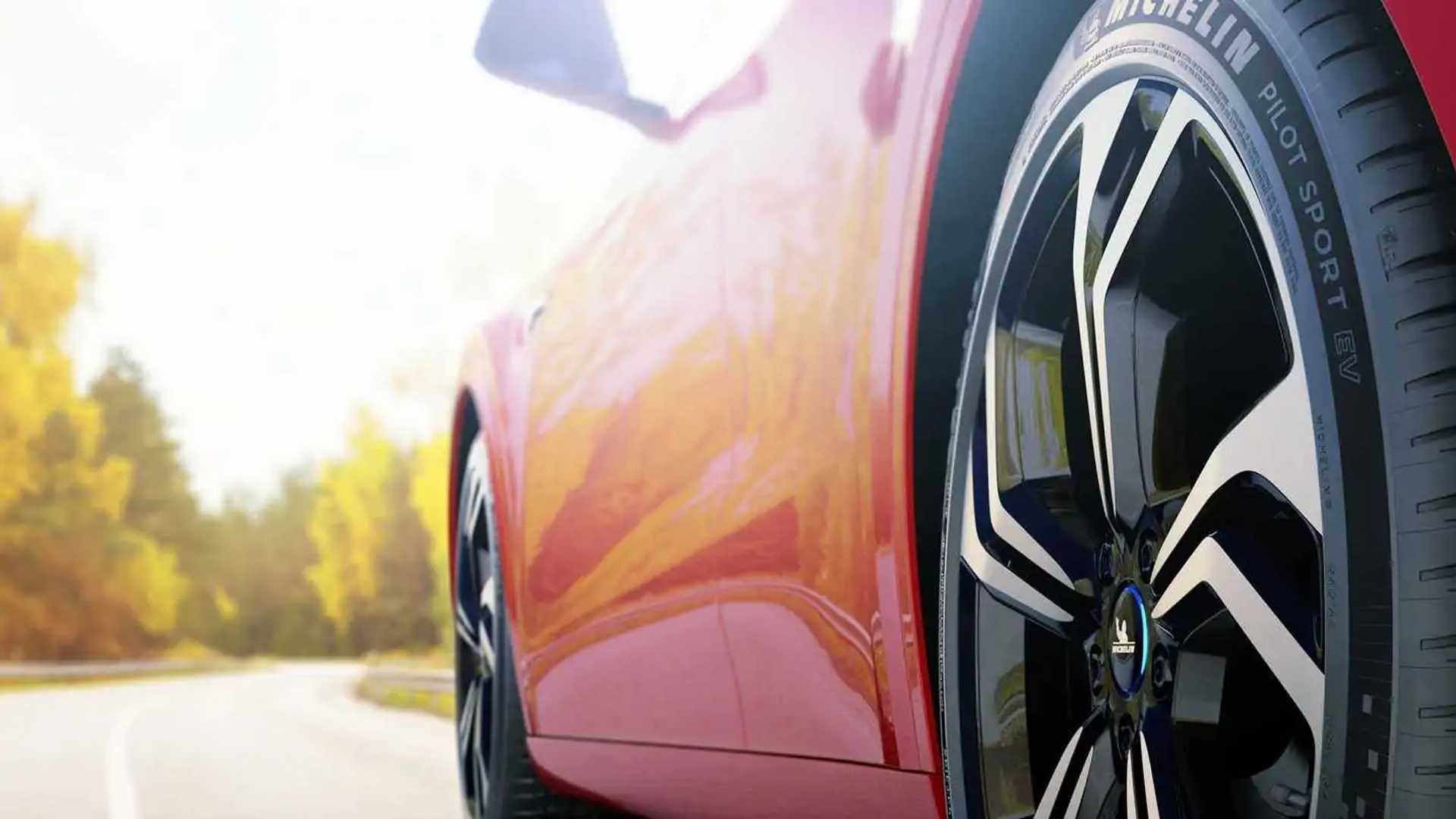
Another significant aspect of EV-specific tires is noise suppression. Given the near-silent operation of electric powertrains, tire roar becomes much more noticeable inside the cabin. To counteract this, some EV tires integrate acoustic foam within their structure to absorb sound. Michelin, a prominent tire manufacturer, clarifies that while these features enhance the EV driving experience, a quieter tire is not automatically a more durable one, as these characteristics serve distinct purposes.
Michelin, for example, has reported substantial durability improvements across its newer tire lines, specifically designed to cope with the increased weight and instantaneous torque demands of electric vehicles. However, it is not always mandatory to opt for an EV-specific tire. ADAC advises that standard tires, provided they meet the vehicle’s required specifications, including crucial parameters like dimensions and load capacity, can be perfectly suitable for electric cars.
Maximising the Lifespan of Your EV Tires
While the evidence suggests that EVs can wear tires faster, drivers have considerable influence over their electric vehicle tire longevity. The practical advice for extending tire life on an EV largely mirrors the best practices for any car, albeit with heightened importance given the unique characteristics of electric vehicles.
Key among these is driving style. Smooth accelerator inputs, avoiding aggressive jackrabbit starts, and gentle, progressive braking (which is also efficient for regenerative braking) can significantly reduce stress on the tires. Maintaining the manufacturer’s recommended tire pressures is paramount, as under-inflated or over-inflated tires can lead to uneven wear and reduced lifespan.
Regularly checking for signs of uneven wear and diligently following the manufacturer’s recommendations for tire rotation intervals are also vital practices. Tire care guidance from Michelin specifically highlights that both driving style and consistent tire rotation schedules can make a substantial difference in overall tire longevity. When the time comes to purchase new tires for an EV, consumers should consider a balance of factors, including expected lifespan, wet and dry grip performance, and how the tire’s rolling resistance might impact the vehicle’s range.
Conclusion: A Nuanced Reality of EV Tire Wear
The notion that electric vehicles wear tires faster is not a myth; it is a reality supported by various studies and real-world observations. The additional weight of battery packs and the instant, potent torque delivery are undeniable physical factors that contribute to increased tire degradation.
However, the extent of this accelerated EV tire wear is highly variable. It is profoundly influenced by the specific vehicle model, the quality and type of tires fitted (including specialised EV tires), and critically, the driver’s habits. Just as with any vehicle, frequently flooring the accelerator and braking harshly will inevitably lead to earlier tire replacement. Ultimately, how often an EV owner needs to replace their tires depends on a confluence of vehicle design, tire technology, and individual driving behaviour.
Frequently Asked Questions (FAQ) about EV Tire Wear
Q1: Why do electric vehicles tend to wear tires faster?
Electric vehicles typically weigh more due to heavy battery packs, increasing stress on tires. Additionally, their instant, high torque delivery can cause greater friction and wear during acceleration and braking. These factors combine to accelerate tire degradation compared to lighter, less torquey combustion engine cars.
Q2: How much faster do EV tires wear out compared to conventional car tires?
Studies suggest varied rates, ranging from approximately 20% to 27% higher tread wear in controlled tests, and up to 22% fewer miles between replacements in fleet data. Some estimates indicate 35-62% shorter lifespans, but these often involve confounding factors like different driving routes. Weight is often cited as the primary differentiator.
Q3: What role does driving style play in EV tire longevity?
Driving style is a significant factor. Aggressive acceleration, rapid deceleration, and hard cornering significantly increase tire wear on any vehicle, and this effect is amplified in high-torque EVs. Smooth driving habits—gentle acceleration and gradual braking—are crucial for maximising an EV tire’s lifespan.
Q4: Are EV-specific tires necessary for electric vehicles?
EV-specific tires are designed to handle the unique demands of electric vehicles, including extra weight, high torque, and noise reduction. While not always strictly necessary, they can offer improved durability and range. Standard tires meeting the vehicle’s load capacity and other specifications can also be suitable.
Q5: What maintenance tips can extend the life of EV tires?
To extend EV tire life, maintain recommended tire pressures consistently, rotate tires regularly according to the manufacturer’s schedule, and frequently inspect them for uneven wear. Avoiding sudden acceleration and braking also contributes significantly to overall tire longevity.
Q6: Does regenerative braking affect EV tire wear?
While the original article does not explicitly detail regenerative braking’s impact, EVs’ overall braking forces (which include regenerative aspects) contribute to tire wear. Smooth use of regenerative braking and conventional brakes, as part of an overall gentle driving style, minimises stress on the tires, promoting longer life.
Q7: How do manufacturers design tires specifically for EVs?
Manufacturers design EV tires with reinforced structures to manage increased weight, unique rubber compounds for enhanced durability and lower rolling resistance (for range), and often incorporate sound-absorbing materials like acoustic foam to reduce cabin noise in the absence of engine sound.
Q8: Should I prioritize durability, grip, or range when buying new EV tires?
When selecting new EV tires, it is advisable to consider a balanced approach. Prioritize tires that offer a good combination of durability to withstand EV characteristics, sufficient grip for safety, and low rolling resistance to maintain optimal range. Consult tire reviews and specifications to find the best fit for your vehicle and driving needs.