
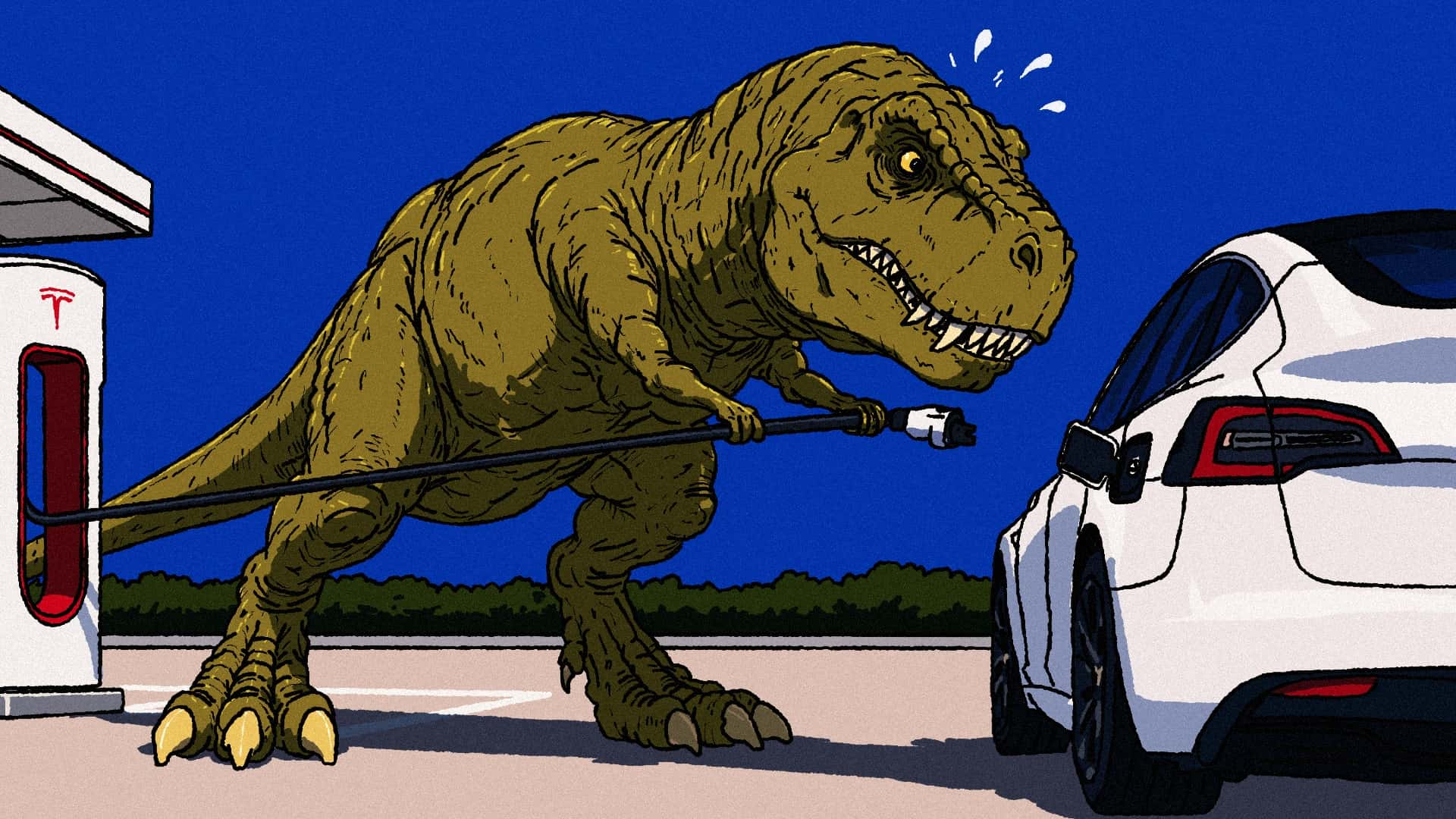
A persistent misconception circulated by critics of electric vehicles (EVs) suggests that their environmental impact is comparable to, or even worse than, that of gasoline-powered cars. This argument often hinges on the premise that charging EVs using electricity generated from fossil fuels merely shifts emissions from tailpipes to power plants, negating any perceived benefits. However, a closer examination of the data from rigorous scientific studies unequivocally debunks this claim, demonstrating that electric vehicles consistently offer a significantly cleaner alternative.
As the global energy landscape evolves and grids progressively integrate more renewable sources, the environmental advantages of EVs continue to grow. This article will delve into the scientific rationale behind why electric vehicles are, in fact, a cleaner transportation solution, even when considering the current electricity generation mix.

Key Takeaways
- Electric vehicles are fundamentally more efficient than internal combustion engine (ICE) cars, converting approximately 90% of energy into motion compared to just 12-30% for gasoline engines.
- Studies by MIT and the Union of Concerned Scientists confirm that EVs emit 40-60% fewer lifecycle emissions than gas vehicles across the U.S., even in regions with carbon-intensive electricity grids.
- The electricity grid is undergoing continuous decarbonization, with wind and solar power rapidly increasing their share, meaning EVs become progressively cleaner with each passing year.
- While EV manufacturing incurs an initial ‘carbon debt,’ this is typically offset by reduced driving emissions within one to two years, a payback period that is consistently shortening.
The Fundamental Efficiency Advantage of Electric Vehicles
At the core of the electric vehicle’s environmental superiority lies its inherent efficiency. Electric motors are remarkably more effective at converting stored energy into kinetic energy (forward motion) compared to the internal combustion engines found in traditional gasoline cars. This fundamental difference in energy conversion efficiency is a primary driver of the reduced environmental impact of EVs.
Internal combustion engines are, by design, highly inefficient machines. A significant portion of the chemical energy contained within a gallon of gasoline is not utilized for propulsion. Instead, it is lost as waste heat through the engine block, exhaust system, and cooling mechanisms. This energy dissipation means that much of the fuel’s potential is squandered, contributing nothing to the vehicle’s movement.
Even the most advanced and ultra-efficient gasoline engines, such as those found in sophisticated hybrid vehicles like the Toyota Prius Plug-In Hybrid, achieve only about 30% efficiency in optimal conditions. For the average conventional gasoline engine, this figure can drop dramatically, sometimes as low as 12%. This implies that for every unit of energy in gasoline, only a small fraction actually moves the vehicle forward, while the vast majority dissipates as heat.

In stark contrast, electric motors boast an efficiency of approximately 90%. This means nearly all the electrical energy stored in an EV’s battery is directly translated into motive force, with minimal energy loss. This extraordinary efficiency is a game-changer for reducing overall energy consumption and, consequently, emissions throughout the vehicle’s operational life.
Consider, for instance, a Tesla Model S equipped with a 100 kWh battery pack. This energy capacity is roughly equivalent to just three gallons of gasoline. Yet, thanks to the superior efficiency of its electric powertrain, this vehicle can achieve an impressive range of 410 miles on a single charge. This vivid comparison underscores how electric vehicles achieve the same amount of work—transporting passengers and goods—with significantly less energy input, thereby leading to a smaller environmental footprint.
Unpacking Lifecycle Emissions: EVs Outperform Gas Cars
The debate surrounding the environmental impact of electric vehicles often necessitates a comprehensive analysis of ‘lifecycle emissions,’ which accounts for all greenhouse gas emissions associated with a vehicle, from its manufacturing and fuel/electricity production to its operation and eventual disposal. Another critical metric is ‘well-to-well emissions,’ which specifically tracks emissions from the extraction of raw energy (oil or primary energy for electricity) through to its use in the vehicle.
Insights from MIT Research
Researchers at the Massachusetts Institute of Technology (MIT) conducted an extensive study examining the lifecycle emissions of various vehicle types across the United States. Their findings revealed that electric vehicles consistently emit between 40% and 60% fewer lifecycle emissions compared to their gasoline-powered counterparts. This significant reduction highlights the substantial environmental benefit of transitioning to electric transportation.
Crucially, the MIT study extended its analysis to regions within the U.S. that rely heavily on carbon-intensive energy sources, such as natural gas and coal, for electricity generation. Even in these areas, where the electricity mix is considered ‘dirtier,’ electric vehicles maintained an environmental advantage. The researchers concluded, “Even with the country’s most carbon-intensive electricity mix, however, BEVs do not raise lifecycle emissions compared to ICEVs.” This finding directly counters the argument that EVs are just as bad if charged from fossil fuel power.
Union of Concerned Scientists Corroborates Findings
Further reinforcing these conclusions, a 2022 study by the Union of Concerned Scientists (UCS) delved into the full well-to-well emissions picture for both electric and gasoline vehicles. This comprehensive analysis considered emissions generated not only from vehicle operation but also from the manufacturing processes of EVs, the transportation of fuel to power plants, the extraction of energy resources, and for gasoline cars, the extraction, refining, and transportation of crude oil.
The UCS research unequivocally supported the MIT findings, concluding that electric vehicles are demonstrably cleaner. The study stated, “Over 90 percent of people in the United States live in regions where driving the average EV produces lower emissions than the most efficient gasoline vehicle on the market today (59 miles per gallon).” This powerful statement indicates that a typical EV, regardless of where it operates in most of the U.S., surpasses the environmental performance of even highly optimized gasoline vehicles.
The 59 miles per gallon benchmark cited by the UCS is particularly noteworthy because it exceeds the efficiency of many renowned hybrid vehicles. For instance, the widely acclaimed Toyota Prius, recognized as one of America’s most efficient hybrids, achieves approximately 57 mpg. The fact that the average EV surpasses this figure, and often relies on an electric motor for its best efficiency, underscores the inherent advantage of electric propulsion.
While a tiny fraction of the U.S. population might reside in areas where certain hybrid vehicles could temporarily demonstrate a marginally cleaner profile, this scenario is rare and, critically, transient. Data consistently suggests that the grid’s ongoing decarbonization will swiftly eliminate these minor discrepancies, further solidifying the EV’s environmental lead. Moreover, a purely gasoline-powered vehicle, regardless of location, is consistently outperformed by its electric equivalent in terms of emissions.
A Future of Progress: The Decarbonizing Electricity Grid
A crucial factor often overlooked by electric vehicle skeptics is the dynamic nature of electricity generation. Unlike the relatively static emissions profile of gasoline, the carbon intensity of the electrical grid is continuously improving. This ongoing decarbonization means that electric vehicles become progressively cleaner each year they are driven, a distinct advantage over their fossil fuel counterparts.
The transformation of the electricity grid towards cleaner energy sources has been substantial. In 2005, the combined contribution of wind and solar power to the nation’s electricity supply was less than 1%. A decade later, by 2015, these renewable sources accounted for approximately 5% of total power generation. By last year, wind and solar had dramatically increased their share, providing a significant 17% of the country’s electricity. This trajectory highlights a clear and accelerating shift towards renewables.
Currently, solar and wind power represent the fastest-growing energy sources in the United States. This rapid expansion is not merely driven by environmental mandates but also by economic realities. Even when accounting for the necessary grid storage solutions to ensure continuous power supply, building new solar power facilities is now more cost-effective per kilowatt-hour than constructing new fossil fuel power plants. This economic incentive further propels the decarbonization trend, ensuring a cleaner future for electric vehicles.
This progressive shift has profound implications for the environmental footprint of electric vehicles. As the grid integrates more renewable energy, every EV charging session becomes inherently cleaner. Marco Miotti, one of the authors of the MIT study, affirmed this trend, stating, “While we found that the electricity mix is a big driver of the spatial variation in emissions savings of EVs, the electricity grid is decarbonizing everywhere. As that happens, emissions savings across space will become more homogenous for EVs, but the differences across one driver to another will remain.” This means that while regional differences in grid cleanliness exist, the overall trend is toward universal improvement.
Environmental Debt and Payback Period
Another important consideration in the lifecycle analysis of electric vehicles is the initial ‘environmental debt’ incurred during their manufacturing process. EVs, particularly due to their battery production, typically have a higher carbon footprint at the point of manufacture compared to conventionally powered gasoline cars. However, this initial deficit is rapidly overcome by the substantial reductions in operational emissions.
In contrast to electric vehicles, gasoline cars tend to be less carbon-intensive to build. Yet, the longer a gasoline car is driven, the greater its cumulative environmental damage due to continuous tailpipe emissions. EVs operate on an inverted paradigm: they begin with a larger manufacturing footprint, but this ‘debt’ is efficiently paid off through their dramatically lower driving emissions. Studies show that within one to two years of operation, an EV’s reduced emissions fully offset its initial manufacturing impact, effectively clearing its environmental debt.
From that point onward, every year an electric vehicle is on the road, it offsets an increasing amount of emissions that an equivalent gasoline car would have produced. Furthermore, this payback period is continually shortening. Advances in manufacturing processes are making EV production more efficient and increasingly reliant on renewable energy, thereby decreasing the original carbon debt. Concurrently, the accelerated decarbonization of electricity grids ensures that EVs offset emissions faster than ever before.
For example, purchasing a used electric vehicle with 17,000 miles on its odometer means that its initial carbon deficit from manufacturing has already been repaid through its prior operational emissions. When such a vehicle is subsequently charged with 100% renewable energy, its environmental impact during operation becomes virtually zero, further widening the environmental gap between electric and gasoline propulsion.
The Path to Zero-Emission Driving
The evidence overwhelmingly supports the conclusion that electric vehicles are a significantly cleaner choice for personal transportation than gasoline-powered cars. The inherent efficiency of electric motors, coupled with a continuously decarbonizing electricity grid, ensures that the environmental advantages of EVs are not only present today but are also rapidly expanding.
While no technology is entirely without environmental considerations, the trajectory for electric vehicles is one of constant improvement. The gap in environmental impact between EVs and gasoline cars is steadily widening, pushing us closer to a future where individual transportation contributes minimal, if any, operational emissions.
For those who dismiss the possibility of truly clean driving, the ongoing advancements in renewable energy and electric vehicle technology offer a compelling counter-narrative. The reality of zero-emissions driving is not a distant aspiration but an increasingly attainable present, fundamentally redefined by the widespread adoption and continuous improvement of electric vehicles.
Frequently Asked Questions (FAQ)
Are electric vehicles truly cleaner than gasoline cars, considering electricity generation?
Yes, comprehensive studies confirm that electric vehicles produce significantly fewer lifecycle emissions than gasoline cars, even when charged from grids relying on fossil fuels. Their superior efficiency ensures less overall energy consumption and, therefore, fewer emissions than burning gasoline.
What makes electric vehicle motors more efficient than internal combustion engines?
Electric motors convert roughly 90% of electrical energy into motion, while gasoline engines lose a large portion (70-88%) as waste heat. This direct energy conversion in EVs minimizes energy loss, making them inherently more efficient and environmentally friendly.
How does the ‘dirty grid’ argument hold up against scientific research?
Research from institutions like MIT and the Union of Concerned Scientists demonstrates that even in regions with the most carbon-intensive electricity mixes, electric vehicles still have a lower environmental impact due to their high efficiency and the overall energy balance.
What are ‘lifecycle emissions’ and ‘well-to-well emissions’ in the context of EVs?
Lifecycle emissions account for all greenhouse gases from a vehicle’s manufacturing, operation, and disposal. Well-to-well emissions specifically track emissions from raw energy extraction (oil or electricity source) through to the vehicle’s use, providing a holistic environmental picture.
Will electric vehicles become even cleaner in the future?
Absolutely. The global electricity grid is rapidly decarbonizing, with increasing integration of renewable sources like wind and solar. As the grid becomes cleaner each year, the operational emissions associated with charging electric vehicles will continue to decrease, enhancing their environmental benefits.
What is the ‘carbon debt’ of an EV, and how quickly is it paid off?
The ‘carbon debt’ refers to the higher initial emissions from manufacturing an EV, primarily due to battery production. However, this debt is typically offset within one to two years of driving, as EVs produce significantly lower operational emissions compared to gasoline cars.
Are there any regions where hybrid cars are cleaner than EVs?
While a very small fraction of the U.S. population might reside in areas where certain efficient hybrids could show a marginal, temporary advantage, the data indicates that electric vehicles consistently outperform purely gasoline cars. Grid decarbonization is quickly eliminating these minor regional discrepancies for hybrids.