
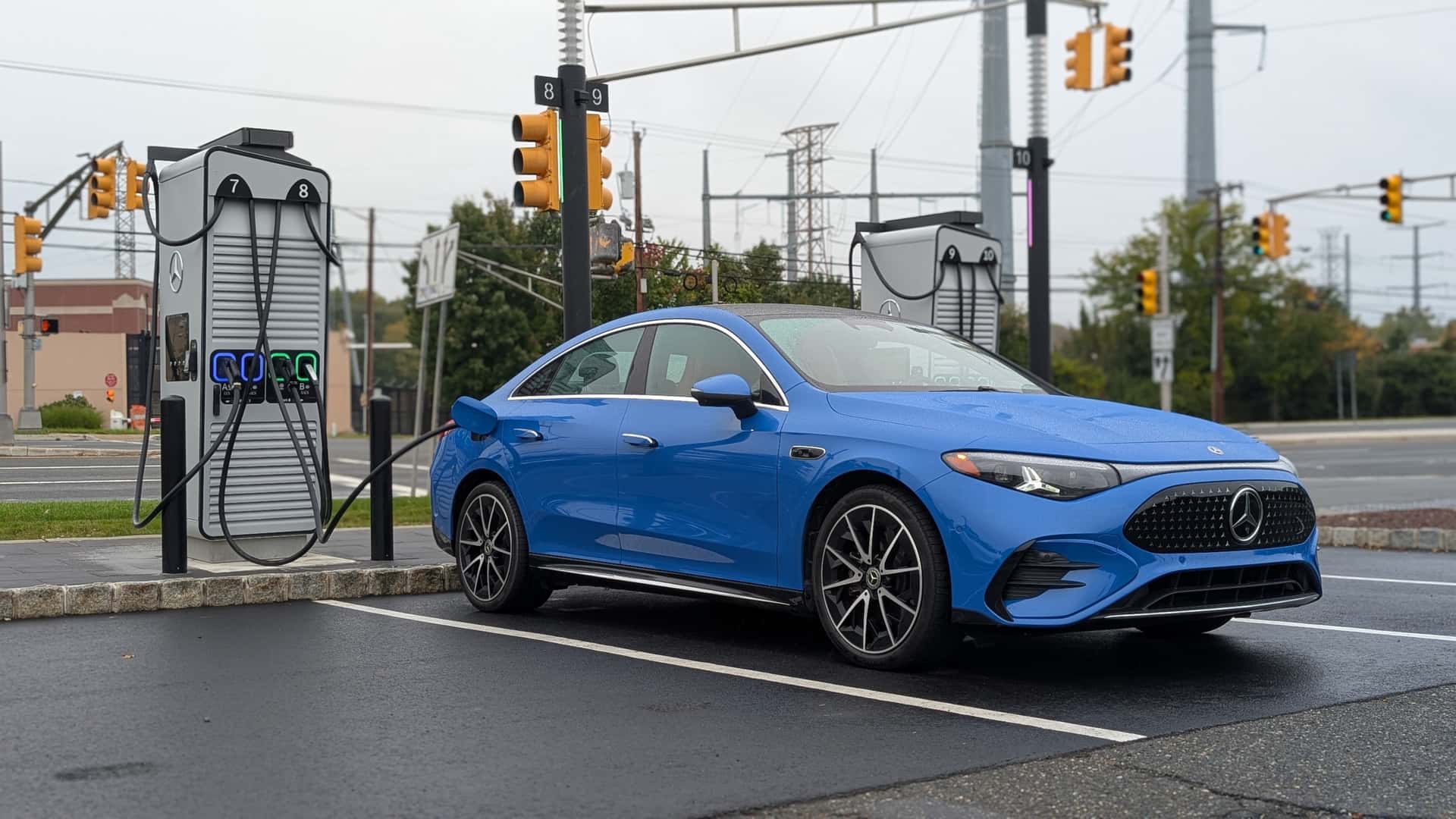
The United States has achieved a significant milestone in its electric vehicle (EV) infrastructure, officially surpassing 80,000 public fast charging ports nationwide. This expansion underscores a continued commitment to developing robust charging networks, even as the pace of deployment experienced a slight deceleration in the third quarter of 2026. Data from the charging data platform Paren indicates that while the quarterly additions dipped compared to the previous year, the overall network growth remains substantial, with a projected stronger performance anticipated in the upcoming fourth quarter.
The journey to over 80,000 public fast charging ports reflects a broader trend towards enhancing charging capabilities across the country. Despite a cooling in EV sales and the impact of recent U.S. government policy rollbacks affecting EV-friendly initiatives, charging providers have continued to invest in the future. These investments include not only increasing the number of stations but also focusing on higher-powered installations designed to reduce charging times significantly.
Key Takeaways
- The U.S. public fast-charging network has expanded beyond 80,000 ports for the first time.
- Deployment of new public fast charging ports saw a 12% year-over-year decline in Q3 2026, alongside a 20% drop in new stations.
- A record 17.6 million public fast-charging sessions were recorded in July alone, highlighting increasing user adoption.
- Tesla remains the largest contributor to new fast-charging capacity, despite its own deployment slowdown.
- There is a notable shift towards higher-powered charging stations, with 73% of new ports delivering at least 250 kilowatts.
The National Landscape: Surpassing 80,000 Public Fast Charging Ports
In the third quarter of 2026, the United States saw the addition of 4,106 new public fast charging ports across 664 stations. This brought the total number of public fast charging ports past the 80,000 mark for the first time, a clear indicator of the nation’s progressing EV ecosystem. This growth is critical for supporting the rising number of electric vehicles on American roads and addressing concerns related to range anxiety among prospective buyers.
While the quarterly addition of public fast charging ports experienced a 12% decline in ports and a 20% drop in stations compared to the same period last year, the overall expansion was deemed substantial. Many of these newly installed public fast charging ports boast higher charging power and are strategically located at convenient sites such as gas stations and travel centers. This placement aims to seamlessly integrate EV charging into existing travel habits, making long-distance journeys more feasible for electric vehicle owners.
Q3 Deployment Trends: A Closer Look at Growth Dynamics
The slowdown in the deployment of public fast charging ports during Q3 2026 was largely influenced by several factors. A primary driver was a moderation in electric vehicle sales following shifts in U.S. government policies. This market adjustment likely prompted some charging network providers to recalibrate their expansion strategies, impacting the short-term rate of infrastructure growth.
Specifically, the Tesla Supercharger network, historically a dominant force in charging infrastructure, accounted for a significant portion of this slowdown. Tesla added 1,287 new public fast charging ports between July and September, which was 533 fewer than its contribution during the same period in the previous year. This reduction signals a potential adjustment in Tesla’s rapid deployment strategy, possibly in response to market changes or a focus on newer initiatives.
Sectoral Contributions: Key Players in Infrastructure Expansion
Despite its decreased rate of deployment, Tesla maintained its position as the country’s largest contributor to new fast-charging capacity in the third quarter. This highlights the sheer scale of its existing network and ongoing investment. Interestingly, Tesla partly mitigated its internal slowdown by adding 124 public fast charging ports through Superchargers sold to third-party businesses, an emerging revenue stream for the automaker.
Beyond Tesla, other entities are making significant strides. Ionna, an automaker-led consortium, emerged as the second-largest contributor, nearly tripling its year-over-year rollout with 378 new public fast charging ports. The consortium aims to establish 30,000 fast chargers across North America by the end of the decade, making its current acceleration particularly noteworthy. Walmart also played a substantial role, rounding out the top three contributors with 344 new public fast charging ports, leveraging its vast retail footprint for convenient access.
Geographic Distribution: Pockets of Progress and Persistent Gaps
Analyzing the regional distribution of new public fast charging ports reveals interesting patterns. California, a long-standing leader in EV adoption and infrastructure, continued its trend by opening 87 new stations in the third quarter. Following California, Republican-governed states demonstrated considerable growth, with Texas adding 66 stations, and North Carolina and Georgia each adding 26. This indicates a broadening appeal and investment in EV infrastructure beyond traditionally liberal states.
Collectively, California, Texas, Florida, Illinois, and New York accounted for 42% of all new public fast charging ports opened last quarter, showcasing concentrated development in key economic and population centers. At the metropolitan level, Dallas-Fort Worth and Houston experienced the largest increases in charging infrastructure, followed by Oklahoma City and Kansas City. However, a significant disparity remains, with rural areas accounting for only 10% of all new public fast charging ports. This imbalance underscores the ongoing challenge of extending reliable fast charging to less densely populated regions, which is crucial for encouraging wider EV adoption.
Advancing Technology: The Era of Ultra-Fast Charging
A pivotal trend identified in Paren’s Q3 report is the pronounced shift towards higher-powered public fast charging ports. Networks are increasingly prioritizing stations that deliver more power, aiming to reduce charging times and get drivers back on the road more quickly. This focus addresses one of the primary concerns of EV owners: the time spent charging.
In the third quarter, approximately 73% of the new public fast charging ports could deliver at least 250 kilowatts (kW), a significant increase from 60% during the same period last year. Stations capable of delivering 400 kW have become the most popular choice for new installations, indicating a clear industry direction. Tesla is also at the forefront of this technological advancement, expanding the rollout of its V4 cabinets, which are capable of delivering an impressive 500 kW. Currently, Tesla operates 42 locations with 487 ports offering 500 kW charging capabilities.
Beneficiaries of High-Powered Charging
This technological leap is particularly beneficial for a new generation of premium electric vehicles designed to leverage ultra-fast charging speeds. Models such as the Lucid Gravity, Porsche Cayenne Electric, and BMW iX3 can all achieve peak charging rates of 400 kW. Similarly, the Mercedes-Benz GLC and Volvo EX60 can top out at around 370 kW. Enthusiasts and early adopters of the Tesla Cybertruck have reported experiencing charging speeds of 500 kW on the new V4 Superchargers.
It is important to note that actual charging speeds are influenced by various factors, including battery temperature and the vehicle’s current state of charge. Nevertheless, the availability of these high-powered public fast charging ports significantly enhances the utility and convenience of these advanced EVs. The benefits extend beyond luxury models, as more affordable vehicles like the Rivian R2 and 800-volt architecture models such as the Hyundai Ioniq 5 and Kia EV6 can also take full advantage of these advanced charging capabilities.
Looking Ahead: The Future of EV Charging Convenience
The increasing prevalence of high-powered public fast charging ports underscores a clear industry vision: making EV charging faster, more convenient, and less intrusive, particularly during road trips. Drivers should not need to spend prolonged periods at a charging station when both their vehicles and the infrastructure can support much quicker turnaround times. The reported record of 17.6 million EV charging sessions nationwide in July, coinciding with a summer travel surge, indicates that consumers are actively utilizing and benefiting from the expanding network.
While the third-quarter slowdown in deployment warrants attention, the long-term trend points towards a more robust and efficient charging ecosystem. Continued investment in both the quantity and quality of public fast charging ports will be essential to sustain the momentum of EV adoption and ensure a seamless experience for electric vehicle drivers across the United States. The focus on strategic locations and advanced technology sets a positive trajectory for future growth and accessibility.
FAQ Section
How many public fast charging ports are there currently in the U.S.?
The United States now has over 80,000 public fast charging ports. This significant milestone was reached despite a slight deceleration in the rate of new installations during the third quarter of 2026, showcasing ongoing expansion efforts in the electric vehicle infrastructure.
Why did the deployment of new fast-charging ports slow down in Q3 2026?
The slowdown in Q3 2026 was primarily attributed to a cooling in electric vehicle sales and the U.S. government’s rollback of certain EV-friendly policies. These factors likely influenced investment decisions and deployment strategies among charging network providers, leading to a temporary dip in installation rates.
Which companies contributed most to new fast-charging capacity in Q3?
Tesla remained the largest contributor to new fast-charging capacity in Q3 2026, despite a slowdown in its own deployment. Ionna, an automaker consortium, ranked second with a significant increase in its rollout, followed by Walmart, which also made substantial additions to the network.
Are new charging stations more powerful than older ones?
Yes, there’s a strong trend towards higher-powered charging stations. In Q3 2026, 73% of new public fast charging ports delivered at least 250 kilowatts (kW), up from 60% the previous year. Stations capable of 400 kW are becoming the most popular choice for new installations, indicating a focus on faster charging speeds.
Which regions are seeing the most growth in charging infrastructure?
California continues to lead in new charging installations. Additionally, Republican-governed states like Texas, North Carolina, and Georgia showed significant growth. At the metro level, Dallas-Fort Worth and Houston experienced the largest increases, highlighting concentrated development in key urban and suburban areas across different states.
What does the increase in ultra-fast charging mean for EV drivers?
The rise of ultra-fast public fast charging ports, offering 250 kW, 400 kW, or even 500 kW, means significantly reduced charging times for compatible EVs. This enhancement addresses range anxiety, makes long-distance travel more convenient, and aligns with the capabilities of advanced EV models, making the overall EV ownership experience much more efficient.