
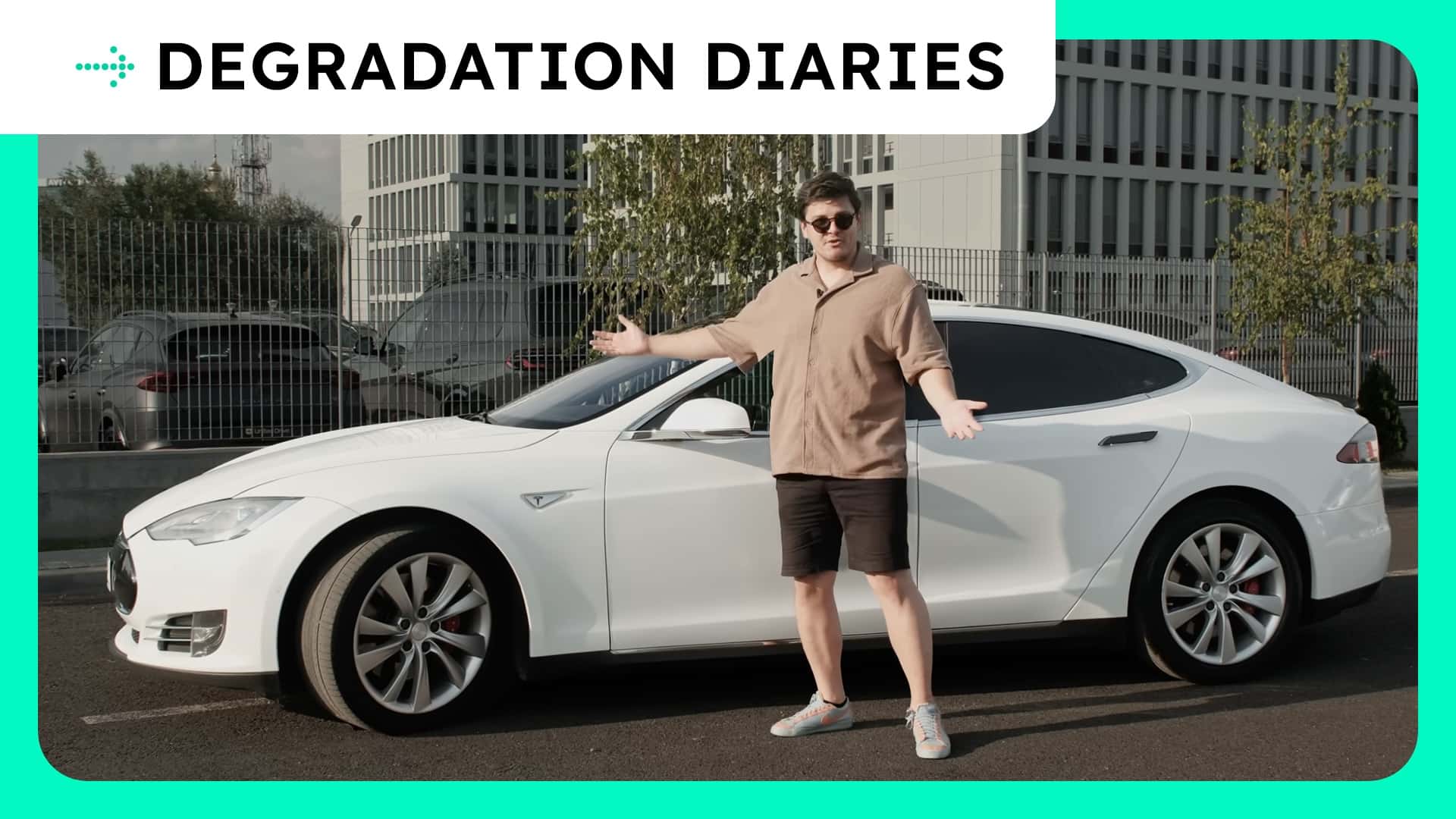
Early models of the Tesla Model S, once symbols of cutting-edge automotive luxury, are now entering a fascinating phase of their lifecycle. These vehicles, which commanded six-figure prices at their inception, are now accessible for significantly less than the cost of a new mass-market sedan. Despite their dramatic depreciation, many high-mileage Model S sedans continue to offer substantial passenger and luggage capacity, robust performance, and sufficient real-world range to serve as dependable daily family cars.
A primary concern for prospective buyers of a pre-owned electric vehicle (EV), particularly an older one like an early Model S, revolves around battery health. The common assumption is that significant range loss would render such vehicles impractical, necessitating a prohibitively expensive battery pack replacement. However, emerging data and real-world observations paint a far more optimistic picture, challenging these conventional apprehensions.

Key Takeaways: Used Tesla Model S Longevity
- Significant Depreciation: Early Model S vehicles, once priced at over $70,000 to $110,000, are now available for as little as $10,000 to $16,850 for 2015 models.
- Remarkable Battery Health: Despite age and high mileage (e.g., over 10 years and 200,000 miles), many batteries retain 85% to 90% of their original capacity, providing approximately 200 miles (320 km) of real-world range.
- Lower Replacement Risk: Contrary to popular belief, battery replacement is not the most immediate or common issue for well-maintained early Model S units, suggesting robust engineering.
- Free Supercharging (SC01): A highly desirable and transferable ‘SC01’ option allows lifetime complimentary Supercharging, significantly reducing running costs, particularly for frequent travellers.
- Pre-Purchase Diligence is Crucial: While batteries hold up well, buyers must conduct thorough inspections for other luxury car components, such as door handles, screens, and air suspension, which can incur substantial repair costs.
The Shifting Landscape of Used Tesla Model S Pricing
The journey of the Tesla Model S from a groundbreaking luxury EV to an affordable pre-owned option highlights a unique aspect of the automotive market. These early electric sedans, which defined a new era of personal transport, have experienced a dramatic price realignment. This shift has made high-performance, spacious electric vehicles accessible to a much broader demographic, presenting an intriguing proposition for budget-conscious buyers.
For instance, data from Kelley Blue Book indicates that most 2015 Model S variants are currently valued between approximately $11,500 and $16,850 when purchased from dealers, with private seller prices starting from just over $10,000. These figures represent a stark contrast to their original retail prices, which ranged from $70,000 to $110,000 in the United States and even higher in European markets. This substantial reduction in entry cost makes the used Tesla Model S a compelling consideration for those seeking premium EV experience without the premium price tag.
Unveiling Battery Longevity: A Surprising Reality
The predominant concern surrounding any older electric vehicle is the degradation of its high-voltage battery pack. Fears of diminished range and costly replacements are often cited as major deterrents. While vehicles like the Nissan Leaf have, in some instances, amplified these anxieties regarding EV battery health, the Tesla Model S presents a counter-narrative of unexpected resilience and durability.

Real-World Data on Battery Capacity
Extensive data from surviving high-mileage Tesla Model S vehicles suggests that their batteries are performing remarkably well over time. Even examples exceeding a decade in age and having accumulated around 200,000 miles (approximately 320,000 kilometers) typically maintain between 85% and 90% of their original battery capacity. This impressive retention rate is contingent on the car’s usage history and charging patterns.
Such a level of degradation translates to a practical real-world driving range of approximately 200 miles (320 km). This figure, while not matching the latest generation of EVs, remains entirely acceptable for most daily driving requirements and occasional longer journeys. This sustained performance ensures that an early used Tesla Model S can still function effectively as a primary vehicle for many individuals and families.
A Case Study in Endurance: The 160,000-Mile Model S P85D
A notable illustration of this battery endurance is a 2015 Model S P85D, which had accrued nearly 160,000 miles (approximately 260,000 kilometers) on its original battery pack. Despite its significant mileage and age, a battery health estimation via the Tessie app indicated that the pack retained approximately 86% of its initial capacity. While this figure is an estimate, it aligns consistently with verified health tests conducted on other Model S vehicles with similar or even higher mileages.
This particular vehicle demonstrated a highway range of around 186 miles (300 km), with even greater range achievable under more favourable driving conditions. Originally, this car was rated for up to 305 miles (491 km) NEDC range and a more conservative 253-mile (407 km) EPA rating. The sustained performance, including its formidable 691 horsepower, underscores that the vehicle’s acceleration and dynamic capabilities remain largely unimpaired, often outperforming many contemporary vehicles in its class.
The Critical Check: Ensuring Battery Health Before Purchase
Despite the generally positive outlook on early Model S battery longevity, it is paramount for any prospective buyer of a used Tesla Model S to conduct a thorough pre-purchase inspection of the battery. Battery condition is influenced by numerous variables, meaning two seemingly identical vehicles manufactured concurrently could exhibit vastly different degradation levels due to disparate usage patterns and charging habits.
Beyond Odometer and Estimated Range
Reliance solely on the odometer reading or the vehicle’s displayed range estimate can be misleading. While an acceptable estimated range is a positive indicator, it does not provide a comprehensive assessment of the battery’s overall health and remaining capacity. A deeper dive into the vehicle’s history and a dedicated diagnostic evaluation are essential for an informed purchasing decision.
Pre-Purchase Inspection Protocols
Buyers should specifically inquire about any prior replacements of the battery pack or either drive unit, requesting corresponding invoices or service records wherever possible. These are substantial and costly repairs, and original owners typically retain detailed documentation. A comprehensive test drive is also crucial. It should ideally begin with a reasonably high state of charge, involve monitoring consumption and predicted range, and critically, include a Supercharger stop. An older Model S that performs normally but exhibits unusually slow charging could indicate an underlying and potentially expensive battery issue.
Observing an owner’s charging habits can also provide insight. For instance, the owner of the 2015 P85D often limits daily charging to 80% and initiates driving shortly after charging to 100%, avoiding prolonged periods with a full battery. Furthermore, parking the vehicle overnight with an extremely low state of charge is generally avoided. These practices are commonly understood to contribute positively to long-term battery health.
The Allure of Transferable Free Supercharging (SC01)
One of the most appealing and financially impactful features for certain early Tesla Model S units is the ‘SC01’ option, which grants free lifetime Supercharging transferable to subsequent owners. This benefit fundamentally alters the long-term ownership economics, particularly for drivers who cover substantial distances or frequently rely on fast charging infrastructure.
Understanding the SC01 Advantage
The presence of the SC01 option means the vehicle can utilise Tesla’s Supercharger network without incurring charging fees, even after a change of ownership. This feature significantly offsets the operational costs associated with electric vehicle ownership. For the P85D examined, despite its relatively higher energy consumption compared to newer models (approximately 20% more than a 2024-2025 Model S based on official MPGe ratings), the absence of charging costs makes its efficiency less of a concern. The current owner regularly uses the Supercharger network for a 250-mile (400 km) cross-country commute, reportedly saving thousands in fuel expenses.
This benefit is particularly attractive for apartment dwellers who lack private home charging facilities or for individuals who undertake frequent highway journeys. It is important to note, however, that Tesla’s fair-use policy typically restricts certain commercial applications, such as taxi or rideshare operations, from utilising this free charging benefit unless payment is made.
Identifying and Verifying SC01 Eligibility
Prospective buyers must exercise diligence when purchasing a used Model S advertised with ‘free Supercharging’. Some Tesla charging benefits, like the ‘SC05’ option, were tied to the original owner and do not transfer. Tesla states that the free-charging status can be verified under the “Specs and Warranty” section within the Tesla app; however, a potential buyer can only access this information after being added as a driver by the registered owner. It is therefore crucial to obtain strong confirmation from the seller, including relevant vehicle information and screenshots from the app, before finalising the purchase.
The SC01 option was available on vehicles produced from the inception of Model S production in 2012 through January 2017. To maximise the likelihood of securing this highly sought-after feature, it is generally recommended to focus searches on Model S units manufactured up to the 2016 model year, as the chances of finding a 2017 model with this specific transferable benefit are considerably lower.
Beyond the Battery: Other Maintenance Considerations for Used Model S
While the battery system of an early Model S often proves to be robust, other aspects of these aging luxury vehicles warrant careful consideration. Pre-2017 Model S sedans are complex machines, packed with advanced electronics and intricate mechanical components that, over time, can succumb to wear and tear. Therefore, a comprehensive inspection should extend beyond just the battery.
Common Wear and Tear Components
Known failure points in early Model S vehicles include door handles, which can seize or malfunction; the large infotainment screens; panoramic sunroof mechanisms; climate control systems; and charging port mechanisms. Perhaps one of the most frequently cited issues is with the air suspension components, which can develop leaks. For instance, the P85D examined displayed a minor air suspension leak, causing the front of the vehicle to sag slightly after prolonged parking. While the suspension still functioned normally during driving, leaks can overwork the compressor, potentially leading to further, more extensive failures.
The first-generation MCU1 infotainment computers, present in earlier models, can also feel sluggish by modern standards and are known to have storage-related vulnerabilities. Tesla offers an MCU2 upgrade for some older cars, which significantly modernises the user experience but represents another considerable potential expense unless the previous owner has already undertaken this retrofit.
The Cost of Luxury Maintenance
Despite the attractive entry price, a used Tesla Model S remains a flagship luxury vehicle. Consequently, its maintenance and repair costs will generally align with those of other premium cars from its era. Even seemingly minor issues with sophisticated components can quickly accumulate into substantial repair bills. Therefore, prospective buyers should budget for potential unplanned maintenance costs, understanding that the initial purchase price is only one part of the total cost of ownership.
A Prudent Investment for the Savvy Buyer
Assuming a thorough pre-purchase inspection confirms the health of its battery and major systems, an early used Tesla Model S presents an extraordinary value proposition. It offers an uncommon blend of spaciousness, practicality, and comfort for extended travel, featuring a large hatchback, a functional front trunk, and rear-seat accommodation that remains competitive with many contemporary EVs.
The performance capabilities of these vehicles have not diminished with age. Even non-Performance variants from early production years remain notably swift by current standards, while models like the P85D continue to deliver acceleration that rivals almost anything available for a comparable price in the used market. Aesthetically, the design has aged gracefully; a well-maintained example does not immediately convey its decade-old status. For those desiring a more modern look, a facelifted front end can be retrofitted, further enhancing its contemporary appeal.
While newer electric vehicles undoubtedly offer objective advancements in range, efficiency, and technology, few can match the sheer value proposition of a well-chosen used Tesla Model S. The key lies in diligent research and inspection: verify battery health, test all powered features, allocate funds for potential repairs, and confirm the transferability of any SC01 free Supercharging benefit. For the discerning buyer, the right example of a used Tesla Model S remains one of the most compelling and cost-effective electric vehicle options available today.
Frequently Asked Questions About Used Tesla Model S
1. How much has the price of a used Tesla Model S fallen?
The price of early Tesla Model S sedans has dropped significantly. Vehicles originally costing $70,000 to $110,000 in 2015 can now be found for roughly $10,000 to $16,850, depending on year, mileage, and specifications. This makes them considerably more affordable than many new conventional cars.
2. How well do early Tesla Model S batteries hold up over time?
Early Tesla Model S batteries demonstrate remarkable durability. Many examples over 10 years old and with high mileage (e.g., 200,000 miles) typically retain between 85% and 90% of their original capacity. This translates to a usable real-world range of approximately 200 miles (320 km).
3. What is the ‘SC01’ free Supercharging option, and is it transferable?
The ‘SC01’ option provides free lifetime Supercharging at Tesla Supercharger stations. Crucially, this benefit is transferable to new owners. It was available on Model S vehicles produced from 2012 through early 2017, though models up to 2016 are a safer bet for finding it.
4. What are the key things to inspect before buying a used Tesla Model S?
Beyond battery health, prospective buyers should inspect door handles, infotainment screens (MCU1 vs. MCU2), panoramic roofs, climate control systems, charging port mechanisms, and air suspension components. Request service records for any past replacements of major components like drive units.
5. Are maintenance costs for a used Model S expensive?
Yes, maintenance costs for a used Tesla Model S can be similar to other luxury cars of its era. Despite the low purchase price, issues with sophisticated electronic or mechanical components can lead to significant repair bills. Buyers should budget for potential unplanned maintenance expenses.
6. How can I verify if a used Model S has transferable free Supercharging?
Tesla states the free-charging status is visible under “Specs and Warranty” in the Tesla app. However, buyers can only see this after being added as a driver by the registered owner. Always obtain strong confirmation, including app screenshots or direct verification from the seller, before completing the purchase.