
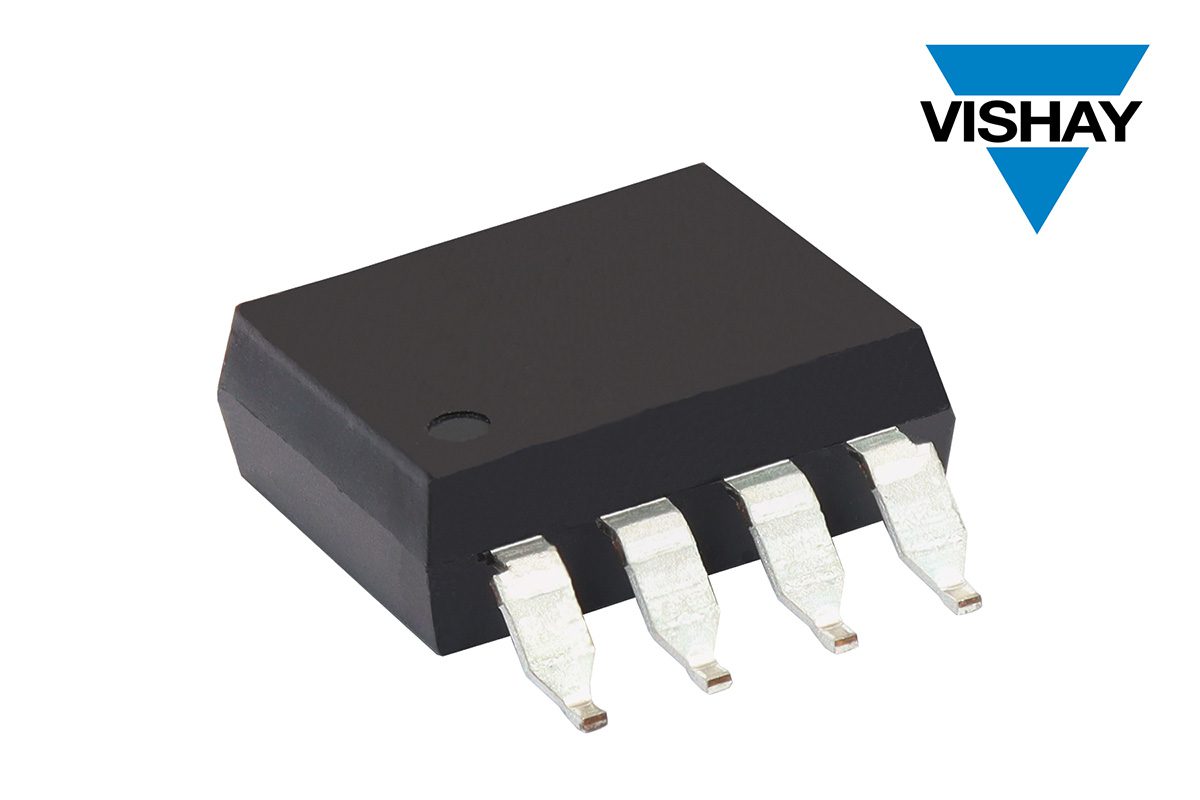
In a significant development for the burgeoning electric vehicle (EV) sector, Vishay Intertechnology, a global leader in discrete semiconductors and passive electronic components, has introduced two new AEC-Q102-qualified optocouplers. These devices, designated VOWA617A and VOWA618A, are engineered to provide robust galvanic isolation crucial for high-voltage EV applications, including on-board chargers, DC/DC converters, and battery management system (BMS) isolation stages.
Launched on May 20, 2026, these optocouplers arrive in a widebody SMD-8 package and distinguish themselves with a superior combination of high creepage distance and an impressive comparative tracking index (CTI). These characteristics are vital for meeting the stringent safety and performance requirements of grid-connected automotive isolation stages.

Key Takeaways
- Vishay’s new VOWA617A and VOWA618A optocouplers are AEC-Q102-qualified for high-voltage EV applications.
- They offer a best-in-class creepage distance of ≥11 mm and a CTI of 600 (Material Group 1), significantly exceeding industry standards.
- Designed for critical functions in on-board chargers, DC/DC converters, and battery management systems, enhancing safety and reliability.
- The devices feature an extended operating temperature range of -40 °C to +125 °C and a junction temperature of +145 °C, suitable for demanding automotive environments.
- These optocouplers provide superior voltage handling capabilities, including 5300 VRMS isolation, setting a new benchmark for EV electronics isolation.
The Critical Role of Galvanic Isolation in Electric Vehicles
Galvanic isolation is a fundamental principle in electrical engineering, ensuring that there is no direct current path between two circuits. In electric vehicles, this separation is paramount for several reasons, primarily related to safety, operational integrity, and signal integrity.
High-voltage systems, common in EVs for propulsion and energy storage, pose inherent risks. Galvanic isolation prevents hazardous voltages from crossing into low-voltage control circuits or, critically, reaching human operators or occupants. It acts as a safety barrier, protecting against electric shock, system damage from faults, and electromagnetic interference (EMI).
Understanding Creepage, Clearance, and CTI
The effectiveness of galvanic isolation is quantified by several key parameters. Creepage distance refers to the shortest path between two conductive parts along the surface of an insulating material. Clearance distance, by contrast, is the shortest distance through air between two conductive parts.
Both distances are critical in preventing arcing and electrical breakdown. The comparative tracking index (CTI) measures the resistance of an insulating material to tracking, which is the formation of a permanently conducting path on its surface due to electrical stress and contamination. A higher CTI indicates superior insulation performance under adverse conditions.
Vishay’s New Optocouplers: A Deep Dive into Enhanced Specifications
The VOWA617A and VOWA618A optocouplers are engineered to address the specific demands of high-voltage EV systems, offering robust performance and enhanced safety margins. Their design focuses on maximizing the integrity of the electrical barrier.
Unmatched Isolation and Creepage Capabilities
A standout feature of Vishay’s new devices is their exceptional creepage distance of ≥11 mm. This figure provides a substantial 38% more margin compared to the typical 8 mm found in many competing solutions. This increased distance directly translates to a greater ability to withstand high voltages without surface arcing or tracking, enhancing the reliability of EV electronics isolation.
Complementing this is a CTI of 600, which grants these optocouplers a Material Group 1 rating—the highest insulation category available. Standard optocouplers typically feature a CTI of 175. This superior CTI, combined with the extended creepage, ensures that the VOWA617A and VOWA618A not only meet but exceed the reinforced insulation requirements for grid-connected equipment, a critical factor for vehicle charging systems.
Key Technical Parameters Overview
The robust specifications of the VOWA617A and VOWA618A underscore their suitability for demanding automotive environments:
- Isolation Voltage (VIORM / VIOWM / VIOTM): These devices boast a working peak isolation voltage (VIORM) of 1500 Vpeak and a working RMS isolation voltage (VIOWM) of 1060 VRMS. The transient isolation voltage (VIOTM) reaches 8000 Vpeak, while the standard isolation voltage is 5300 VRMS. These figures represent a 6% and 19% increase in VIORM and VIOWM, respectively, over Vishay’s previously cited competing devices, signaling a new benchmark in voltage handling.
- Collector-Emitter Voltage: A collector-emitter voltage of 80 V ensures stable operation within control circuitry.
- Current Transfer Ratio (CTR): The devices offer a CTR range of 50%–600%, providing flexibility for various design requirements. Input currents for CTR specification are 5 mA for the VOWA617A and 1 mA for the VOWA618A.
- Operating and Junction Temperatures: Designed for the harsh realities of automotive use, the optocouplers operate reliably across a wide temperature range of −40 °C to +125 °C. The junction temperature capability extends to +145 °C, significantly surpassing typical consumer-grade optocouplers, which generally top out at +85 °C. This expanded range ensures performance stability under extreme thermal cycling and environmental stresses inherent in EVs.
Applications Across EV Subsystems
The VOWA617A and VOWA618A optocouplers are strategically designed for deployment in several critical EV subsystems where robust EV electronics isolation is indispensable.
On-Board Chargers (OBCs)
OBCs connect the vehicle to the electrical grid for charging. Here, galvanic isolation is vital to protect both the vehicle’s internal systems and the user from the high voltages present in the grid. The enhanced creepage and CTI of Vishay’s optocouplers ensure a reliable and safe interface during charging operations, preventing potential hazards from grid disturbances or vehicle faults.
DC/DC Converters
EVs utilize DC/DC converters to efficiently manage power flow between different voltage domains, such as converting the high-voltage traction battery power to lower voltages required for auxiliary systems (e.g., lighting, infotainment). Isolation in these converters prevents noise propagation and protects lower voltage circuits from the high-voltage primary side, ensuring stable and safe operation.
Battery Management System (BMS) Isolation Stages
The BMS is the brain of the EV battery pack, monitoring cell voltage, temperature, and current to ensure safe and optimal performance. Isolation within the BMS is crucial for protecting the sensitive control electronics from the high-voltage battery stack. Vishay’s new optocouplers provide the necessary robust barrier, allowing for precise measurement and control while safeguarding the entire system against potentially damaging overvoltages or short circuits.
Meeting Rigorous Automotive Standards
The AEC-Q102 qualification signifies that these optocouplers have undergone rigorous testing to meet the Automotive Electronics Council’s reliability standards for optoelectronic devices. This qualification is a testament to their durability and performance under the demanding conditions found in automotive applications.
By exceeding the reinforced insulation requirements for grid-connected equipment, Vishay is providing components that not only comply with current industry standards but also anticipate future demands for enhanced safety and reliability in EV power electronics. This proactive approach supports the automotive industry’s continuous drive towards safer, more efficient, and robust electric vehicle platforms.
Market Availability and Impact
The introduction of the VOWA617A and VOWA618A is poised to impact the design and manufacturing of EV power electronics by offering components with superior isolation capabilities and extended operational resilience. This can lead to more compact, reliable, and safer EV designs.
Samples and production quantities of these advanced automotive optocouplers are currently available, with lead times estimated at eight weeks. This timely availability ensures that manufacturers can integrate these critical components into their next-generation EV platforms without significant delays, contributing to the accelerated development of electric mobility solutions.
FAQ Section
What are the primary applications of Vishay’s new optocouplers in EVs?
Vishay’s VOWA617A and VOWA618A optocouplers are primarily designed for galvanic isolation in high-voltage EV applications. These include critical subsystems such as on-board chargers (OBCs), DC/DC converters, and battery management system (BMS) isolation stages, ensuring safety and operational integrity across the vehicle’s electrical architecture.
How do these optocouplers enhance safety in EVs?
These optocouplers enhance safety through their superior isolation characteristics, including a creepage distance of ≥11 mm and a CTI of 600. This robust isolation prevents high voltages from reaching sensitive low-voltage circuits or vehicle occupants, effectively mitigating risks of electric shock and system damage in high-voltage EV environments.
What makes the isolation capabilities of these devices stand out?
The VOWA617A and VOWA618A stand out with a creepage distance of ≥11 mm, offering 38% more margin than typical 8 mm solutions. Coupled with a CTI of 600 (Material Group 1), they exceed reinforced insulation requirements for grid-connected equipment, providing exceptional resistance against surface arcing and electrical tracking, crucial for EV electronics isolation.
What is the significance of the AEC-Q102 qualification?
AEC-Q102 qualification is a standard set by the Automotive Electronics Council for optoelectronic components. It signifies that the VOWA617A and VOWA618A optocouplers have met stringent reliability and performance standards required for use in harsh automotive environments, ensuring their durability and long-term stability in EVs.
How do the operating temperatures compare to standard optocouplers?
These new Vishay optocouplers feature an extended operating temperature range of −40 °C to +125 °C and a junction temperature capability of +145 °C. This significantly surpasses typical consumer-grade optocouplers, which usually operate only up to +85 °C, making them highly suitable for the extreme thermal demands of automotive applications.
What are the voltage handling improvements in these new devices?
The VOWA617A and VOWA618A offer notable improvements in voltage handling, including a VIORM (working peak voltage) of 1500 Vpeak and a VIOWM (working RMS voltage) of 1060 VRMS. These represent increases of 6% and 19%, respectively, over Vishay’s previous competing devices, enhancing their robustness for high-voltage EV systems.