
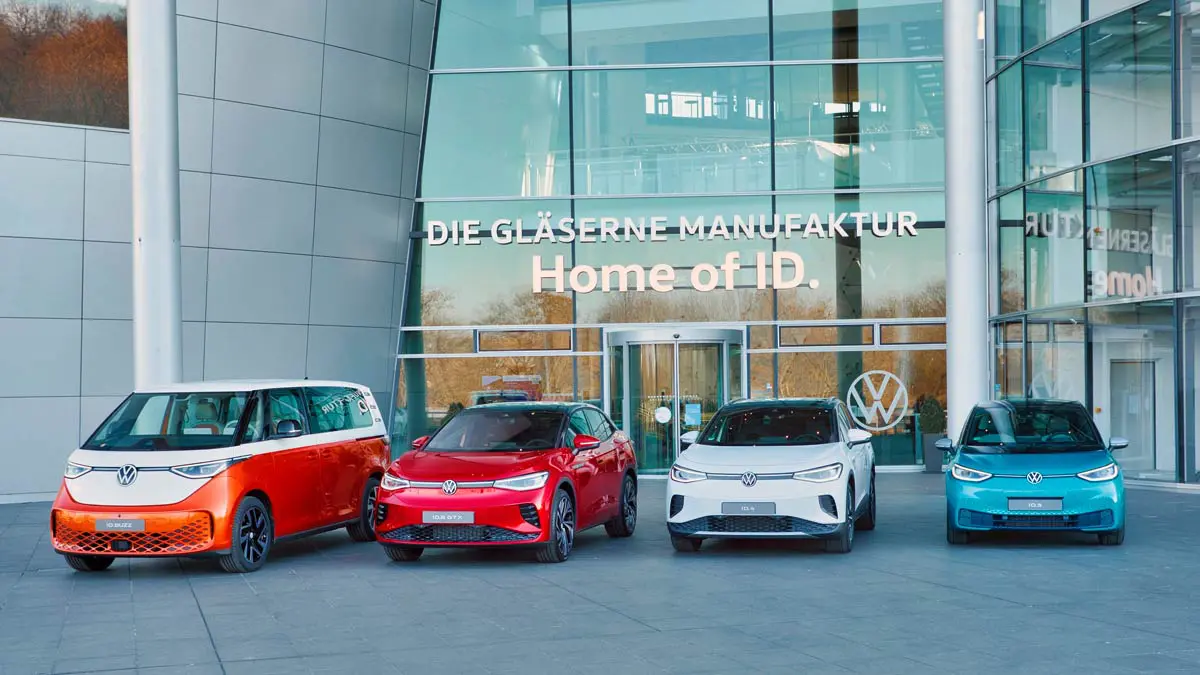
The Volkswagen Group has achieved a significant milestone, announcing the delivery of four million fully battery-electric vehicles (BEVs) worldwide. This accomplishment marks a crucial point in the global transition towards electric mobility, coming just over a decade after the group’s first BEV offering.
A Decade of Electric Growth
Volkswagen’s electric journey began in 2013 with the launch of the e-up!, an all-electric iteration of its compact city car. This was followed in 2014 by the electric version of the popular Golf model. Since then, the group has steadily expanded its electric portfolio across its various brands.
MEB Platform Fuels Expansion
The recent surge in BEV sales can be largely attributed to the introduction of the modular electric drive matrix (MEB) platform in 2019. This dedicated electric-only architecture has become the foundation for a significant portion of the group’s electric offerings. Of the four million BEVs delivered, an impressive three million have been built on the MEB platform, highlighting its success in scaling production and offering a range of electric vehicles.
Brand Contributions to the Milestone
The four million BEV milestone encompasses vehicles sold under all of the Volkswagen Group’s automotive brands, including Audi, Porsche, Cupra, and Skoda. Passenger cars from the core Volkswagen brand account for roughly half of the total deliveries. Skoda follows with approximately 480,000 units, while Seat/Cupra has contributed around 230,000 BEVs. Volkswagen Commercial Vehicles has delivered about 140,000 electric vehicles.
Premium brands within the group also play a substantial role. Audi models represent nearly 870,000 of the total deliveries, with Porsche contributing around 250,000 BEVs. Additionally, electric trucks and buses from Scania, MAN, International, and Volkswagen Truck & Bus make up approximately 0.3% of the total, equating to around 11,000 vehicles.
Top Performing BEVs
The Volkswagen Group’s top 10 most popular BEVs collectively account for over 80 percent of all deliveries to date. While specific figures for each model were not provided in the original report, this concentration indicates strong market acceptance for a core set of electric models within the group’s diverse lineup.
Regional Delivery Breakdown
Geographically, Europe remains the dominant market for Volkswagen Group’s BEV sales. A substantial 68% of the four million vehicles were delivered to customers in Europe, underscoring the region’s strong commitment to electric vehicle adoption. China, the world’s largest automotive market, represents 20% of the sales, while the United States accounts for 8%. All other global markets combined make up the remaining percentage.
Electrification Trends in 2025 and Beyond
The report notes that in 2025, BEVs constituted nearly one in five new car sales globally. In specific markets, this trend is even more pronounced. The UK saw BEVs making up almost one in four new car sales, while China exceeded one in three in January of the current year. This indicates a significant shift in consumer preferences and market dynamics.
Looking ahead to 2026, despite some manufacturers adjusting their electrification strategies in response to evolving market conditions and policy shifts, the overall trajectory points towards the continued inevitability of electrification. The focus is shifting from ‘if’ to ‘when’ the last mass-produced internal combustion engine vehicle will be built, signalling a long-term commitment to electric mobility from major automotive players like the Volkswagen Group.