
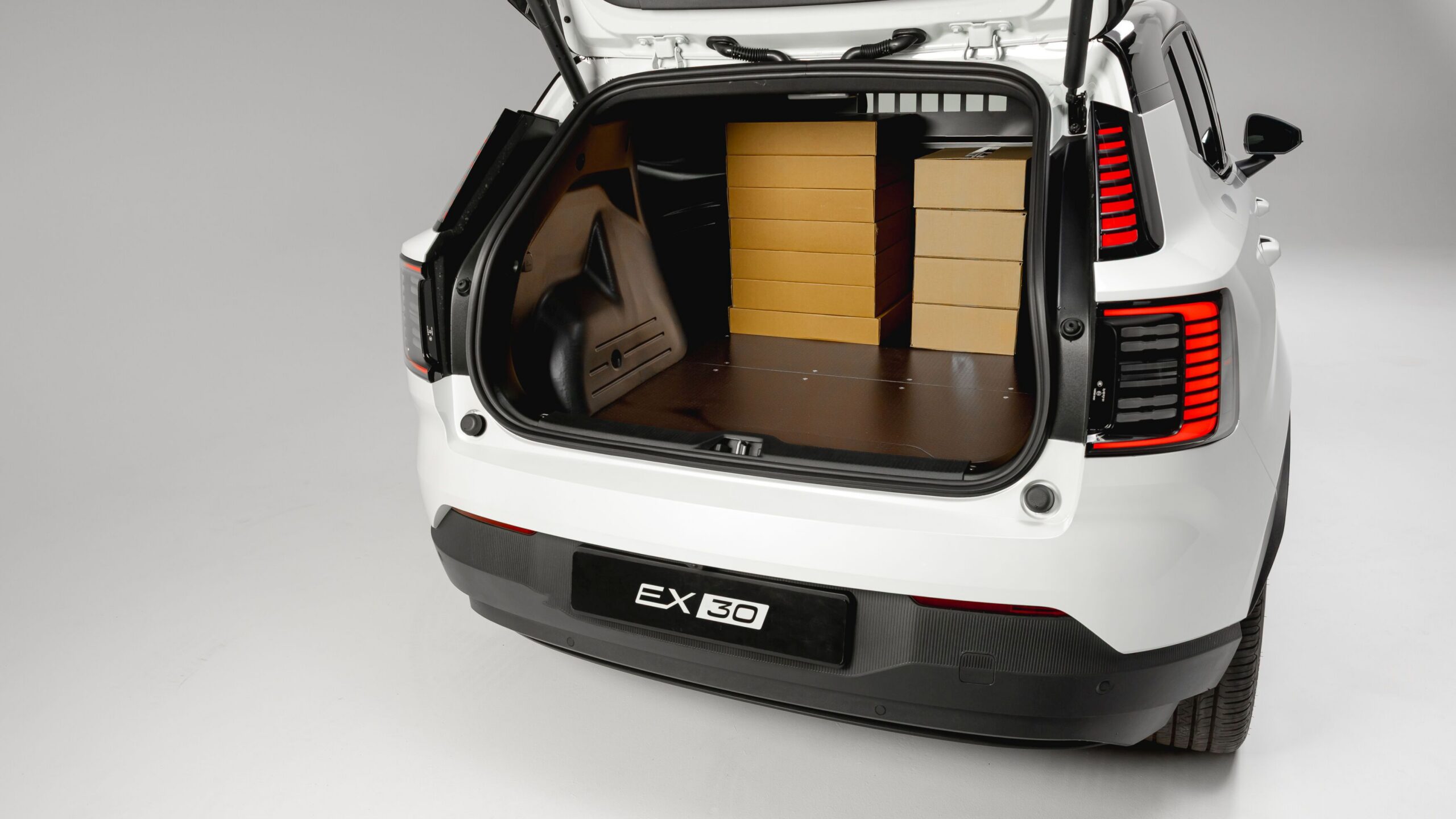
In a notable development for the automotive sector, Volvo Car UK has announced the introduction of its inaugural commercial vehicle: the fully electric EX30 Cargo. This move, confirmed by a press release dated March 25, has garnered significant attention, marking a unique strategic direction for the Swedish premium car manufacturer.
The announcement confirms the transformation of the compact EX30 SUV into a dedicated light commercial vehicle, signalling Volvo’s entry into a segment traditionally dominated by more utilitarian offerings. This innovative approach aims to cater to businesses and fleet operators seeking sustainable and efficient transport solutions.

Volvo’s Strategic Entry into Commercial Electrification
The decision by Volvo to convert its EX30 SUV into a commercial van highlights a growing trend within the automotive industry to leverage existing electric vehicle platforms for diverse applications. With increasing pressure on businesses to reduce their carbon footprint, the demand for electric light commercial vehicles (eLCVs) is on a steady rise, particularly in urban environments.
Volvo’s entry into this market with the EX30 Cargo positions the brand to capture a share of this expanding segment, offering a premium and sustainable option. The initiative underscores a commitment to broadening its electric vehicle portfolio beyond passenger cars, addressing the practical needs of commercial operations.
Engineering the EX30 Cargo: From SUV to Electric Light Commercial Vehicle
The transformation of the EX30 SUV into the EX30 Cargo involves a series of thoughtful modifications, converting a passenger-focused interior into a functional and efficient cargo space. These alterations are meticulously designed to maximise utility while maintaining the vehicle’s inherent electric performance and safety standards.

Key changes include the removal of the rear seating, replaced by a flat floor that integrates an access panel, ingeniously utilising the space once occupied by the rear footwell. The rear windows have been blacked out, ensuring privacy and security for the cargo carried within.
Optimising for Utility: Payload, Volume, and Accessibility
To further enhance its commercial capabilities, the Volvo EX30 Cargo is equipped with a robust cargo barrier, separating the driver’s compartment from the load area. This feature is crucial for safety, preventing items from shifting forward during transit.
The engineering team at Volvo Car UK also focused on improving accessibility and load volume. The rear door hinge straps have been specifically altered to allow for a wider opening than the standard passenger version, simplifying the loading and unloading of goods. Furthermore, the rear side and door panels of the interior have been redesigned to incrementally increase the available load volume, creating a total cargo area of 1,000 litres and a payload capacity of 390 kg.
The UK’s Unique Car-Derived Van Segment
The concept of converting passenger vehicles into light commercial variants is not new, particularly in the United Kingdom, which boasts a long-standing tradition of ‘car-derived vans’ (CDVs). This specialised vehicle category is officially defined as ‘a goods vehicle that is adapted as a derivative of a passenger vehicle and which has a maximum laden weight not exceeding two tonnes.’
Historically, the UK market has seen numerous examples of such conversions, ranging from classic models like the Mini van/utes and Austin A30 vans/utes, which featured van or ute-style rears appended to the front passenger section. More recently, CDVs have evolved into simpler interior conversions of existing hatchbacks and station wagons, such as the Renault Zoe ZE van that entered the market in 2020.
This established market segment provides a receptive environment for the Volvo EX30 Cargo, aligning with a demand for compact, efficient, and versatile commercial transport solutions that retain the driving dynamics and comfort of a passenger car.
Targeting the Urban Professional: Benefits for Businesses
The EX30 Cargo is particularly well-suited for urban professionals and businesses that require a compact yet capable electric light commercial vehicle. Tradespeople, specialized technicians, and last-mile delivery services, who often transport sensitive equipment or a select assortment of tools, stand to benefit significantly from its design.
Unlike traditional, often larger vans or open-bed utes, the EX30 Cargo offers a secure, enclosed space ideal for protecting vibration-sensitive equipment from environmental elements and potential theft. The vehicle’s passenger car origins mean drivers can expect a more comfortable and refined travel experience, complete with modern amenities and advanced features not commonly found in conventional light commercial vehicles.
An additional benefit for operators in the UK is the potential for lower tollway fees. Many toll systems categorise vehicles based on size and weight, and a car-derived van often incurs lower charges compared to heavier, larger utes or vans, contributing to reduced operational costs for businesses.
The Electric Advantage: Performance and Sustainability
As a fully electric light commercial vehicle, the Volvo EX30 Cargo offers substantial environmental benefits, producing zero tailpipe emissions. This aligns with corporate sustainability objectives and contributes to improved urban air quality, making it an ideal choice for businesses committed to green logistics.
While the conversion focuses on cargo utility, the underlying electric powertrain of the EX30 SUV is retained, ensuring robust performance. This typically includes brisk acceleration, quiet operation, and a substantial driving range, making it highly suitable for daily commercial routes within cities and beyond. The instant torque characteristic of electric motors is particularly advantageous for stop-and-go urban driving, enhancing efficiency and responsiveness.
Strategic Availability and Market Dynamics
It is important to note that the Volvo EX30 Cargo is not a factory-produced model. Instead, it undergoes a meticulous second-stage conversion process carried out by Volvo Car UK. This arrangement allows for flexibility, as the conversion can be applied to both newly ordered EX30 vehicles and existing ones, offering current owners an option to repurpose their vehicles for commercial use.
The electric light commercial vehicle is currently on sale, with pricing starting from £36,010 on-the-road. For the Australian market, the concept of a car-derived van faces different market dynamics. The prevalent preference for larger ute-style vehicles among tradespersons means that a similar offering might not achieve the same level of market acceptance. The EX30 Cargo is exclusively available through Volvo Car UK’s fleet sales channels, indicating a targeted approach towards corporate and commercial clients.
A Glimpse into the Future of Urban Logistics
Volvo’s introduction of the EX30 Cargo marks a significant step in the evolution of electric light commercial vehicles. By transforming a stylish, compact SUV into a practical commercial solution, Volvo is demonstrating innovative ways to meet the growing demand for sustainable urban logistics.
This development underscores the versatility of electric vehicle platforms and points towards a future where commercial transport is not only efficient and environmentally friendly but also comfortable and sophisticated. The EX30 Cargo exemplifies a pragmatic approach to electrification, offering a tailored solution for specific market needs within the commercial sector.