
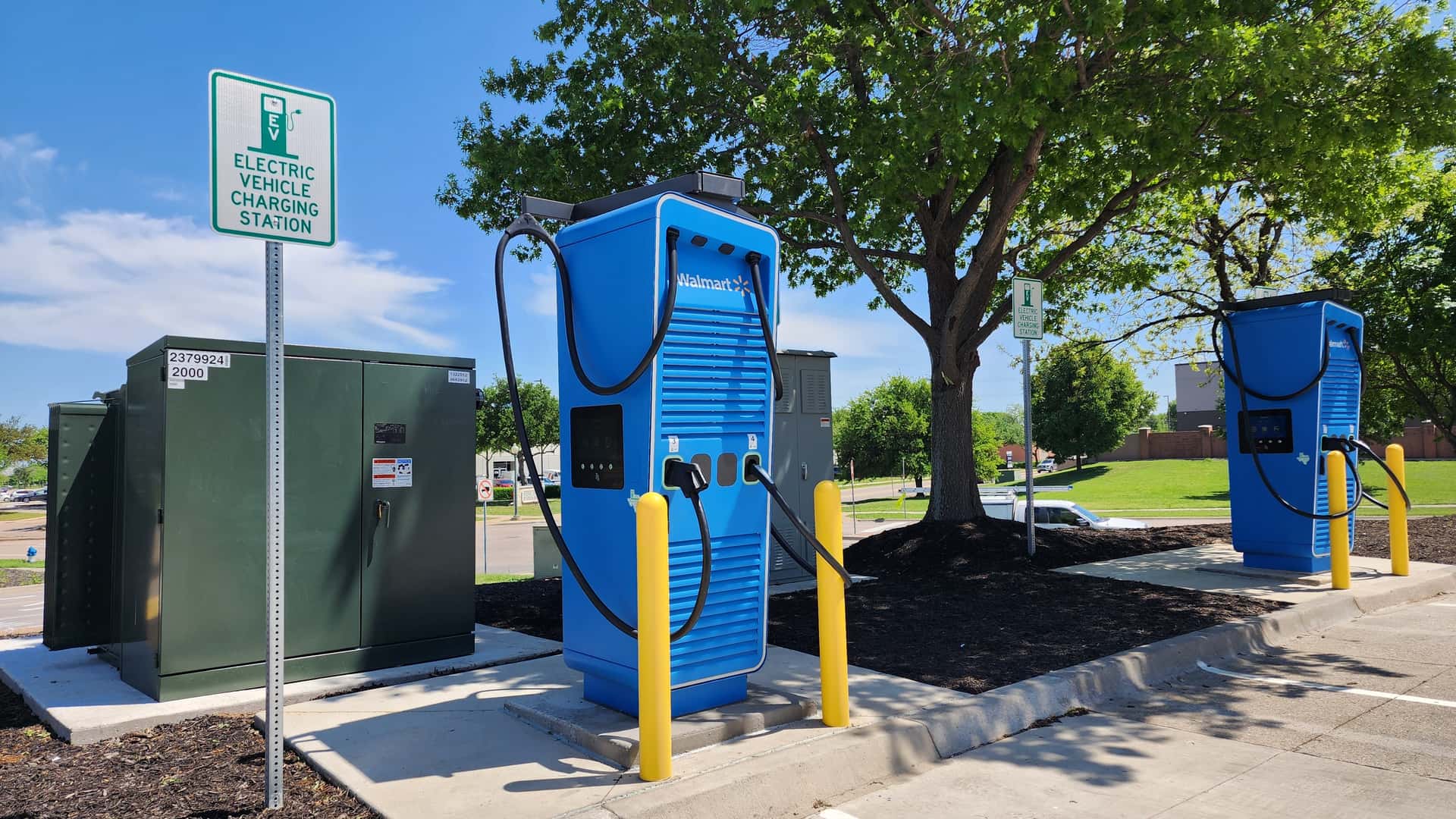
Key Takeaways:
- Walmart is aggressively expanding its EV fast charging network across the United States, marking a significant push into electric vehicle infrastructure.
- The retail giant recently boosted its charging port count by 50% in just one month, now exceeding 300 high-power ports across 50 stores.
- Customer convenience is being enhanced with the introduction of contactless payment options and a 10% discount for Walmart+ members using the dedicated app.
- The network exclusively features 400 kW DC fast chargers, with ongoing design improvements, including repositioning NACS connectors for better compatibility with Tesla vehicles.
- Walmart’s long-term vision includes deploying thousands of chargers across its extensive network of over 5,200 Walmart and Sam’s Club locations.
Walmart, the world’s largest retailer, is rapidly accelerating the deployment of its electric vehicle (EV) charging infrastructure across the United States. This strategic expansion is not merely about increasing numbers; it also focuses on enhancing user convenience and offering competitive pricing, cementing the company’s role in supporting the nationwide transition to electric mobility.

In a notable acceleration of its efforts, the retail behemoth has expanded its EV charging network by approximately 50% in just one month. This latest surge follows an earlier 50% increase recorded between February and April, underscoring Walmart’s commitment to building a robust and accessible charging ecosystem for its customers and the broader EV community.
Walmart’s Aggressive Push into EV Charging Infrastructure
The current count for Walmart’s EV charging network now exceeds 300 individual DC fast charging ports. These high-powered connectors are operational at 50 Walmart stores across the U.S., a substantial increase from the 31 stations and 224 high-powered connectors reported just last month. Each of these advanced ports is capable of delivering up to 400 kilowatts (kW) of power, ensuring rapid charging for compatible electric vehicles.
This rapid deployment positions Walmart as a crucial player in the evolving landscape of electric vehicle charging. By integrating fast chargers directly into its retail locations, Walmart leverages its extensive footprint to provide accessible and convenient charging solutions, addressing a key challenge for widespread EV adoption.
Strategic Location and Scale of Deployment
The decision to install chargers at its stores is strategic, offering EV owners the convenience of charging while they shop. With over 5,200 Walmart and Sam’s Club locations across the United States, the potential for future expansion is immense. This scale of deployment could significantly alleviate range anxiety for many EV drivers, particularly in suburban and rural areas where charging options might be fewer.
Adam Happel, Walmart’s General Manager for Retail EV charging, highlighted the company’s long-term vision during an interview with InsideEVs contributor and charging expert Tom Moulougney. He indicated that Walmart is not involved in this endeavour for the short term, projecting the installation of thousands of chargers across a vast number of its U.S. stores.
Enhancing User Experience: Contactless Payments and Member Benefits
Recognising the importance of a seamless user experience, Walmart is also implementing several improvements to its EV charging services. A significant enhancement is the introduction of contactless payment terminals on its DC fast chargers, a direct response to customer feedback.
Previously, initiating and paying for a charging session was exclusively managed through Walmart’s proprietary app. While the app offers specific benefits, the lack of alternative payment methods proved inconvenient for some users. The retail giant is currently trialling the contactless payment solution at one station, with plans to integrate this functionality into all future installations.
Exclusive Discounts for Walmart+ Members
For Walmart+ members, the benefits extend beyond convenience. Those who utilise the Walmart app to initiate and pay for their charging sessions are eligible for a 10% discount. This incentive aims to reward loyal customers while also encouraging broader adoption of the app, which serves as a central hub for managing various Walmart services.
The introduction of contactless payments, alongside app-based discounts, demonstrates Walmart’s dual approach: catering to immediate user preferences while also fostering engagement with its membership programs. This strategy is designed to make EV charging at Walmart stores both easier and more economical for a wide range of consumers.
Transparent Pricing and Charging Policies
Transparency in pricing is another cornerstone of Walmart’s EV charging strategy. Adam Happel confirmed that customers will always have a clear view of how much they need to pay for their charging sessions. This eliminates uncertainty and helps EV owners budget their charging costs effectively.
Furthermore, Walmart’s policy includes no idling fees, a common charge levied by many charging networks to prevent vehicles from occupying a spot after their charging session is complete. The absence of such fees can enhance customer satisfaction, although it places more responsibility on drivers to move their vehicles promptly.
Time of Use Rates and Dynamic Pricing
While there is no dynamic pricing based on how crowded a station is, some locations implement Time of Use (TOU) rates. This means the price of electricity can vary depending on the time of day, typically being higher during peak demand hours and lower during off-peak periods. This model encourages charging during less congested times and can help manage grid load more efficiently.
Walmart is also considering the implementation of Plug & Charge functionality, which allows EV drivers to simply plug in their vehicle and begin charging without needing an app or credit card for each session. However, a primary barrier to this feature is its current incompatibility with automatically applying discounts, as the car communicates directly with the charger, bypassing the user’s logged-in Walmart account necessary for discount application.
Advanced Charger Technology and Design Optimisation
Walmart’s commitment to high-speed charging is evident in its choice of equipment. The company is exclusively installing 400 kW DC fast chargers, sourced from reputable manufacturers such as ABB and Alpitronic. These chargers are equipped with both CCS1 and NACS (North American Charging Standard) connectors, ensuring compatibility with a broad spectrum of electric vehicles on the market, including Tesla models.
An interesting design adjustment has also been implemented based on user feedback. Initially, the NACS cable was fitted to the right side of the charger. However, this positioning proved suboptimal for Tesla EVs, which typically have their NACS port located on the left rear of the vehicle. To enhance user convenience and accessibility, all future Walmart EV chargers will feature the NACS cable on the left side.
Future-Proofing the Charging Experience
This attention to detail, from charger power to connector placement, reflects Walmart’s dedication to providing a user-friendly and efficient charging experience. By standardising on high-power chargers and adapting connector layouts, Walmart is actively contributing to a more seamless and accessible public charging infrastructure, aligning with the broader industry goal of simplifying EV ownership.
As the electric vehicle market continues its rapid expansion, the availability of reliable, fast, and accessible charging infrastructure becomes paramount. Walmart’s strategic investment and ongoing improvements to its EV charging network are set to play a significant role in accelerating the adoption of electric vehicles across the United States, offering both convenience and affordability to a growing base of EV owners.
Frequently Asked Questions (FAQ)
How many EV charging ports does Walmart currently operate?
Walmart currently operates over 300 individual DC fast charging ports across 50 of its stores in the United States. This network is undergoing rapid expansion, with more installations planned across numerous locations.
What is the charging speed of Walmart’s EV chargers?
Walmart’s EV chargers are high-power DC fast chargers, capable of delivering up to 400 kilowatts (kW) of power. This ensures a quick charge for compatible electric vehicles, significantly reducing charging times.
Can I pay for EV charging at Walmart without using an app?
Yes, Walmart is implementing contactless payment terminals at its DC fast chargers. While current stations primarily use the Walmart app, future installations will include this convenient payment option, with one station already trialling the system.
Are there any discounts for charging an EV at Walmart?
Walmart+ members who use the Walmart app to initiate and pay for their charging sessions can enjoy a 10% discount. This membership benefit makes charging more affordable for regular customers.
Does Walmart charge idling fees for EVs?
No, Walmart does not implement idling fees at its EV charging stations. This policy allows EV drivers to charge without the added concern of incurring extra costs if they take longer to move their vehicle after charging is complete.
What types of connectors do Walmart’s EV chargers have?
Walmart’s EV chargers are equipped with both CCS1 and NACS (North American Charging Standard) connectors. This dual-connector setup ensures broad compatibility with most electric vehicles available on the market, including Tesla models.
Is Plug & Charge supported on Walmart’s network?
Plug & Charge functionality is currently not supported by Walmart’s DC chargers, though the company is considering it for the future. The primary challenge lies in integrating automated discounts with this system, as it bypasses the app-based payment mechanism.
What is Walmart’s long-term vision for its EV charging network?
Walmart has expressed a long-term commitment to EV charging, aiming to install thousands of chargers across as many Walmart and Sam’s Club locations as possible in the U.S. This expansive vision underscores its role in the future of electric mobility.