
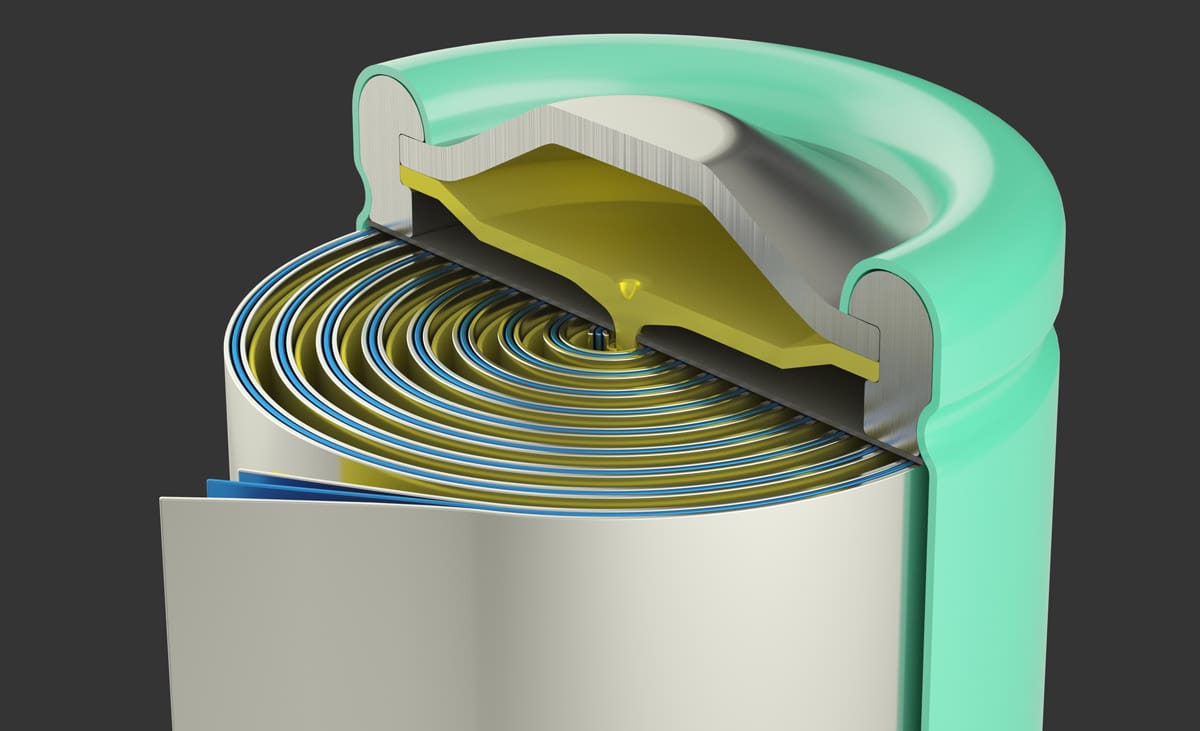
In a significant development poised to advance EV battery technology, X-BATT, a pioneering materials company, has announced Glassact, a novel spherical silicon oxycarbide (SiOC) anode material. This innovative material is engineered to deliver a reversible capacity exceeding 800 mAh/g, a figure that represents more than double the capacity typically offered by conventional graphite anodes currently prevalent in electric vehicles.
The company has proactively published ambitious performance targets for Glassact, seeking to differentiate its announcement in a sector often characterized by optimistic claims. These targets aim to set a new benchmark for energy density, charging speed, and durability in lithium-ion batteries.

Key Takeaways (TL;DR)
- X-BATT’s Glassact is a new spherical silicon oxycarbide (SiOC) anode material.
- It targets a reversible capacity greater than 800 mAh/g, potentially doubling graphite’s capacity.
- Performance targets include over 8C charge rates (retaining >80% capacity), less than 8% cyclic swelling, and more than 8,000 cycles at over 80% depth of discharge.
- These figures are published targets and await independent validation.
- The material’s unique structure (carbon scaffold, ceramic matrix, protective shell) and spherical morphology aim to enhance stability and longevity.
- SiOC offers superior dimensional stability compared to pure silicon, mitigating capacity fade due to swelling.
- Production utilizes an emulsion process compatible with existing industrial equipment, suggesting scalability and domestic manufacturing potential.
Pushing the Boundaries of EV Battery Technology
The global transition to electric vehicles (EVs) is heavily reliant on continuous advancements in EV battery technology. At the heart of every lithium-ion battery are its electrodes: the cathode and the anode. The anode, traditionally made from graphite, plays a crucial role in storing lithium ions during charging and releasing them during discharge, determining a battery’s energy density and charging speed.
While graphite has served the industry well, its theoretical capacity limits present a bottleneck for achieving longer EV ranges and faster charging times. This has spurred extensive research into alternative anode materials, with silicon emerging as a strong contender due to its significantly higher theoretical capacity compared to graphite.
Glassact’s Ambitious Performance Targets Detailed
X-BATT’s Glassact SiOC anode material is not merely a theoretical concept but comes with clearly articulated performance objectives. The company is targeting a reversible capacity of greater than 800 mAh/g. To put this into perspective, current commercial graphite anodes typically offer a reversible capacity of approximately 372 mAh/g.

Beyond capacity, the material aims for exceptional charging kinetics, targeting charge rates greater than 8C while retaining more than 80% of its nominal capacity. Such a rapid charging capability could dramatically reduce charging times for electric vehicles, addressing a key consumer concern.
Durability and longevity are also central to Glassact’s design. The targets include less than 8% cyclic swelling – a critical factor for maintaining battery integrity – and an impressive cycle life of greater than 8,000 cycles at over 80% depth of discharge. These figures, if validated, would represent a significant leap forward in battery lifespan and reliability for EV battery technology.
The Innovative Structure Behind the Targets
The superior performance targets for Glassact stem from its unique material composition and structural engineering. The anode is fabricated by precisely shaping a proprietary pre-ceramic resin into near-perfect microspheres. These microspheres then undergo a conversion process in low-temperature, short-residence pyrolysis furnaces, transforming them into a robust ceramic material.
The internal architecture of each SiOC microsphere is a marvel of material science. It features a conductive carbon scaffold that supports a glassy ceramic matrix, all enveloped within a protective outer shell. This intricate design is purpose-built to efficiently handle the storage and release of lithium ions while simultaneously ensuring the stability of the electrolyte interface, a common point of degradation in many battery chemistries.
The spherical morphology itself, coupled with a low surface area, plays a vital role in limiting electrolyte decomposition. This decomposition is a pervasive degradation mechanism in many silicon-based anode materials, contributing to capacity fade and shortened battery life. Glassact’s design directly addresses this challenge, promising enhanced stability and extended operational life for EV battery technology.
Addressing the Silicon Swelling Challenge
Pure silicon metal, despite its high theoretical capacity, faces a significant hurdle: dramatic volume expansion during lithiation (when lithium ions insert into the anode structure). This expansion, which can exceed 300%, severely stresses the electrode structure, leading to particle pulverization, loss of electrical contact, and rapid capacity fade over repeated charge-discharge cycles.
This is where silicon oxycarbide (SiOC) ceramics offer a distinct advantage. SiOC materials are known for their inherent thermal and chemical stability, providing a more robust framework than pure silicon. X-BATT’s Glassact leverages this characteristic, targeting an impressive cyclic swelling rate of less than 8%. This dimensional stability is a key differentiator, distinguishing SiOC from its pure silicon counterparts.
While the trade-off for this enhanced stability is a slightly lower absolute capacity compared to pure silicon’s theoretical maximum, Glassact’s projected capacity of over 800 mAh/g still significantly surpasses that of traditional graphite, offering more than double the energy storage potential. This balance between high capacity and exceptional dimensional stability is crucial for practical, long-lasting EV battery technology.
Scalability and Domestic Production Advantages
Beyond its technical merits, X-BATT emphasizes the practical aspects of Glassact’s production and supply chain. The company states that the material is produced domestically using an emulsion process.
Crucially, this process is compatible with equipment already proven and utilized in adjacent industries. This compatibility suggests a significant scalability advantage, potentially accelerating the transition from laboratory development to large-volume industrial production. The ability to leverage existing manufacturing infrastructure could mitigate the high capital costs and long lead times typically associated with developing entirely new production lines for advanced materials.
Domestic production also offers strategic benefits, including increased supply chain resilience, reduced reliance on international suppliers, and potential for greater control over quality and environmental standards. These factors are increasingly important for governments and manufacturers seeking to secure the future of EV battery technology and automotive industries within their own borders.
The Road Ahead for High-Capacity Anodes
While X-BATT’s Glassact SiOC anode presents a compelling vision for the next generation of EV battery technology, it is important to note that the stated performance metrics are currently targets and have not yet undergone independent validation. The battery materials sector eagerly awaits verification of these claims, which would solidify Glassact’s position as a transformative innovation.
Should these targets be met and independently confirmed, the implications for the electric vehicle industry would be profound. Batteries featuring Glassact anodes could enable EVs with significantly extended driving ranges, allowing for longer journeys on a single charge. Furthermore, the touted fast-charging capabilities could dramatically improve user convenience, making EV ownership more attractive to a wider demographic. The enhanced cycle life would also contribute to the overall economic viability and sustainability of electric vehicles by extending battery lifespan and reducing the frequency of replacements.
Conclusion: A Promising Leap for EV Battery Technology
X-BATT’s Glassact SiOC spherical anode material represents a powerful step forward in the relentless pursuit of more efficient, durable, and cost-effective EV battery technology. By directly addressing the limitations of graphite and the challenges of pure silicon, this innovative material could pave the way for electric vehicles with greater range, faster charging, and extended operational life. As the industry continues its drive towards electrification, advancements like Glassact are vital for accelerating widespread adoption and shaping the future of sustainable transportation.
FAQ Section
What is Glassact?
Glassact is a newly unveiled spherical silicon oxycarbide (SiOC) anode material developed by X-BATT. It is designed to significantly enhance the performance of lithium-ion batteries, particularly for electric vehicle applications, by offering higher energy density and improved durability.
How does Glassact improve battery capacity?
Glassact targets a reversible capacity greater than 800 mAh/g, which is more than double the capacity of traditional graphite anodes. This higher capacity allows batteries to store more energy, potentially leading to longer driving ranges for electric vehicles.
What are the key performance targets for Glassact?
X-BATT’s targets for Glassact include a reversible capacity over 800 mAh/g, charge rates exceeding 8C while retaining over 80% capacity, less than 8% cyclic swelling, and a cycle life of over 8,000 cycles at more than 80% depth of discharge.
How does Glassact address the problem of silicon swelling?
Pure silicon can expand dramatically during charging, leading to battery degradation. Glassact, made from SiOC ceramics, is designed for dimensional stability with a target of less than 8% cyclic swelling, significantly mitigating this common issue and enhancing battery longevity.
Is Glassact currently available in commercial products?
No, the performance metrics for Glassact are currently stated as targets by X-BATT and have not yet been independently validated. The material is in a developmental stage, with potential for future commercialization upon successful verification of its claims.
What are the manufacturing advantages of Glassact?
Glassact is domestically produced using an emulsion process that is compatible with existing industrial equipment. This manufacturing approach suggests strong scalability potential, enabling quicker ramp-up to mass production and offering benefits for supply chain resilience.
What potential impact could Glassact have on electric vehicles?
If X-BATT’s targets are validated, Glassact could lead to electric vehicles with significantly longer driving ranges, much faster charging times, and extended battery life. These advancements are crucial for accelerating the widespread adoption of EV battery technology.