
Key Takeaways (TL;DR)
- YASA, a leading EV motor developer, is advancing two distinct axial flux motor designs aiming to significantly reduce or entirely eliminate rare-earth magnet content.
- This crucial initiative, named Project Resilience, is backed by the UK government’s DRIVE35 Demonstrate competition, receiving funding to strengthen domestic automotive R&D.
- The project addresses critical vulnerabilities in the global rare-earth supply chain, which is geographically concentrated and prone to disruption and price volatility.
- YASA’s dual development path includes heavy-rare-earth-free designs for high-performance applications and fully rare-earth-free technology for broader vehicle applications.
- A shared stator technology will enable a modular motor architecture, allowing for adaptable rotor solutions and streamlined manufacturing across different vehicle programs.
- Project Resilience is part of a larger £18 million combined government and industry investment across 10 demonstrator projects, all tasked with delivering a product or process prototype within 12 months.
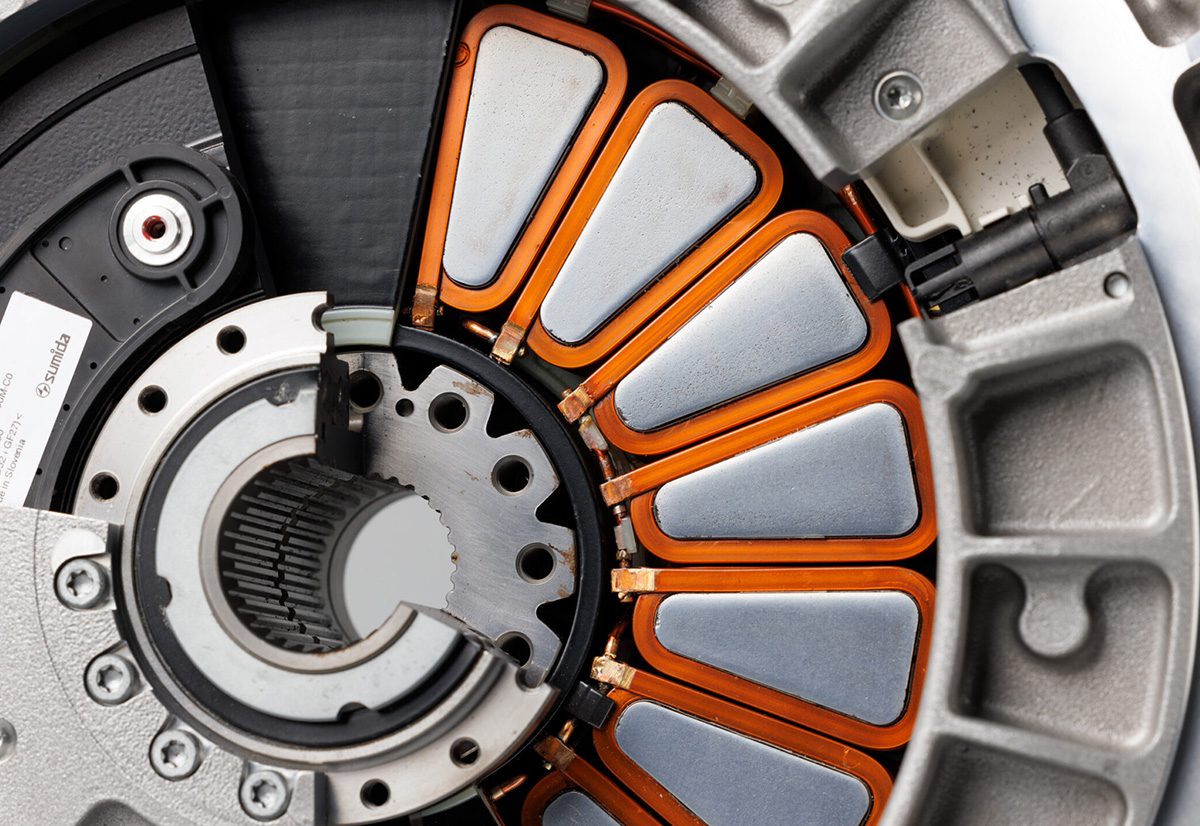
In a significant stride towards sustainable electric vehicle (EV) manufacturing, YASA, a prominent innovator in electric motor technology, has embarked on a pioneering program to develop advanced axial flux motor designs. This ambitious initiative, dubbed Project Resilience, is specifically focused on creating electric motors that either substantially reduce or entirely eliminate the need for rare-earth magnets, a move poised to reshape the automotive industry’s reliance on these critical materials.
The project has secured substantial backing from the UK government through the highly competitive DRIVE35 Demonstrate program. This crucial funding will enable YASA to conduct its cutting-edge research and development activities directly from its state-of-the-art engineering and development facilities located across the United Kingdom. The investment underscores a national commitment to fostering innovation and resilience within the advanced manufacturing sector.
The Imperative for Rare-Earth-Free EV Motors
The global automotive industry’s rapid shift towards electrification has significantly increased demand for electric motors. These motors traditionally rely on permanent magnets, which often incorporate rare-earth elements. While highly effective, the procurement of these materials presents a complex challenge for manufacturers worldwide.
YASA has highlighted that the supply chains for rare-earth permanent magnets are currently characterized by a high degree of geographical concentration. This concentrated dependency exposes automotive manufacturers and their suppliers to considerable risks, including potential export restrictions, unpredictable price volatility, and the constant threat of supply chain disruptions. Such vulnerabilities can severely impact production schedules and vehicle costs.
Furthermore, heavy rare earths, which are frequently used to enhance the thermal stability of permanent magnets in high-performance electric motors, pose their own set of challenges. According to YASA, these particular elements are not only difficult to extract but their processing methods are also notably carbon-intensive. Developing alternatives therefore aligns with broader environmental sustainability goals within the automotive sector.
YASA’s Dual-Track Development Strategy
Under Project Resilience, YASA is pursuing two distinct but complementary developmental pathways for axial flux motor designs. The first route focuses on achieving high-performance battery-electric and hybrid vehicle applications through heavy-rare-earth-free permanent-magnet designs. The objective here is to maintain exceptional power density without increasing the motor’s mass or overall package size, ensuring no compromise on vehicle performance.
Concurrently, the company is dedicating efforts to developing fully rare-earth-free axial flux technology. This second pathway targets vehicle applications that may have different performance, cost, and manufacturing requirements, potentially opening doors for broader adoption across various segments of the EV market. This strategic dual approach allows YASA to cater to a diverse range of automotive needs, offering tailored solutions that address specific industry demands.
Modular Architecture and Engineering Synergies
A cornerstone of YASA’s innovative strategy lies in building both development routes around a common stator technology. This foundational commonality creates significant potential for a highly flexible and modular motor architecture. In such a system, different rotor technologies, developed under the two pathways, can be interchangeably selected based on the precise requirements of each specific vehicle program.
This shared stator approach offers substantial benefits beyond just design flexibility. It allows YASA to efficiently carry engineering expertise, design methodologies, development insights, and critical manufacturing knowledge across both technology pathways. This synergy not only streamlines the development process but also broadens the range of applications for which YASA’s cutting-edge axial flux technology can be effectively deployed, enhancing scalability and market reach.
UK Government’s Strategic Investment in Advanced Manufacturing
Project Resilience is an integral component of the DRIVE35 program, an initiative meticulously managed by the Department for Business, Innovation, Science and Trade (DBIST), in close collaboration with the Advanced Propulsion Centre UK (APC) and Innovate UK. This collaborative framework highlights a unified government-led effort to accelerate innovation within the UK’s industrial landscape.
The DRIVE35 program itself is a key pillar of the UK government’s ambitious Advanced Manufacturing Sector Plan. This comprehensive plan is designed to inject substantial grant funding into the automotive sector, with an allocation of £4 billion earmarked for research and development (R&D), scale-up activities, and transformational projects, available through 2035. Such long-term strategic investment underscores the UK’s commitment to becoming a global leader in advanced automotive technologies.
Project Resilience: A Broader Collaborative Initiative
Project Resilience stands as one of ten ‘Demonstrate’ projects recently announced to share a collective £9 million in government funding. The Advanced Propulsion Centre UK (APC) has further detailed that the combined investment from both government and industry across these ten projects surpasses £18 million, illustrating a robust public-private partnership driving technological advancement.
A critical requirement for projects funded through the Demonstrate competition is the successful development and presentation of a product or process demonstrator within a stringent 12-month timeframe. This accelerated timeline ensures tangible progress and rapid innovation. While the specific financial award received by YASA for its individual contribution to Project Resilience was not publicly disclosed, its inclusion in such a competitive program underscores the project’s strategic importance and potential impact.
Tom Hillman, YASA’s Head of Motor Simulation, articulated the core philosophy guiding this ambitious undertaking: “Project Resilience is about creating credible alternatives without losing sight of what vehicle manufacturers need from an electric motor.” He further elaborated on the necessity of a multifaceted approach, stating, “Different applications require different balances of performance, efficiency, packaging, cost and production volume, which is why we are developing two complementary technology routes rather than pursuing a single universal solution.” This statement perfectly encapsulates YASA’s pragmatic and market-driven approach to sustainable motor development. The insights for this report were provided by YASA.
Frequently Asked Questions (FAQs)
What is Project Resilience?
Project Resilience is a UK government-funded initiative where YASA is developing two new axial flux motor designs. The primary goal is to reduce or entirely eliminate the use of rare-earth magnets in electric vehicle motors, addressing supply chain vulnerabilities and environmental concerns associated with these materials. It is part of the broader DRIVE35 Demonstrate program.
Why is YASA focusing on rare-earth-free motor designs?
YASA is developing rare-earth-free motors to mitigate risks associated with the geographically concentrated supply chains of rare earths, which lead to price volatility and potential disruptions. Additionally, heavy rare earth extraction and processing are carbon-intensive, aligning the project with broader environmental sustainability goals for EV manufacturing.
What are the two types of axial flux motor designs YASA is developing?
YASA is developing two complementary designs: one is a heavy-rare-earth-free permanent-magnet design aimed at high-performance battery-electric and hybrid vehicles, maintaining power density without increasing motor mass. The second is a fully rare-earth-free axial flux technology, targeting applications with diverse performance, cost, and manufacturing requirements.
How does a common stator technology benefit YASA’s development?
Using a common stator technology enables YASA to create a modular motor architecture, allowing different rotor technologies to be selected based on specific vehicle program needs. This approach facilitates the transfer of engineering, design, development, and manufacturing knowledge across both pathways, broadening the application scope of their axial flux technology.
What is the DRIVE35 Demonstrate competition?
DRIVE35 Demonstrate is a UK government-funded program delivered by the Department for Business, Innovation, Science and Trade, in partnership with the Advanced Propulsion Centre UK and Innovate UK. It forms part of the UK government’s Advanced Manufacturing Sector Plan, which allocates £4 billion for automotive R&D, scale-up, and transformation projects until 2035.
What is the overall investment in Project Resilience and similar initiatives?
Project Resilience is one of ten ‘Demonstrate’ projects sharing £9 million in government funding. The Advanced Propulsion Centre UK (APC) states that the combined government and industry investment across these ten projects exceeds £18 million. These projects are mandated to build a product or process demonstrator within 12 months to show rapid progress and innovation.