
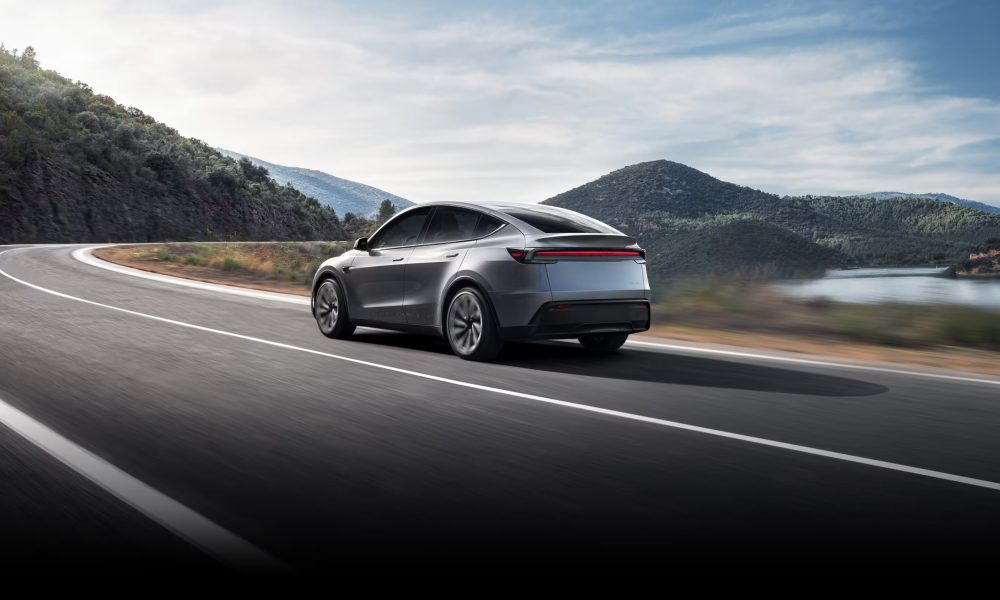
Tesla’s advanced Full Self-Driving (FSD) Supervised system may soon be available to drivers in the Netherlands, with Elon Musk indicating that regulatory approval could be granted as early as March 20. This potential breakthrough signifies a significant step in Tesla’s strategy to broaden the deployment of its sophisticated driver-assistance technology across European markets.
Musk Confirms Potential March Approval
During a recent interview conducted at Tesla’s Giga Berlin facility, CEO Elon Musk shared the optimistic timeline for FSD Supervised’s introduction to the Netherlands. He attributed the specific date to information provided by local Dutch authorities.

“We’re told by the authorities that March 20th, it’ll be approved in the Netherlands,’ what I was told,” Musk stated during the interview. He added, “Hopefully, that date remains the same. But I think people in Europe are going to be pretty blown away by how good the Tesla car AI is in being able to drive.”
This announcement suggests a collaborative dialogue between Tesla and European regulators as the company seeks to navigate diverse legal frameworks for autonomous driving technologies.
Understanding Tesla’s FSD Supervised Technology
Tesla’s FSD Supervised system distinguishes itself through its reliance on advanced AI and a vision-based approach. Instead of depending heavily on traditional sensors like radar and lidar, the system primarily utilizes cameras and sophisticated neural networks.

These neural networks are trained using vast amounts of real-world driving data collected from Tesla vehicles globally. This approach allows the system to interpret its surroundings and make driving decisions in a manner that mimics human perception.
Safety Data and Performance Metrics
Tesla consistently publishes safety reports that compare the incident rates of vehicles operating with FSD Supervised engaged against those driven manually. According to the company’s latest safety data, the FSD Supervised system has accumulated over 8.3 billion miles of real-world driving.
During this period, vehicles operating with FSD Supervised experienced one major collision for every 5,300,676 miles driven. For comparative context, Teslas operating with their standard Active Safety features engaged recorded a major collision rate of one per 2,175,763 miles. Vehicles driven manually without any active safety systems saw a rate of one major collision per 855,132 miles.
These figures place Tesla’s FSD Supervised system’s safety record significantly above the U.S. national average for major collisions, which stood at one per 660,164 miles during the same reporting period.
Netherlands as a Gateway for European Expansion
If the anticipated March 20 approval materializes, the Netherlands would emerge as the first European market to officially sanction Tesla’s latest FSD Supervised software under updated regulatory guidelines. This development is crucial for Tesla’s broader European ambitions.
The company has been actively seeking expanded access to FSD capabilities across the continent. European Union member states each have their own distinct regulatory standards regarding advanced driver-assistance systems and autonomous driving, making a phased rollout necessary.
Securing approval in the Netherlands could serve as a vital precedent and foundational step for wider adoption across the EU. However, Tesla will likely need to pursue and secure additional country-specific clearances to fully implement FSD Supervised in other European nations.
The Future of Autonomous Driving in Europe
The potential approval of FSD Supervised in the Netherlands underscores the evolving landscape of automotive technology and regulation in Europe. As AI-powered driving systems become more sophisticated, regulators are tasked with ensuring public safety while fostering innovation.
Tesla’s vision for autonomous driving involves a continuous learning system that improves with every mile driven. The company’s commitment to data collection and iterative software updates aims to enhance the capabilities and safety of its FSD system over time.
The rollout in the Netherlands, should it proceed as planned, will be closely watched by the automotive industry, regulatory bodies, and consumers across Europe and beyond. It represents a tangible step towards a future where advanced driver-assistance systems play a more integral role in daily transportation.