
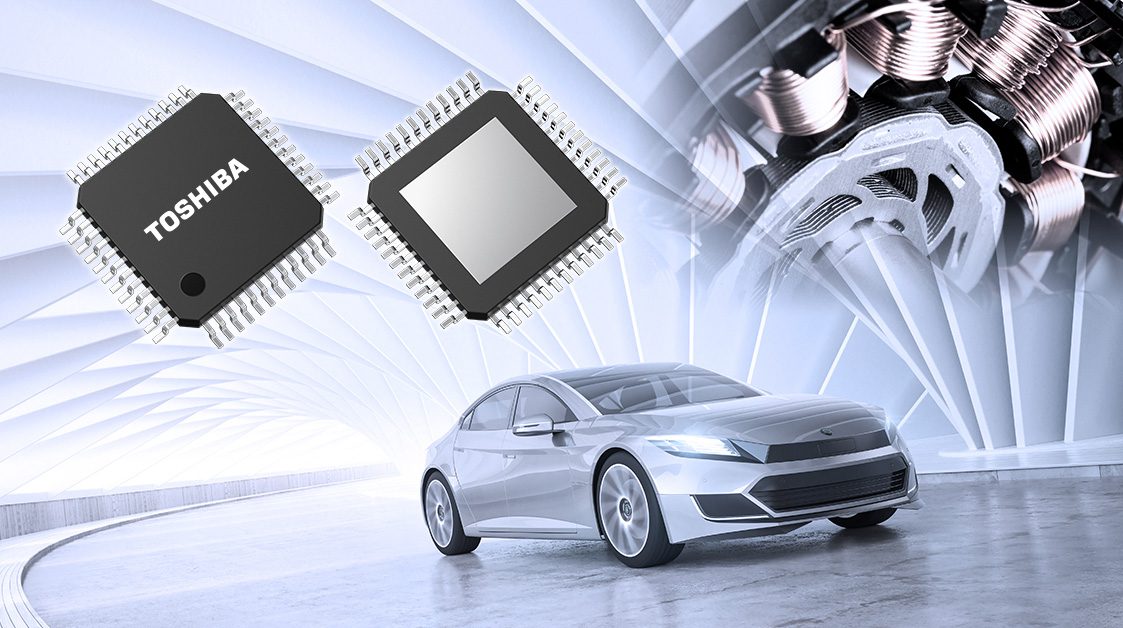
Key Takeaways:
- Toshiba Electronic Devices & Storage Corporation has begun shipping engineering samples of its new TB9M030FG chip.
- This latest SmartMCD series device integrates a microcontroller and gate driver in a single package.
- A proprietary sensorless control method enables Field-Oriented Control (FOC) from zero speed for automotive BLDC motors.
- The innovative approach eliminates acoustic noise typically associated with standard high-frequency signal injection techniques.
- Target applications include electric water pumps, oil pumps, fans, and blowers in electrified automotive auxiliary systems.
- Mass production of the TB9M030FG is slated for January 2027, promising quieter, more efficient motor control solutions.
New Delhi, India – Toshiba Electronic Devices & Storage Corporation has announced a significant leap in automotive motor control technology with the commencement of engineering sample shipments for its TB9M030FG device. This new addition to the SmartMCD series is poised to redefine the efficiency and quiet operation of automotive BLDC motors, crucial for the ongoing electrification of vehicle auxiliary systems.

The TB9M030FG stands out by combining a microcontroller and a gate driver within a single, compact package. Its most remarkable feature is a proprietary sensorless approach that enables Field-Oriented Control (FOC) directly from zero speed, a critical advancement without the usual acoustic noise generated by conventional high-frequency signal injection methods.
Revolutionising Sensorless Control for Automotive BLDC Motors
The control of three-phase brushless DC (BLDC) motors presents a unique challenge, particularly when it comes to accurately detecting rotor position at very low speeds without the use of physical position sensors. Traditional sensorless control mechanisms often rely on superimposing a high-frequency voltage signal onto the drive waveform.
While effective in inferring position, this harmonic injection typically results in undesirable acoustic noise and audible motor sound, which is a significant drawback in noise-sensitive automotive environments.

Toshiba’s Innovative Noise-Free Solution
Toshiba’s latest innovation directly addresses this industry-wide issue. The TB9M030FG employs a unique sensorless control algorithm designed specifically for salient-pole motors. This method ensures stable Field-Oriented Control (FOC) not only from a complete standstill but also throughout the critical low-speed operating range.
Crucially, it achieves this without incurring the acoustic penalty inherent in existing high-frequency signal injection techniques, paving the way for quieter and more comfortable vehicle interiors powered by advanced automotive BLDC motors.
Integrated Design and Advanced Features
The SmartMCD (Smart Motor Control Device) series, exemplified by the TB9M030FG, embodies Toshiba’s commitment to highly integrated solutions for complex automotive applications. By packaging both a 32-bit Arm Cortex-M0 microcontroller and a gate driver into a single chip, the device significantly reduces component count, board space, and overall system cost.
This level of integration is paramount for modern automotive designs, where space is at a premium and reliability is non-negotiable. The compact 9×9 mm QFP48 package underscores its suitability for demanding applications.
Key Technical Specifications of the TB9M030FG
The TB9M030FG is engineered to meet the stringent requirements of the automotive sector. Its robust specifications highlight its capability for high-performance and reliable operation:
- MCU Core: A powerful 32-bit Arm Cortex-M0 processor, operating at 40 MHz, provides efficient processing capabilities for complex motor control algorithms.
- Memory: Features 64 KB of flash memory with Error-Correcting Code (ECC) for enhanced data integrity, 12 KB of ROM, and 4 KB of RAM, providing ample resources for application code and data.
- Package: Housed in a compact 9×9 mm QFP48 package, optimising space utilization in automotive electronic control units.
- Supply Voltage (Vbat): Offers a wide operating range of 6–18 V, with an absolute maximum rating of –0.3 to +40 V, ensuring flexibility and protection against voltage fluctuations.
- Operating Temperature (Ta): Designed for extreme conditions, with an operating temperature range from –40 to +150 °C.
- Junction Temperature (Tj): Supports a junction temperature range from –40 to +175 °C, crucial for automotive environments.
- Communication: Equipped with essential automotive communication interfaces, including LIN (1 channel, responder mode), UART, SPI, and PWM, facilitating seamless integration into vehicle networks.
- Current Sensing: Incorporates a 1-shunt resistor current sense amplifier for precise motor current measurement, vital for accurate FOC.
- ADC: Features both 12-bit and 10-bit Analog-to-Digital Converters, providing high-resolution data acquisition for various sensor inputs.
- Qualification: Fully qualified to AEC-Q100 Grade 0, the highest standard for automotive electronic components, ensuring extreme reliability and operational longevity.
Optimising Efficiency with Built-in Vector Engine Hardware
One of the critical architectural advantages of the TB9M030FG is its integrated vector engine hardware. This dedicated hardware module is designed to offload the computationally intensive tasks associated with Field-Oriented Control (FOC) from the main CPU core. By handling FOC computations independently, the vector engine significantly reduces the software overhead.
This intelligent division of labour frees up the 32-bit Arm Cortex-M0 core to manage other system-level functionalities, improving overall system responsiveness and efficiency. It also contributes to a smaller program size, simplifying software development and maintenance for engineers working on automotive BLDC motors applications.
Driving Electrification in Automotive Auxiliary Systems
The TB9M030FG is specifically tailored for a range of critical automotive auxiliary systems that are rapidly undergoing electrification. These include electric water pumps, oil pumps, fans, and blowers.
The shift towards electric versions of these components is a cornerstone of modern vehicle design, aiming to enhance fuel efficiency in internal combustion engine vehicles, extend range in electric vehicles, and improve overall vehicle performance by reducing parasitic loads on the engine.
Demand for more integrated and quieter motor control solutions in these applications is soaring. Toshiba’s SmartMCD series directly addresses this need, offering compact, highly efficient, and acoustically optimised control for increasingly sophisticated automotive BLDC motors.
Strategic Market Positioning and Future Availability
The release of engineering samples marks a crucial step in the product development cycle, allowing automotive manufacturers and Tier-1 suppliers to begin integration and testing well in advance of mass production. This proactive approach ensures a smooth transition and rapid adoption once the device becomes widely available.
Toshiba Electronic Devices & Storage Corporation has scheduled mass production for the TB9M030FG to commence in January 2027. This timeline aligns with the ongoing evolution of automotive electrical architectures and the increasing demand for advanced motor control solutions that contribute to quieter, more efficient, and robust vehicle systems.
Toshiba’s Continued Commitment to Automotive Innovation
This development reinforces Toshiba’s long-standing expertise and commitment to the automotive semiconductor market. By continually pushing the boundaries of integration and control algorithms, the company remains at the forefront of providing solutions that meet the evolving demands for performance, reliability, and environmental consciousness in the automotive industry.
The TB9M030FG is expected to play a pivotal role in accelerating the adoption of high-performance automotive BLDC motors in a wide array of auxiliary systems, contributing to the broader goals of vehicle electrification and sustainable mobility.
Frequently Asked Questions (FAQ)
What is the primary innovation of Toshiba’s TB9M030FG chip?
The main innovation is its proprietary sensorless Field-Oriented Control (FOC) technology, which enables accurate motor position detection and control from zero speed without the acoustic noise typically generated by standard high-frequency signal injection methods. This ensures quieter operation for automotive BLDC motors.
What are the key components integrated into the TB9M030FG?
The TB9M030FG is a SmartMCD series device that integrates both a 32-bit Arm Cortex-M0 microcontroller and a gate driver into a single package. This high level of integration reduces complexity, board space, and overall system cost for automotive applications.
Which automotive applications will benefit most from this new chip?
The chip is specifically designed for electric water pumps, oil pumps, fans, and blowers. These auxiliary systems are crucial for vehicle performance and efficiency, and the TB9M030FG’s quiet and efficient control of automotive BLDC motors makes it ideal for their electrification.
How does the TB9M030FG reduce software overhead?
It includes built-in vector engine hardware that performs the computationally intensive FOC calculations independently of the main CPU core. This offloading frees up the Arm Cortex-M0 processor for other system tasks, reducing the software burden and simplifying programming.
When is the mass production of the TB9M030FG scheduled?
Toshiba Electronic Devices & Storage Corporation has scheduled the mass production of the TB9M030FG device to begin in January 2027. Engineering samples are currently being shipped to allow early integration and testing by automotive manufacturers.