
Key Takeaways:
- Toshiba’s new TB9M030FG chip integrates a microcontroller and gate driver for compact motor control.
- It features a proprietary sensorless Field-Oriented Control (FOC) technology, enabling quiet operation from zero speed.
- This innovation eliminates the acoustic noise typically associated with conventional low-speed sensorless motor control.
- The device targets critical automotive auxiliary systems like pumps, fans, and blowers, supporting electrification efforts.
- Engineered to automotive industry standards (AEC-Q100 Grade 0), ensuring reliability and performance in harsh conditions.
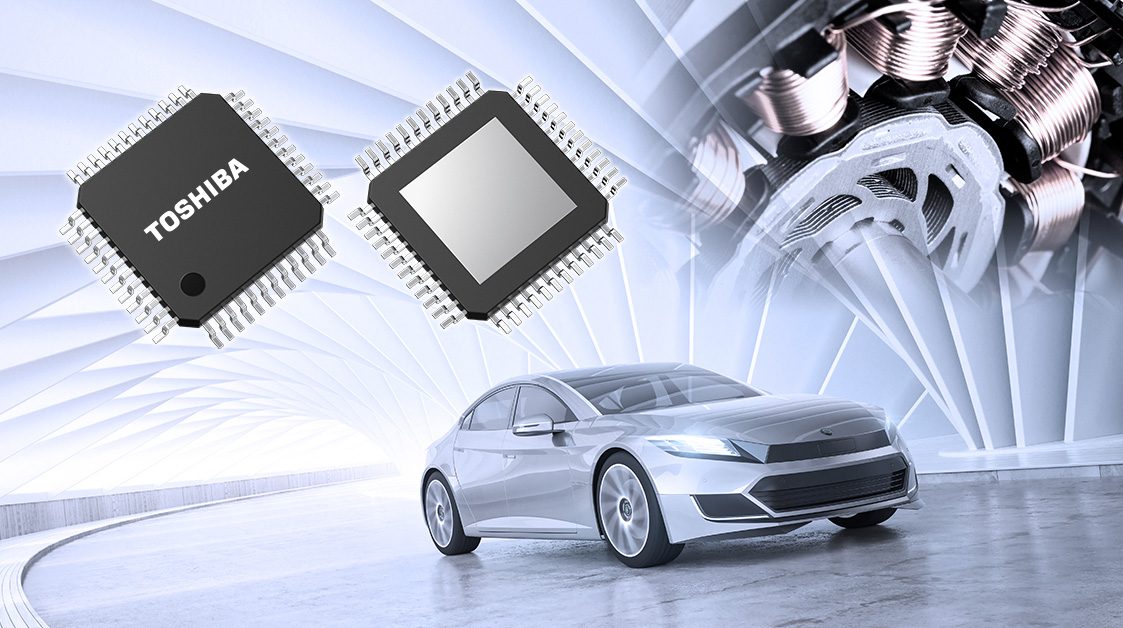
New Delhi, India — Toshiba Electronic Devices & Storage Corporation has unveiled a significant advancement in automotive technology with the shipment of engineering samples for its latest SmartMCD series offering, the TB9M030FG. This innovative chip represents a leap forward in the design of **automotive motor control device** solutions, combining essential components and pioneering a unique sensorless control method that promises quieter and more efficient operation for a wide range of vehicle auxiliary systems.

The TB9M030FG is engineered to address some of the persistent challenges in electric motor control, particularly within the demanding automotive environment. By integrating a microcontroller and a gate driver into a single package, Toshiba aims to streamline design processes, reduce component count, and enhance the overall reliability of motor control units in modern vehicles.
Pioneering Zero-Speed Sensorless FOC for Automotive Applications
One of the most noteworthy features of the TB9M030FG is its proprietary sensorless Field-Oriented Control (FOC) technology. This advanced approach enables the precise detection of rotor position and subsequent motor control even from a complete standstill, extending through the low-speed range, without relying on traditional position sensors.
Conventional methods for sensorless control, especially at low or zero speeds, often involve superimposing a high-frequency voltage signal onto the drive waveform. While effective in inferring rotor position, this harmonic injection technique typically generates undesirable acoustic noise, leading to audible motor sounds that can detract from vehicle occupant comfort.

Toshiba’s breakthrough lies in its ability to achieve stable sensorless FOC from zero speed on salient-pole motors without this acoustic penalty. This innovative method promises to deliver silent operation, a crucial advantage as the automotive industry increasingly prioritizes passenger experience and the quiet performance of electric and hybrid vehicles.
Integrated Architecture: The SmartMCD Advantage
The SmartMCD (Motor Control Device) series, exemplified by the TB9M030FG, is built on the principle of high integration. Consolidating a microcontroller and a gate driver into a single chip offers several benefits for automotive manufacturers and system designers. This integrated approach not only saves valuable board space but also reduces wiring complexity, leading to potentially lower manufacturing costs and improved electromagnetic compatibility (EMC).
At its core, the TB9M030FG houses a robust 32-bit Arm Cortex-M0 processor, operating at 40 MHz. This processing capability ensures efficient execution of complex control algorithms, while dedicated memory provisions — including 64 KB of flash memory with Error-Correcting Code (ECC), 12 KB of ROM, and 4 KB of RAM — provide ample space for program storage and data handling, crucial for mission-critical automotive functions.
Designed for the Rigors of the Automotive Environment
The TB9M030FG is specifically designed to meet the stringent requirements of automotive applications. It is housed in a compact 9×9 mm QFP48 package, facilitating integration into space-constrained electronic control units (ECUs). The device operates within a supply voltage range of 6V to 18V, with an absolute maximum rating of –0.3V to +40V, accommodating typical vehicle electrical systems.
Thermal performance is paramount in automotive components, and the TB9M030FG excels in this regard. It is specified for an operating temperature (Ta) range of –40°C to +150°C and a junction temperature (Tj) range of –40°C to +175°C. These wide temperature ranges ensure reliable operation in the extreme conditions often encountered under the hood or within other vehicle compartments.
Furthermore, the chip boasts a comprehensive suite of communication interfaces, including LIN (1 channel, responder mode), UART, SPI, and PWM. These industry-standard protocols enable seamless communication with other ECUs and sensors within the vehicle’s network, supporting sophisticated system integration. For precise motor current feedback, the device incorporates a 1-shunt resistor current sense amplifier, complemented by 12-bit and 10-bit Analog-to-Digital Converters (ADCs) for accurate signal acquisition.
AEC-Q100 Grade 0 Qualification: Assuring Automotive Reliability
A critical aspect of any **automotive motor control device** is its qualification for the demanding automotive sector. The TB9M030FG has achieved AEC-Q100 Grade 0 qualification. This certification is a testament to the device’s adherence to the highest reliability standards set by the Automotive Electronics Council (AEC). Grade 0 signifies operation up to a maximum ambient temperature of +150°C, ensuring robust performance and longevity even in the harshest automotive environments. This level of qualification underscores Toshiba’s commitment to providing trusted and durable components for the global automotive industry.
Empowering Electrification of Auxiliary Systems
The target applications for the TB9M030FG include a wide array of electric water pumps, oil pumps, fans, and blowers. These components are integral to modern vehicle systems, contributing to engine cooling, lubrication, cabin climate control, and battery thermal management in electric vehicles (EVs).
The broader trend of electrifying automotive auxiliary systems is driving demand for more integrated, efficient, and quieter motor control solutions. As vehicles become increasingly electrified, replacing traditional mechanical or hydraulic systems with electric counterparts offers benefits such as improved fuel efficiency, reduced emissions, and greater design flexibility. Toshiba’s new chip directly supports this transition by offering a high-performance, compact, and acoustically optimized solution.
The integration of a built-in vector engine hardware specifically designed to handle FOC computations offloading the main CPU core is another key advantage. This dedicated hardware significantly reduces software overhead and overall program size, freeing up the CPU for other critical tasks and potentially accelerating development cycles for automotive engineers.
Roadmap to Mass Production
Toshiba Electronic Devices & Storage Corporation began shipping engineering samples of the TB9M030FG on April 18, 2026, allowing automotive manufacturers to evaluate and integrate the advanced **automotive motor control device** into their upcoming vehicle platforms. Mass production of the TB9M030FG is strategically scheduled for January 2027, aligning with future vehicle development cycles and the increasing demand for advanced motor control solutions in the evolving automotive landscape.
This development from Toshiba underscores the continuous innovation in semiconductor technology that is crucial for advancing the efficiency, comfort, and reliability of next-generation automobiles, particularly as the industry moves towards greater electrification and automation.
FAQ Section
What is the TB9M030FG and what makes it unique?
The TB9M030FG is Toshiba’s new automotive motor control device chip from its SmartMCD series. It integrates a microcontroller and gate driver. Its unique feature is a proprietary zero-speed sensorless Field-Oriented Control (FOC) technology that enables quiet motor operation from a standstill, avoiding the acoustic noise associated with conventional sensorless methods.
What are the primary applications for this new chip?
The TB9M030FG is designed for various automotive auxiliary systems that are undergoing electrification. Key applications include electric water pumps, oil pumps, cooling fans, and blowers. These systems are vital for engine management, thermal control, and enhancing overall vehicle efficiency and comfort.
How does Toshiba’s sensorless FOC differ from standard approaches?
Standard sensorless FOC methods often superimpose a high-frequency voltage signal to infer rotor position at low speeds, which generates audible noise. Toshiba’s proprietary approach, however, achieves stable and precise sensorless FOC from zero speed on salient-pole motors without introducing this acoustic penalty, ensuring silent operation.
What benefits does integrating a microcontroller and gate driver offer?
Integrating both a microcontroller and a gate driver into a single package, as seen in the TB9M030FG, offers several advantages. It significantly reduces the physical space required on a circuit board, simplifies the overall system design, lowers manufacturing costs by reducing component count, and can improve system reliability and electromagnetic compatibility (EMC).
What does AEC-Q100 Grade 0 qualification mean for this device?
AEC-Q100 Grade 0 qualification is the highest standard for automotive electronic components, ensuring reliability under extreme conditions. It certifies that the TB9M030FG can operate reliably at an ambient temperature up to +150°C. This qualification is crucial for components used in harsh automotive environments, guaranteeing robust performance and long-term durability.
When will the TB9M030FG be available for mass production?
Toshiba Electronic Devices & Storage Corporation commenced shipping engineering samples of the TB9M030FG on April 18, 2026, for evaluation by automotive manufacturers. Mass production for the new automotive motor control device is scheduled to begin in January 2027, making it available for widespread integration into upcoming vehicle models.