
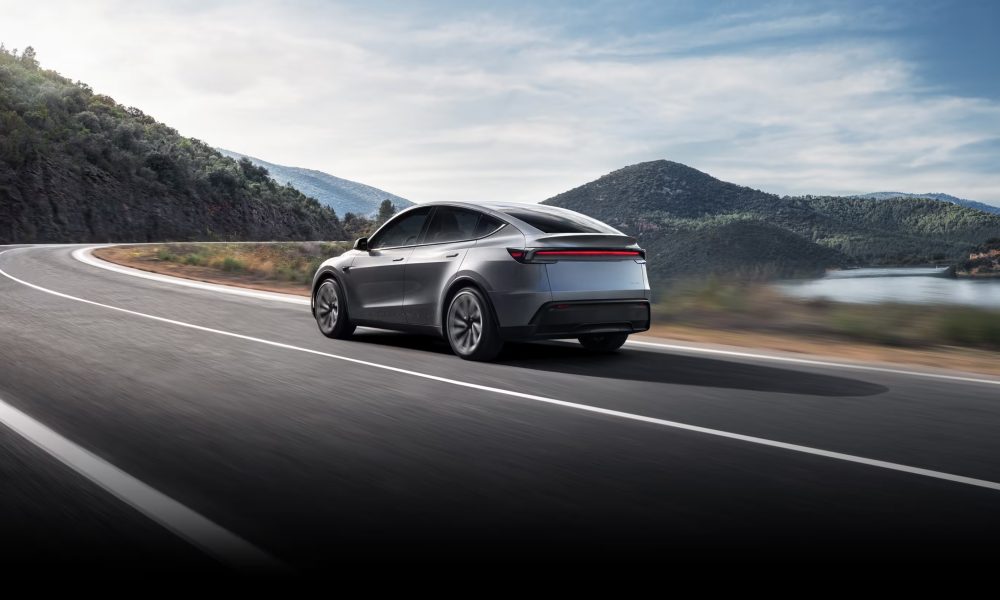
Tesla CEO Elon Musk has indicated that the company’s Full Self-Driving (FSD) software, in its supervised iteration, could receive regulatory approval in the Netherlands by March 20, 2026. This potential approval marks a significant step for Tesla’s advanced driver-assistance systems in the European market.
Regulatory Milestone Anticipated in the Netherlands
Musk shared this optimistic timeline during a recent interview conducted at Tesla’s Giga Berlin facility. He attributed the March 20th date to information provided by local Dutch authorities.

“We’re told by the authorities that March 20th, it’ll be approved in the Netherlands,’ what I was told,” Musk stated during the interview. He added, “Hopefully, that date remains the same. But I think people in Europe are going to be pretty blown away by how good the Tesla car AI is in being able to drive.”
The Netherlands could become the first European nation to officially sanction Tesla’s latest supervised FSD software under evolving regulatory frameworks. Tesla has been actively pursuing expanded access for its FSD system across Europe, a region with regulatory standards that differ considerably from those in the United States.
Tesla’s Vision-Based AI and Safety Data
Tesla’s FSD system distinguishes itself by utilizing vision-based neural networks. These networks are trained on extensive real-world driving data, enabling vehicles to navigate using cameras and artificial intelligence rather than relying solely on traditional sensor suites often found in competitor systems.

The performance of FSD Supervised has demonstrated significant progress. According to Tesla’s safety reports, vehicles equipped with FSD Supervised have collectively driven over 8.3 billion miles. During this period, the system recorded one major collision for every 5,300,676 miles driven with FSD Supervised engaged.
For comparative context, Teslas operating with their Active Safety systems engaged but without FSD Supervised incurred one major collision for every 2,175,763 miles. Vehicles driven manually without any Active Safety features experienced one major collision for every 855,132 miles. These figures are notably better than the U.S. national average, which stood at one major collision for every 660,164 miles during the same timeframe.
Path to Broader European Adoption
Securing approval in the Netherlands is anticipated to serve as a crucial stepping stone for broader adoption across the European Union. However, it is likely that Tesla will still need to obtain clearances in individual member states, given the varying national regulations.
The potential green light in the Netherlands signifies Tesla’s ongoing efforts to navigate complex European automotive regulations and introduce its advanced autonomous driving technology to a wider audience. The company’s success in this market could pave the way for similar advancements in other EU countries, accelerating the deployment of sophisticated AI-powered driving assistance systems across the continent.