
Escalating global conflicts, particularly in the Middle East, and the potential closure of critical shipping lanes like the Strait of Hormuz, have starkly illuminated Australia’s profound vulnerability in its reliance on diesel for road freight and food distribution. As the second most road-freight-dependent nation globally, Australia imports approximately 90% of its refined diesel and crude oil, with a significant portion, around 30%, transiting the Strait of Hormuz.
This dependence leaves the nation exposed to volatile international oil prices and supply chain disruptions. With projections suggesting oil prices could reach $120 per barrel, concerns are mounting over potential fuel shortages during prolonged global instability. While calls for increased government investment in fuel storage are growing, such a strategy risks entrenching Australia further into an expensive and precarious energy system reliant on imported oil.

A More Robust Alternative: Electrifying Road Freight
Experts propose a more effective and sustainable solution: the widespread electrification of road freight. This approach not only strengthens national energy security but also promises reduced operational costs, lower emissions, and significantly diminished supply-chain risks.
Record-Breaking Demonstrations and Future Plans
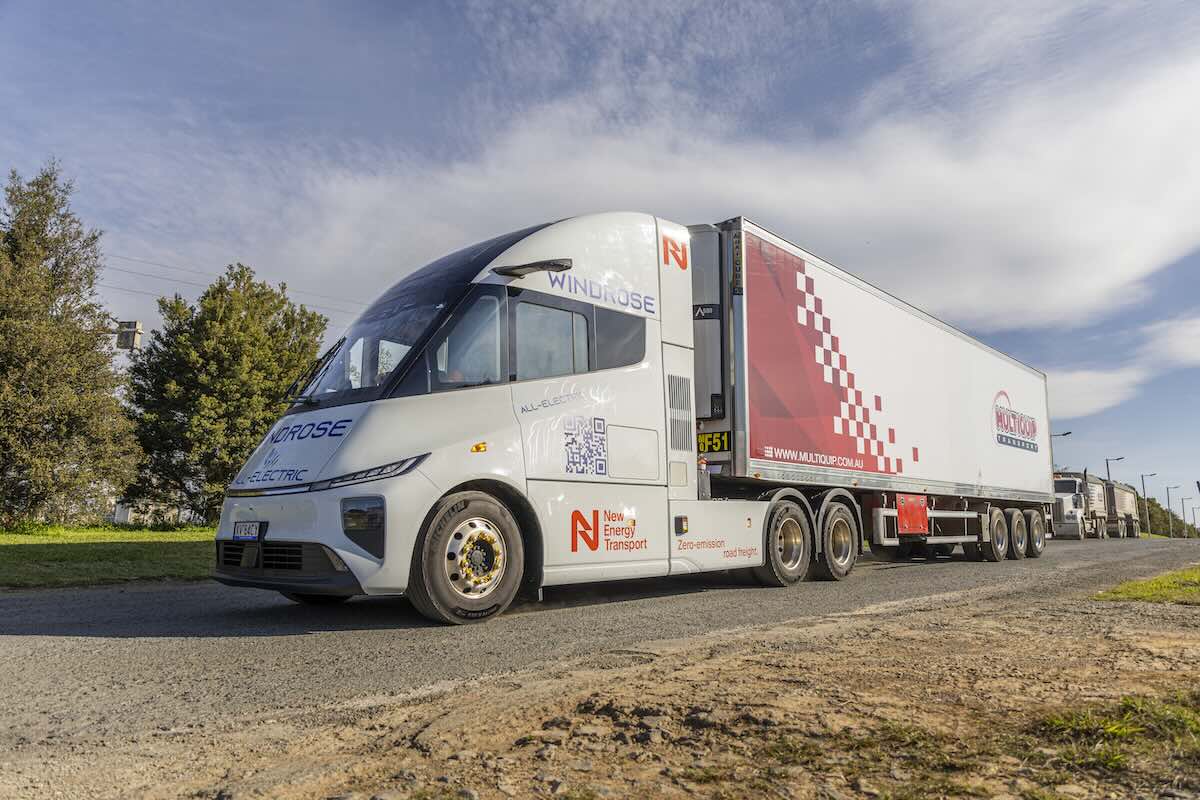
Australian electric trucking startup, New Energy Transport (NET), has demonstrated the tangible potential of this transition. The company recently completed a landmark test, successfully transporting 36 tonnes of cargo over 480 kilometres on a single charge. Notably, the electric truck finished the journey 40 minutes faster than a comparable diesel truck, attributed to its ability to maintain consistent speed on inclines.
The electric prime mover utilized in the demonstration was supplied by Chinese manufacturer Windrose. NET is poised to establish its first major electric depot in the south-west of Sydney by mid-2026. This facility will house 50 electric trucks and service key routes connecting to Newcastle, Wollongong, and Canberra. NET’s strategy involves a comprehensive overhaul of road freight operations for the electric era, integrating electric prime movers, high-speed charging infrastructure, and cost-effective renewable energy sources. Preliminary modeling by NET suggests this integrated approach could reduce road freight costs by over 20%.

Enhancing Energy Security Through Domestic Power
Australia’s status as the second most road-freight-dependent country means its supply chains for food and essential goods are highly susceptible to fuel price volatility and geopolitical events. The reliance on nearly 30 billion litres of imported diesel annually for the road transport sector represents a significant economic and food-security vulnerability, directly impacting national security.
Electrifying heavy road freight offers a fundamental shift. Instead of depending on imported liquid fuels, Australia can generate transport energy domestically. A distributed network of solar, wind, and energy storage assets can power the nation’s freight sector, effectively replacing overseas oil supply chains with Australian renewable energy sources.
Retrofitting Existing Fleets for Accelerated Transition
While new electric trucks are crucial, the existing diesel fleet presents a substantial asset and an opportunity for rapid electrification. Companies like Janus, based on the Central Coast, are pioneering the retrofitting of diesel engines with electric drivetrains and modular battery systems. This approach offers a cost-effective alternative to major engine rebuilds, with the incremental cost typically recouped within a year. Battery packs can also be swapped in mere minutes, minimizing downtime.
This retrofitting strategy allows for a faster electrification timeline compared to waiting for complete fleet replacement and avoids the premature scrapping of functional vehicles. The integration of automation is also progressing, with Solarh2e collaborating with Chinese equipment supplier Sany to implement automated battery-swap systems, initially for mine site operations.
Innovations in Charging Infrastructure
A common apprehension regarding large-scale electric truck adoption is the potential strain on the electricity grid. However, innovative solutions are emerging that do not necessitate extensive grid upgrades. Australian companies such as eLumina and New Volt are drawing inspiration from large-scale charging facilities like Tesla’s Lost Hills station in California. These setups often combine a moderate grid connection with substantial battery storage and on-site solar photovoltaic (PV) generation.
Deploying such infrastructure strategically along major freight corridors and in regional areas can enhance grid resilience while supporting electric vehicle charging. This distributed approach mitigates the need for massive overhauls of the existing power infrastructure.
Learning from China’s Ambitious Electrification Drive
China serves as a compelling case study in the rapid and large-scale adoption of electric vehicles. Currently, approximately 30% of new trucks sold in China are battery-electric, significantly reducing diesel’s market share to around 40%. Chinese manufacturers dominated the global electric truck market in 2024, accounting for 80% of the approximately 90,000 units sold worldwide, according to the International Energy Agency (IEA).
This accelerated uptake has already begun to curb China’s oil consumption, with projections indicating a peak in oil demand by 2027. Consistent policy support and industrial scale have propelled Chinese clean-tech firms, such as CATL and BYD, to global leadership in battery and electric vehicle technology. These companies are actively investing in international markets, including significant projects like CATL’s US$6 billion integrated battery facility in Indonesia and multiple multibillion-dollar battery gigafactories across Europe and North Africa.
Strategic collaboration with China on zero-emissions transport, particularly in areas like charging networks and battery-swapping technologies, could significantly accelerate Australia’s transition and bolster its national resilience.
The Convergence of Transport and the Power System
Beyond the immediate benefits of quieter, cleaner trucks that improve driver working conditions and local community quality of life, electric trucking heralds a fundamental integration of the transport and electricity sectors. These sectors have historically operated in complete isolation.
A fleet of 100 heavy electric trucks can possess approximately 60 MWh of battery capacity, comparable to about half the capacity of South Australia’s original ‘big battery’. With the advent of the Megawatt Charging Standard (MCS), enabling bi-directional charging, these fleets could actively participate in the electricity market. This participation can help manage daily demand peaks and provide grid stability during network disruptions, transforming trucks from passive energy consumers to active grid assets.
A Strategic Opportunity for Australia
The electrification of road freight presents Australia with a unique opportunity to fundamentally rethink its economic energy infrastructure. Blessed with abundant renewable energy resources, extensive road freight corridors, and a supportive policy landscape, Australia is strategically positioned to capitalize on the benefits of electric road freight. For the nation to achieve genuine energy security, the most effective and economically viable path lies not in expanding fuel storage for imported diesel, but in decisively eliminating diesel dependence altogether.