

BYD is set to significantly accelerate electric vehicle (EV) charging speeds in Europe, announcing plans to roll out its 1 megawatt (MW) charging technology across the continent. The company aims to deploy over 3,000 ultra-fast charging stations by the end of 2026, marking a substantial upgrade from current charging capabilities.
European Rollout Details Emerge
The ambitious expansion plans were detailed during a recent presentation in Poland. Information shared on the social media platform X by Norbert C revealed that initial deployment will include dozens of sites in Poland alone, capable of delivering up to 1,000 kW of charging power. This output far surpasses the 350–400 kW capacity found in most of Europe’s fastest EV chargers currently available.
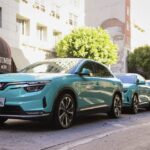
BYD first introduced its 1,000-volt “Super e-Platform” last year, a technology designed to enable compatible electric vehicles to gain approximately 400 km of driving range in as little as five minutes. Realizing this charging speed consistently will necessitate robust grid infrastructure and sophisticated site engineering, representing a considerable advancement in EV charging technology.
Byłem dziś na bardzo ciekawym spotkaniu w BYD Polska. Było trochę o nowych autach ale i o sieci ładowania.
BYD zainwestuje w tym roku kasę w kilkadziesiąt stacji ładowania w Polsce o mocy 1000kW. W Europie ponad tysiąc
I uwaga oni zainwestują kasę ale nie będą CPO (Charge… pic.twitter.com/aOLmVqHqgH
— Norbert Cała ⚡ (@norbertcala) February 26, 2026
Vehicle Compatibility and Future Models
The only 1 MW charging-capable vehicle from BYD confirmed for the European market is the Denza Z9, with its launch anticipated in the first half of 2026. The Denza brand has already established a presence in Australia, having launched there late last year, hinting at potential future megawatt charging infrastructure in that region as well.
Vehicles built on BYD’s new “Super e-Platform,” such as the latest versions of BYD’s Han L sedan and Tang L SUV models, will be compatible with this high-power charging technology. The platform’s 1,000-volt architecture supports charging currents up to 1,000 amps, theoretically enabling the rapid addition of range.

The advancement in charging technology is supported by BYD’s next-generation blade batteries. These batteries are engineered to handle significantly higher charging rates while maintaining their durability and longevity, a critical factor for high-performance charging systems.
Addressing Range Anxiety and Infrastructure Demands
The primary goal of this ultra-high-power charging infrastructure is to drastically reduce charging times, bringing them closer to conventional gasoline refuelling durations. This addresses a key psychological barrier that often deters potential buyers from adopting electric vehicles.
However, deploying such powerful charging stations presents significant challenges. They will require substantial grid capacity to supply the immense power needed. Furthermore, careful site planning and engineering will be essential to ensure safe and efficient operation.
The expansion of ultra-fast charging capabilities is not unique to BYD. As faster-charging EV models from manufacturers like Zeekr and Xpeng become more prevalent in Europe and Australia, the demand for advanced charging infrastructure will continue to grow. Future charging sites may need to be larger and designed to accommodate these significantly higher power levels.
While no specific Australian rollout has been confirmed for the 1 MW chargers, Denza’s recent entry into the Australian market suggests that the possibility of a megawatt-capable charging network in Australia cannot be ruled out in the longer term.
About the Author:
Riz Akhtar is the founder of carloop, based in Melbourne, specializing in Australian EV data, insight reports, and trends. He is a mechanical engineer with seven years of experience in transport infrastructure development before establishing carloop. His passion for cars, particularly EVs, drives his commitment to reducing transport emissions in Australia. He currently drives a Tesla Model 3.