
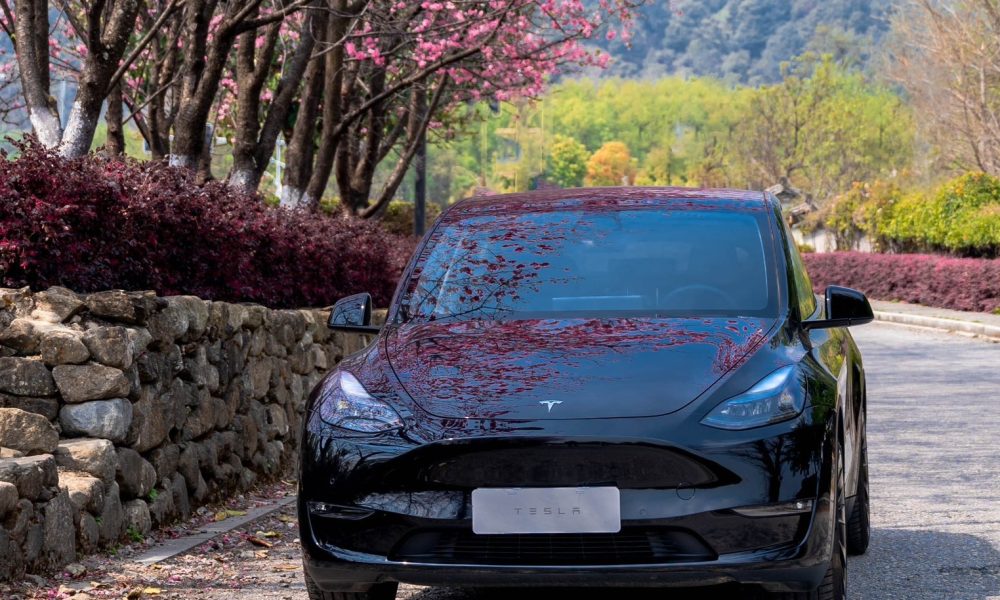
Tesla is reportedly on the cusp of expanding its advanced driver-assistance system, Full Self-Driving (FSD), to Japan, marking a significant step in the electric vehicle manufacturer’s global rollout strategy for the technology.
Ambitious Timeline Set for 2026 Implementation
Richi Hashimoto, the president of Tesla’s Japanese subsidiary, has indicated that the company is targeting 2026 for the implementation of Full Self-Driving in Japan. Speaking on the company’s objectives, Hashimoto stated, “We are aiming for implementation in 2026. [We are] doing everything in our power [to achieve this].”
This ambitious timeline follows a period of successful internal testing and positive preliminary media reviews. Employee test drives of the FSD system commenced in 2025, initially focusing on the Model 3. By March 5, 2026, testing had expanded to include the Model Y variant.
Regulatory Approval and Potential for Widespread Adoption
The successful deployment of FSD in Japan hinges on securing regulatory approval. Once cleared by authorities, Tesla plans to leverage its Over-the-Air (OTA) software update capabilities to activate the system across its existing fleet.
Approximately 40,000 Teslas are currently operating on Japanese roads, presenting a substantial potential user base for the FSD technology. The country’s well-organized traffic systems and stringent safety standards are seen as favorable conditions for the introduction and testing of autonomous driving technologies.

Hashimoto’s Leadership and Tesla’s Sales Surge in Japan
The push for FSD implementation in Japan aligns with Richi Hashimoto’s leadership, which has been credited with a notable turnaround in Tesla’s sales performance within the country. Under his guidance, Tesla achieved a record delivery of 10,600 vehicles in Japan during 2025.
This figure represents a nearly 90% increase compared to the previous year and marks the first time the company has surpassed the 10,000-unit threshold annually. This sales growth is attributed to a strategic shift from an online-only sales model to a more accessible approach.
Strategic Retail Expansion and Infrastructure Development
Tesla’s strategy in Japan has involved the establishment of 29 physical showrooms situated in high-traffic shopping malls. This move was complemented by enhanced staff training and the introduction of attractive financing options in January 2026, making Tesla vehicles more accessible to consumers.
Further bolstering the ownership experience, Tesla has outlined plans to significantly expand its Supercharger network. The company aims to have over 1,000 Supercharger points operational across Japan by 2027, enhancing charging convenience and infrastructure for its growing customer base.
Broader International Context: Giga Berlin and Giga Shanghai
The developments in Japan are part of Tesla’s larger international expansion strategy. In Europe, the Giga Berlin factory demonstrated strong production capabilities in 2025, manufacturing over 200,000 vehicles despite a temporary operational halt. These vehicles serve more than 30 European markets.
Production at Giga Berlin is slated for sequential growth in 2026, with plans for battery cell manufacturing to commence by 2027. While the European electric vehicle market has faced certain challenges, the Berlin facility remains crucial for supplying Model Y vehicles across the continent.
Meanwhile, Giga Shanghai continues to be a vital manufacturing hub for Tesla, particularly in Asia. China, as Tesla’s largest market, saw deliveries from the Shanghai plant in January 2026 rise by 9 percent year-over-year, reaching 69,129 units. Anticipation is building for the introduction of more affordable new models later in the year.
Global FSD Rollout and Future Technology Integration
Tesla’s FSD technology is already undergoing advancements and deployment in markets such as the United States and South Korea. The company has further plans for rollout in Europe and other parts of Asia, indicating a coordinated global strategy.
This expansion of FSD capabilities is expected to complement Tesla’s long-term goals, which include the wider introduction of its Cybercab autonomous taxi service and the Optimus humanoid robot in new international markets.
With the prospect of OTA-enabled autonomous driving on the horizon and successful retail strategies contributing to market penetration, Tesla is systematically strengthening its global presence. From its showrooms in Tokyo to its manufacturing operations in Berlin and Shanghai, the company’s vision for sustainable mobility powered by advanced technology is steadily gaining momentum across key international regions.