
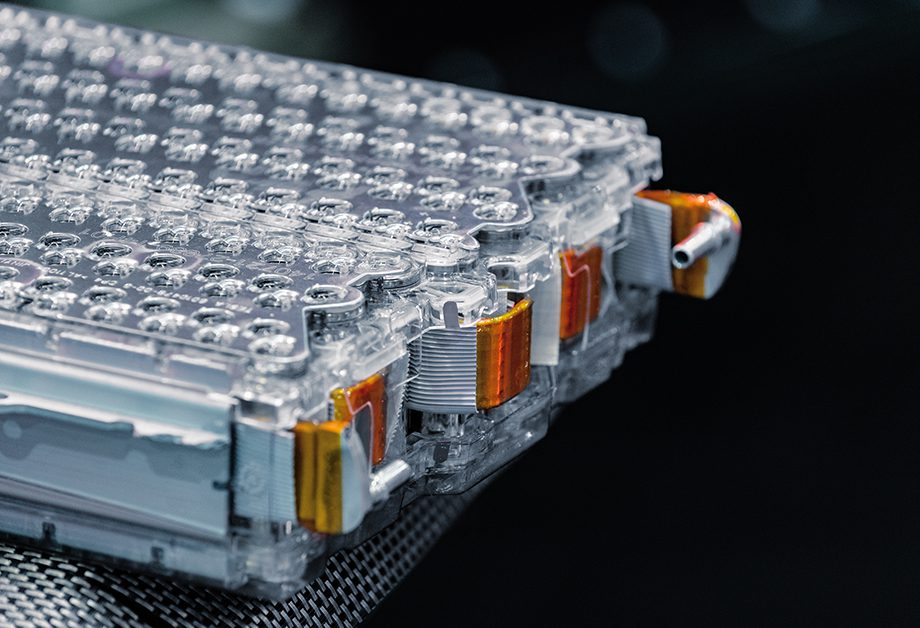
With over 60 million electric vehicles (EVs) now navigating global roads, the automotive industry’s focus has decisively shifted from proving EV feasibility to mastering manufacturability. This necessitates rapid scaling of production while ensuring unwavering quality, safety, and profitability. The same manufacturing imperative applies to EV and e-mobility batteries, where technological advancement must be matched by efficient, cost-effective, and high-quality production processes.
Optimizing Battery Manufacturing Through Material Science
Achieving scalable and high-quality battery production presents significant challenges. However, strategic material selection offers a pathway to enhanced quality and throughput. Among these, pressure-sensitive adhesive (PSA) tapes have emerged as a sophisticated and versatile solution, simplifying complex assembly processes and supporting automation.

The Versatility of PSA Tapes in Battery Design
PSA tapes represent a mature technology widely adopted across various industries, including automotive. These tapes typically consist of an adhesive layer that bonds to a substrate with light pressure, a facestock for dimensional stability and other properties, and a protective liner. Their adaptability allows them to fit into confined spaces, contributing to reduced pack mass. Furthermore, PSA tapes offer clean, repeatable application and are highly compatible with automated manufacturing environments.
Compared to liquid adhesives, which require curing time and can exhibit application variability, and mechanical fasteners, which add to part count and weight, PSA tapes provide a streamlined alternative. They eliminate the need for cure times, allowing assembled components to move directly to the next production stage, thereby saving valuable time and reducing the need for capital expenditure on equipment like curing ovens.
Customizable Properties Beyond Basic Adhesion
Beyond their bonding capabilities, PSA tapes can be engineered with specific functionalities to enhance battery system performance and safety. For instance:
- Electrically insulative film facestocks can bolster a system’s dielectric protection.
- Tapes integrated with flame-retardant materials like mica can provide crucial thermal management and fire safety.
- Lamination with thick foam facestocks offers shock absorption for sensitive internal components.
PSA Tapes as a Design-for-Manufacturability (DFM) Solution
The true value of PSA tapes extends to their ability to address specific manufacturing process challenges, embodying the principles of Design for Manufacturability (DFM). Battery production, from cell to module and pack assembly, is inherently complex, involving diverse substrates, tight tolerances, layered constructions, and critical electrical and thermal management requirements. Traditional bonding and assembly methods often lead to inefficient steps, increased scrap rates, and potential damage to delicate battery components.
Addressing Manufacturing Pain Points with PSA Tape Solutions
PSA tapes offer tangible solutions to these common pain points, optimizing battery production in several key areas:
Reducing Process Complexity and Costs
The immediate bonding characteristic of PSA tapes eliminates time-consuming steps associated with traditional methods. The absence of cure times accelerates the production cycle and removes the need for energy-intensive curing equipment, leading to significant savings in both time and capital expenditure. Products like Avery Dennison’s next-generation Volt Tough™ Stretch exemplify this. This PSA tape-based dielectric insulation solution is designed for application onto flat metal blanks, which are subsequently formed into battery components. Its engineered stretchability prevents the dielectric barrier from tearing during the stamping process, offering a simpler and more cost-effective alternative to traditional methods like powder coating.
Enhancing Automation and Robotic Application
PSA tapes are integral to the development of efficient automated manufacturing processes in the e-mobility sector. Their design allows for various automation strategies, including pick-and-place of die-cut parts, integrated liner removal and application, and wide-web lamination for large components. The instant adhesion ensures that components remain stable during transfer between workstations, which is critical for preventing misalignment in layered battery assemblies that could lead to electrical clearance issues or thermal interface problems.
Film-based carriers like PET offer dimensional stability, crucial for precise robotic handling and placement at high speeds. For applications requiring conformity around irregular surfaces, nonwoven or foam carriers provide the necessary flexibility while maintaining automation compatibility. By utilizing PSA tapes engineered for robotic application, battery manufacturers can stabilize production lines, improve yield, and enhance overall equipment effectiveness.
Minimizing Scrap Rates and Improving Quality Control
The delicate nature of many battery materials makes them susceptible to damage during high-speed assembly. PSA tapes can be customized to help manufacturers reduce waste and scrap. A common issue arises during liner removal, where materials like mica or ceramic paper can tear or fracture. PSA tape constructions featuring controlled-release liners and balanced adhesive systems minimize mechanical stress on these sensitive materials, leading to fewer damaged parts.
Manufacturers can precisely control the liner’s release force through adjustments to the release formula or through methods like zone coating the adhesive. Furthermore, PSA tapes can be integrated with vision systems for inline quality checks. Printed liners or pigmented adhesives enable automated equipment to verify part presence and placement, identifying defects early and allowing for the removal of non-compliant parts before further value is added, thus reducing the total cost of scrap.
Collectively, these incremental improvements—reducing handling damage, preventing misalignment, and catching defects early—significantly contribute to higher overall yields and lower manufacturing costs at scale.
Partnering for Engineered PSA-Tape DFM Solutions
To effectively leverage PSA tapes in battery manufacturing, collaborating with experienced tape manufacturers is essential. Key considerations when selecting a partner include their:
- Expertise and application experience within the battery industry.
- Research and development capabilities for creating innovative solutions.
- Willingness and capacity to develop customized solutions.
- Access to a network of converters and functional material suppliers.
- Commitment to providing ongoing technical support.
Engaging with PSA tape manufacturers early in the product design phase allows for the development of solutions that are optimally integrated into the manufacturing process. Companies like Avery Dennison work closely with OEMs and suppliers to create tailored PSA-tape solutions for specific cell, module, and pack designs, backed by extensive R&D and a broad portfolio for the e-mobility battery sector.