
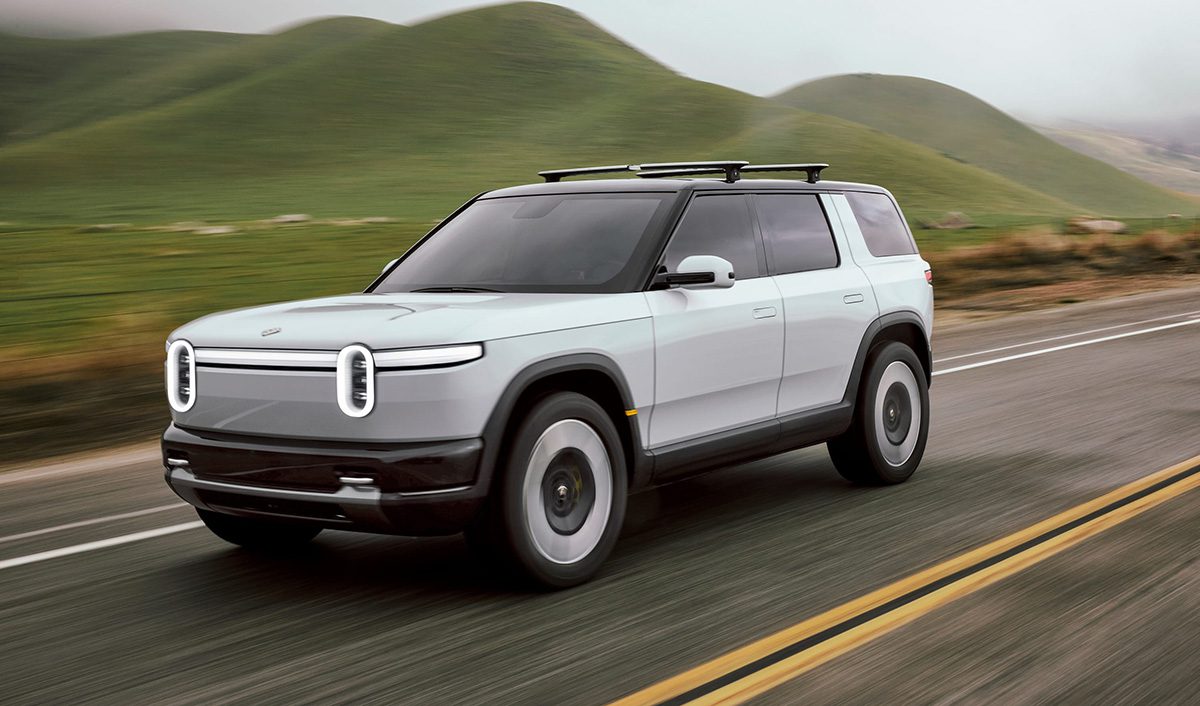
In a significant development poised to reshape urban mobility, ride-hailing giant Uber and electric vehicle innovator Rivian have announced a landmark partnership. The collaboration aims to deploy an extensive fleet of autonomous Rivian R2 robotaxis, with initial plans targeting 10,000 fully autonomous vehicles in the first phase.
This ambitious initiative seeks to integrate thousands of unsupervised autonomous Rivian R2 robotaxis exclusively onto the Uber platform, making them available to passengers across major markets. The initial rollout is slated to commence in 2028, with San Francisco and Miami identified as the first deployment cities.
Strategic Alliance to Scale Autonomous Mobility
The long-term vision of this strategic alliance extends significantly beyond the initial deployment. By the close of 2031, Uber and Rivian aspire to expand the presence of these autonomous vehicles across 25 cities spanning the United States, Canada, and Europe. This aggressive timeline underscores the companies’ commitment to accelerating the adoption of autonomous driving technology on a global scale.
Uber’s commitment to this partnership is substantial, including a planned investment of up to $1.25 billion in Rivian. This financial backing is structured to occur through 2031 and is contingent upon the achievement of specific milestones, indicating a performance-driven collaboration.
The partnership positions both companies at the forefront of the burgeoning autonomous vehicle market. For Uber, it represents a crucial step in fulfilling its long-held ambition of operating a large-scale, cost-effective autonomous fleet. For Rivian, it offers a pathway to rapidly scale its advanced autonomous technology and vehicle production within the commercial ride-hailing sector.

Rivian’s Advanced Autonomy Platform at the Core
Central to this deployment is Rivian’s cutting-edge third-generation autonomy platform, which was first unveiled in December 2025. This sophisticated system is engineered for advanced self-driving capabilities, promising a new era of safety and efficiency for autonomous robotaxis.
The platform is equipped with a comprehensive multi-modal sensor suite, designed to provide a 360-degree understanding of the vehicle’s surroundings. This suite includes 11 high-resolution cameras, boasting a combined 65 megapixels, which offer detailed visual perception.
Supplementing the visual data, the system incorporates five radars and one LiDAR unit. This combination of sensors allows the autonomous robotaxis to perceive objects, measure distances, and map environments with exceptional accuracy, even in challenging weather conditions or varying light levels.
Powering this intricate perception and decision-making apparatus are two of Rivian’s proprietary RAP1 chips. These in-house developed processors are formidable, capable of delivering 1600 TOPS (Tera Operations Per Second) of AI computing performance. This high computational power is critical for real-time data processing and complex algorithmic execution required for Level 4 autonomous operation.
Leadership Perspectives on the Future of Autonomous Robotaxis
Both Rivian and Uber leadership have articulated a strong conviction in the potential of this partnership to drive significant advancements in autonomous technology and service delivery.
RJ Scaringe, founder and CEO of Rivian, highlighted the strategic importance of the collaboration. “This partnership with Uber will help accelerate our path to level 4 autonomy to create one of the safest and most convenient autonomous platforms in the world,” Scaringe stated, emphasizing the dual focus on safety and user experience.
Scaringe further elaborated on the foundational elements supporting Rivian’s autonomous ambitions: “The scale of Rivian’s growing data flywheel, coupled with RAP1, our state-of-the-art in-house inference platform, and our multimodal perception platform make us excited for the rapid advancement of Rivian autonomy over the next couple of years.” This statement underscores Rivian’s vertically integrated approach, leveraging data from its consumer vehicles to refine its autonomous capabilities.
Dara Khosrowshahi, CEO of Uber, echoed this sentiment, expressing confidence in Rivian’s unique strategy. “We’re big believers in Rivian’s approach—designing the vehicle, compute platform and software stack together, while maintaining end-to-end control of scaled manufacturing and supply in the US,” Khosrowshahi commented, pointing to the advantages of integrated development.
Khosrowshahi also noted the value of Rivian’s broader experience: “That vertical integration, combined with data from their growing consumer vehicle base and experience managing the complexities of commercial fleets, gives us conviction to set these ambitious but achievable targets.” This comprehensive approach, from design to manufacturing and fleet management, provides a robust foundation for scaling autonomous robotaxis.
The Journey Towards Level 4 Autonomy
The stated goal of achieving Level 4 autonomy is a critical aspect of this partnership. Level 4 autonomy, as defined by the Society of Automotive Engineers (SAE), refers to a state where the vehicle can perform all driving functions and monitor the driving environment under certain conditions, such as within a geofenced area, without human intervention.
For autonomous robotaxis, Level 4 capability means the vehicles can operate independently within designated operational design domains (ODDs), handling most driving situations without a safety driver. This represents a significant leap from current assisted driving systems and is essential for truly unsupervised commercial operations.
Rivian’s focus on developing its entire autonomy stack in-house—from the vehicle design to the compute platform and software—is a deliberate strategy to achieve this level of sophistication and control. This vertical integration is expected to facilitate faster development cycles and tighter integration of hardware and software, crucial for the reliability and safety demanded of autonomous robotaxis.
Transforming Urban Transportation with Autonomous Robotaxis
The deployment of thousands of autonomous Rivian R2 robotaxis has the potential to fundamentally transform urban transportation. For consumers, it could mean more convenient, potentially more affordable, and consistently available ride-hailing services, especially in high-demand areas.
For cities, the widespread adoption of autonomous fleets could lead to reduced traffic congestion, fewer accidents attributed to human error, and more efficient use of road infrastructure. The electric nature of Rivian’s vehicles also promises environmental benefits, contributing to cleaner urban air and reduced carbon footprints.
The ambition to deploy these autonomous robotaxis across 25 cities in the US, Canada, and Europe by 2031 highlights a long-term vision that extends beyond mere technological innovation. It signifies a strategic move to establish a dominant position in the future of mobility, where autonomous, electric vehicles play a central role in how people move within and between urban centers.
Pioneering the Future of Autonomous Fleets
This partnership between Uber and Rivian represents a powerful convergence of ride-hailing demand and advanced electric vehicle technology. With a substantial financial commitment, a clear technological roadmap, and an expansive deployment strategy, the collaboration is set to significantly accelerate the practical application of autonomous robotaxis.
As the planned deployments in San Francisco and Miami approach in 2028, the industry will be closely watching how this alliance navigates the complexities of scaling Level 4 autonomous vehicles. The success of this venture could serve as a blueprint for future collaborations, defining the next generation of urban mobility solutions worldwide.