
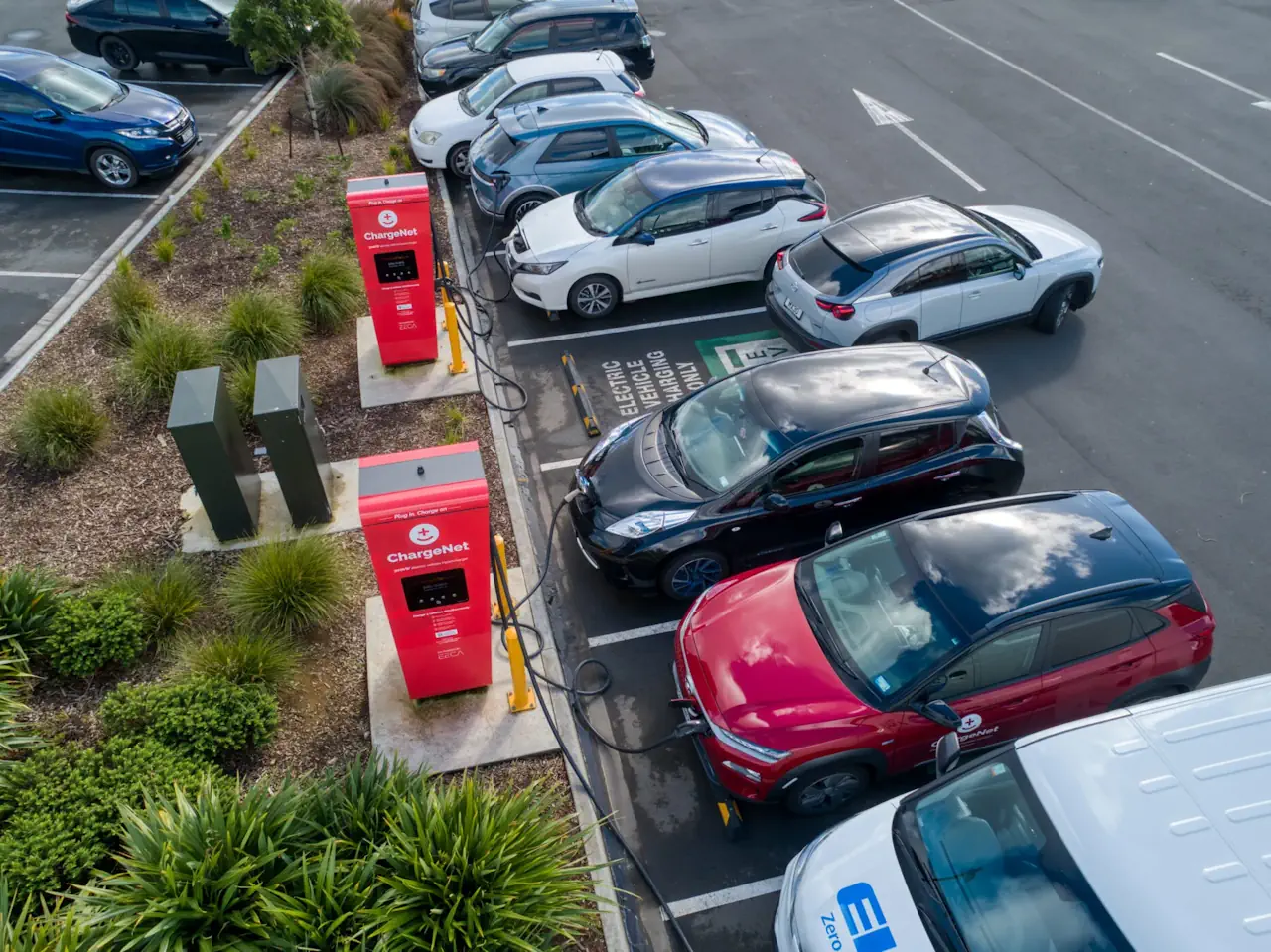
Wellington, New Zealand – In a significant move to accelerate the nation’s transition to electric vehicles (EVs), the New Zealand government has announced a comprehensive co-funding initiative designed to dramatically expand the country’s EV charging network. This strategic partnership with two leading private operators is set to inject over $110 million into the development of critical electric vehicle charging infrastructure.
The ambitious plan will see the installation of more than 2,500 additional EV chargers across New Zealand, effectively doubling the current number of public charging points. This substantial investment underscores the government’s commitment to addressing a key barrier to widespread EV adoption: the availability of reliable and accessible charging facilities.

Strategic Investment to Boost Electric Vehicle Adoption
The cornerstone of this initiative is a substantial financial commitment that combines both public and private sector resources. On Monday, the government confirmed it would provide $NZ52.7 million in zero-interest loans, a crucial incentive designed to de-risk investment for private entities and foster rapid infrastructure deployment.
Complementing this government support, an additional $NZ60 million in private investment will be allocated. This capital will be strategically split between two prominent players in New Zealand’s energy and charging sectors: ChargeNet, the nation’s leading EV charging network, and Meridian Energy, a 100 per cent renewable electricity utility. Their combined efforts are projected to deliver 2,574 new charge points.
Expanding Charger Capabilities Across the Nation
The rollout will feature a mix of charging technologies to cater to diverse user needs and vehicle types. Included in the expansion are 1,374 DC fast chargers, essential for rapid charging on longer journeys and reducing wait times, alongside 1,200 AC chargers, suitable for slower, more common charging scenarios such as overnight stops or workplace charging.

This dual-pronged approach ensures a robust and versatile electric vehicle charging infrastructure capable of supporting the growing number of EVs on New Zealand roads. The sheer scale of this deployment is expected to significantly enhance the convenience and practicality of owning an electric vehicle across both urban and regional areas.
Key Operators Lead the Charge: ChargeNet and Meridian Energy
Under the terms of the agreement, ChargeNet, a recognised leader in the EV charging sector, has been awarded $NZ37.7 million from the government. ChargeNet will match this funding dollar-for-dollar, committing significant private capital to its ambitious “PowerUp” rollout.
The “PowerUp” initiative is slated to establish over 1,700 new charging points throughout the country. This extensive network expansion is projected to be completed by 2030, laying a foundational framework for future EV growth. ChargeNet’s commitment reflects a strong confidence in the burgeoning EV market and the strategic necessity of robust infrastructure.
Similarly, Meridian Energy will receive $NZ15 million in matched concessionary loans from the government. This funding will support Meridian’s plans to roll out 900 new charge points. As a utility focused on renewable electricity, Meridian’s involvement reinforces the alignment of EV adoption with New Zealand’s broader sustainability and decarbonisation goals.
Breaking the ‘Charger Deadlock’ to Spur Adoption
New Zealand’s Transport Minister, Chris Bishop, highlighted the critical motivation behind this significant government intervention. He articulated a common dilemma facing potential EV buyers and infrastructure providers alike, often referred to as the ‘charger deadlock’.
“Many New Zealanders have thought about getting an EV, even before the fuel challenges we’re currently facing. But research shows that the lack of public chargers is holding many back from making the switch to an EV,” Minister Bishop stated, addressing the public’s hesitation driven by range anxiety and perceived inconvenience.
He further elaborated on the economic and market challenges: “The private sector is reluctant to invest in charging infrastructure until there’s sufficient demand, but demand won’t grow until the lack of public chargers stops putting buyers off. Just as the previous National-led government did with the ultrafast broadband network rollout, we’re taking action to break that deadlock.” This comparison draws a clear parallel to previous successful government initiatives designed to stimulate essential infrastructure development where market forces alone were insufficient.
Ensuring Equitable Access: Urban and Regional Distribution
A key aspect of the new electric vehicle charging infrastructure rollout is its strategic geographical distribution. Approximately half of the new chargers are designated for installation within New Zealand’s primary population centres.
These key urban hubs include Auckland, Hamilton, Tauranga, the Wellington region, Christchurch, and Dunedin. Placing a high density of chargers in these areas will cater to the large number of existing and prospective EV owners, facilitating daily commutes and urban travel with greater ease.
Crucially, the other half of the new chargers will be disseminated throughout New Zealand’s regions. This commitment ensures that EV travel across the entire country becomes more viable, supporting tourism, inter-city connectivity, and making electric vehicles an attractive option for rural communities.
Charting the Course Towards 10,000 Chargers by 2030
Minister Bishop also provided a comprehensive overview of the current state and future targets for electric vehicle charging infrastructure New Zealand. He noted the pressing need for expansion, stating, “New Zealand currently has a bit over 1,800 public charge points, which is among the lowest charger-to-EV ratios in the OECD.” This statistic underscores the urgency and significance of the announced co-funding deal.
He added that an additional 161 charge points are currently in various stages of progress, indicating ongoing efforts beyond this new announcement. When combined with the substantial investment being unveiled today, the national total of public charging points is projected to reach approximately 4,550.
Looking ahead, the New Zealand government has set an ambitious target to significantly bolster the nation’s electric vehicle charging infrastructure. “The Government is working towards 10,000 charge points by 2030, roughly one for every 40 EVs,” Minister Bishop confirmed. This long-term vision aims to create a robust and pervasive charging network that can comfortably support a rapidly growing national EV fleet, ensuring that charging availability no longer poses a barrier to the country’s clean transport ambitions. The ratio of one charger for every 40 EVs is seen as a benchmark for convenient and reliable access, aligning New Zealand with leading nations in sustainable transport.