
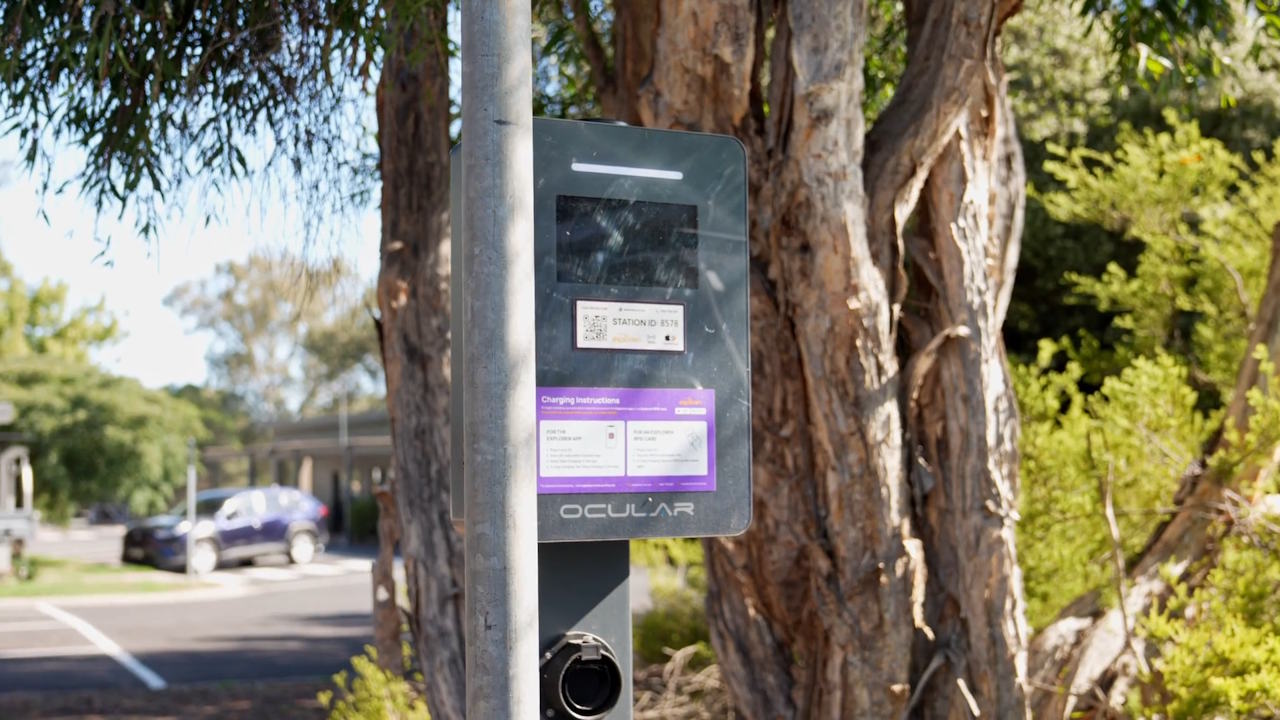
In a significant step towards enhancing regional energy independence and community resilience, a $50,000 grant from Victorian electricity and gas network company AusNet has facilitated the installation of an electric vehicle (EV) charger and a robust 40 kilowatt-hour (kWh) battery storage system in Alexandra.
The crucial funding, provided through AusNet’s Energy Resilience Community Fund, was awarded to the Taungurung Land and Waters Council (TLaWC). This strategic investment is set to bolster the existing 45 kWh solar system at the TLaWC’s office, creating a comprehensive, self-sustaining energy hub for the First Nations community and surrounding areas.

Empowering Regional Energy Resilience
The announcement by AusNet on Monday highlighted the project’s dual benefits: promoting sustainable transport solutions and fortifying local infrastructure against power disruptions. The 40 kWh battery storage, coupled with the new EV charger, signifies a forward-thinking approach to energy management in regional Victoria, particularly within the traditional lands of the Taungurung people.
AusNet’s Energy Resilience Community Fund is designed to support initiatives that strengthen local energy infrastructure, particularly in areas susceptible to environmental challenges or grid vulnerabilities. The grant awarded to TLaWC exemplifies this commitment, channeling resources directly into projects that offer tangible, long-term benefits for communities.
The Role of the Taungurung Land and Waters Council
The Taungurung Land and Waters Council plays a pivotal role as the corporate representative and ‘face’ of the Taungurung people of Central Victoria. Its mandate extends to upholding the interests of the Taungurung community with respect to their profound connection to culture and country.

The traditional lands of the Taungurung people encompass a vast and significant area. This includes the region situated between the upper reaches of the Goulburn River and its numerous tributaries north of the Dividing Range. Geographically, their traditional country stretches from the Campaspe River to Kilmore in the west, extending eastwards towards Mount Beauty, and from Benalla in the north down to the very top of the Great Dividing Range.
The TLaWC’s Alexandra office serves not only as an administrative centre but also as a crucial community complex. This facility is strategically located adjacent to the Department of Energy, Environment and Climate Action (DEECA) regional office, enhancing its importance as a local hub for various services and support systems.
Ensuring Operational Continuity During Outages
A primary objective of this energy upgrade is to guarantee that the TLaWC’s Alexandra office and community complex can maintain full operation even during power outages. This capability is paramount, especially in a region where reliable electricity supply can be critical for essential services and community well-being.
The integration of the 40 kWh battery storage system with the existing 45 kWh solar installation provides a robust off-grid capability. This means that when the main grid experiences interruptions, the TLaWC facility can seamlessly transition to its own power supply, ensuring uninterrupted service for its community members and broader operations.
Kim Sullivan, AusNet Energy Resilience Community Fund manager, underscored the profound impact of the project. “This upgrade means TLaWC can stay open and connected during power outages, supporting both community services and emergency response and keeping Taungurung people on country,” Sullivan stated.
Boosting Local Electric Vehicle Infrastructure
Beyond ensuring energy resilience, the project significantly contributes to the nascent electric vehicle charging infrastructure in Alexandra. The newly installed EV charger is designed to utilise excess electricity generated by the solar panels, making the charging process not only convenient but also environmentally sustainable.
The introduction of this EV charger is particularly impactful as it is only one of two such facilities available in Alexandra. This addition addresses a critical need for local charging capacity, which is essential for encouraging the adoption of electric vehicles in regional areas and supporting both residents and visitors travelling through the region.
Sullivan further highlighted this benefit, noting, “The new EV charger will use excess solar generation and adds much needed local charging capacity, as one of only two EV chargers in Alexandra.” This expansion of charging options can help alleviate range anxiety for EV owners and foster a greener transport ecosystem in Central Victoria.
A Critical Hub for Emergency Response
The enhanced energy infrastructure at the TLaWC and adjacent DEECA regional sites positions them as vital points of coordination and support during regional emergencies. This critical role was vividly demonstrated during recent fires in the region, when these locations served as indispensable havens for affected individuals and emergency personnel.
During such crises, these facilities provided safe spaces where people could remain connected, charge essential devices like phones, and receive critical information. Furthermore, they acted as crucial centres for supporting coordination efforts among various agencies and ensuring the continuity of essential community services, ranging from welfare checks to logistical support.
The ability of the TLaWC office to operate independently of the grid during emergencies ensures that these life-sustaining functions can proceed without interruption, providing stability and support when communities are most vulnerable. This underscores the comprehensive nature of the AusNet grant, addressing both daily community needs and crucial emergency preparedness.
Supporting the Broader Alexandra Community
The impact of the TLaWC’s Alexandra office extends beyond the Taungurung people, serving as a hub for the wider community. The facility actively supports various local groups and initiatives, fostering a strong sense of community spirit and cooperation.
Among the local organisations that benefit from the TLaWC’s infrastructure and support are the Alexandra Community Shed and the Eildon and Districts Woodworkers Guild. These groups provide valuable social connections, skill-building opportunities, and communal spaces for residents, contributing significantly to the social fabric of Alexandra and its surrounding districts.
The upgraded energy system at the TLaWC office thus represents a multi-faceted investment. It not only empowers a First Nations community with greater energy autonomy and sustainable transport options but also reinforces a critical regional asset that supports emergency response and enhances the overall well-being of the broader Alexandra community.