
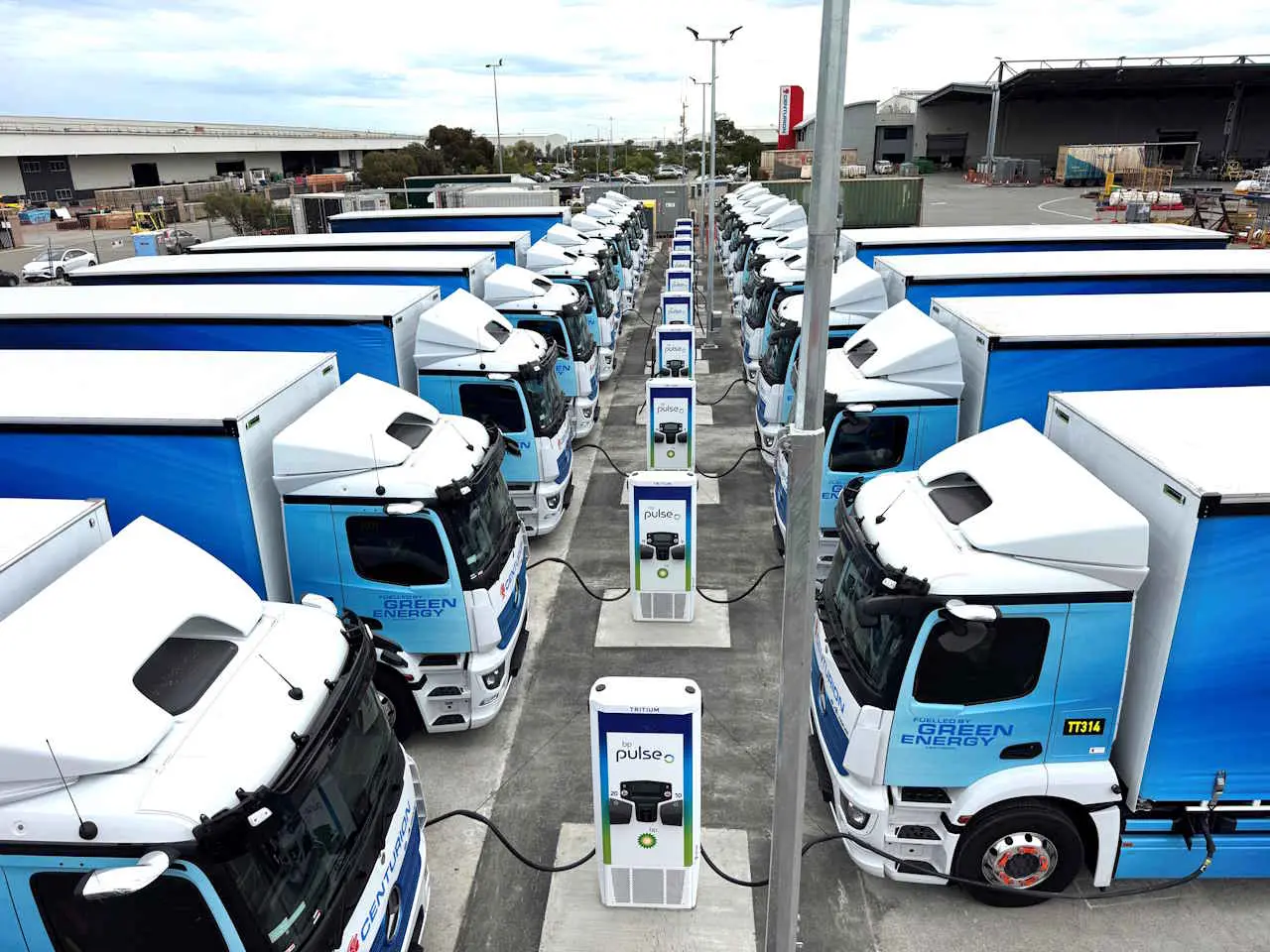
Melbourne, Victoria – The Victorian Labor government has initiated a significant push towards a greener, more cost-efficient future for its vital freight industry. Unveiling two new, targeted programs, the state aims to empower freight businesses to reduce their reliance on traditional fuels and embrace cleaner transport options.
These initiatives, the Freight Decarbonisation Co-Investment Program and the Victorian Electric Heavy Vehicle Trial, are designed to assist operators across Victoria in navigating the transition to low- and zero-emission vehicles, alongside crucial supporting infrastructure and innovative technologies. The move comes as a strategic response to rising operating costs, particularly in the wake of recent fuel price fluctuations, seeking to boost efficiency and modernise fleets for long-term sustainability.

Strategic Investment in Sustainable Freight
The announcement underscores Victoria’s commitment to supporting a sector that forms the backbone of its economy. State Minister for Ports and Freight, Melissa Horne, highlighted the immediate benefits for businesses grappling with rising expenses.
“We know the cost of fuel is hurting our freight operators which is why rolling out these programs will help freight businesses cut costs, boost efficiency and modernise their fleets for the future,” Minister Horne stated. “We’re making it easier for operators to save on running costs while transitioning to cleaner, more reliable technology.”
The freight sector in Victoria is a massive employer, sustaining approximately 240,000 jobs. It is responsible for the movement of an estimated 440 million tonnes of goods annually, a figure projected to increase significantly in the coming decades. This growth necessitates proactive measures to ensure the industry remains economically viable and environmentally responsible.

The Freight Decarbonisation Co-Investment Program Explained
Central to Victoria’s new strategy is the $8 million Freight Decarbonisation Co-Investment Program. This program offers substantial grants, up to $300,000, to small and medium-sized freight businesses engaged in road or rail transport.
The funding is earmarked for critical investments, including the acquisition of cleaner vehicles, the development of essential charging infrastructure, the adoption of low-emission fuels, and the integration of cutting-edge technologies that reduce environmental impact and operational costs. This comprehensive approach aims to address various facets of decarbonisation within the freight sector.
A key aspect of the program is its co-investment requirement, promoting shared responsibility and commitment from participating businesses. Successful grant recipients are required to co-invest at a rate of 1:5. For instance, a business receiving the maximum grant of $300,000 would need to contribute $60,000 in cash, demonstrating a tangible commitment to their decarbonisation efforts.
Expressions of interest for this pivotal program are currently open and will close at 4:00 pm on Wednesday, 22 April 2026. Further details and application guidelines are available here.
Pioneering Real-World Experience with Electric Heavy Vehicles
Complementing the co-investment initiative is the $1.5 million Victorian Electric Heavy Vehicle Trial. This program, a collaborative effort with the Victorian Transport Association (VTA), is designed to provide businesses with invaluable real-world experience operating electric heavy vehicles.
The trial acknowledges the practical challenges and learning curve associated with integrating new technologies into existing logistics operations. By offering hands-on opportunities, the government aims to de-risk the adoption process and gather crucial data on performance, reliability, and cost-effectiveness in diverse operational settings.
As of the current reporting, additional specific details regarding the structure and implementation of the Victorian Electric Heavy Vehicle Trial have not been publicly released by the government. Further updates are anticipated as the trial progresses.
Industry Welcomes Forward-Thinking Initiatives
The Victorian Transport Association (VTA) has extended a warm welcome to these new programs, commending the government’s foresight and practical support for the industry’s transition. Peter Anderson, CEO of the VTA, articulated the sector’s positive reception.
Anderson lauded the government for “recognising the scale of the decarbonisation challenge and for supporting freight operators with meaningful, hands‑on programs.” This endorsement from a leading industry body underscores the perceived value and relevance of the initiatives.
The VTA has consistently advocated for a pragmatic and informed approach to decarbonisation, ensuring that the adoption of cleaner technologies aligns with operational and commercial realities for freight companies. “The VTA has consistently advocated for a measured, informed transition so that freight companies can adopt cleaner technologies when it makes operational and commercial sense,” Anderson affirmed.
He further emphasised the long-term nature of this industry transformation, while highlighting the importance of starting with a clear vision. “While this shift will take years, the most important step is beginning with knowledge, clarity, and a plan.”
Towards a Sustainable Future for Victorian Freight
These dual programs represent a crucial step in Victoria’s broader strategy to enhance economic efficiency, reduce carbon emissions, and foster a more sustainable future for its freight sector. By providing both financial incentives and practical experience, the government aims to accelerate the adoption of clean energy technologies, making it easier for businesses to invest in greener fleets.
The initiatives are expected to have a multi-faceted impact, not only by cutting operational costs for businesses but also by contributing significantly to Victoria’s environmental targets. As the demand for freight services continues to grow, integrating low and zero-emission vehicles becomes imperative for maintaining both economic competitiveness and ecological responsibility.
The collective efforts of the Victorian government and industry stakeholders signify a concerted drive towards a modern, resilient, and environmentally conscious freight network, positioning Victoria at the forefront of sustainable transport solutions in Australia.