
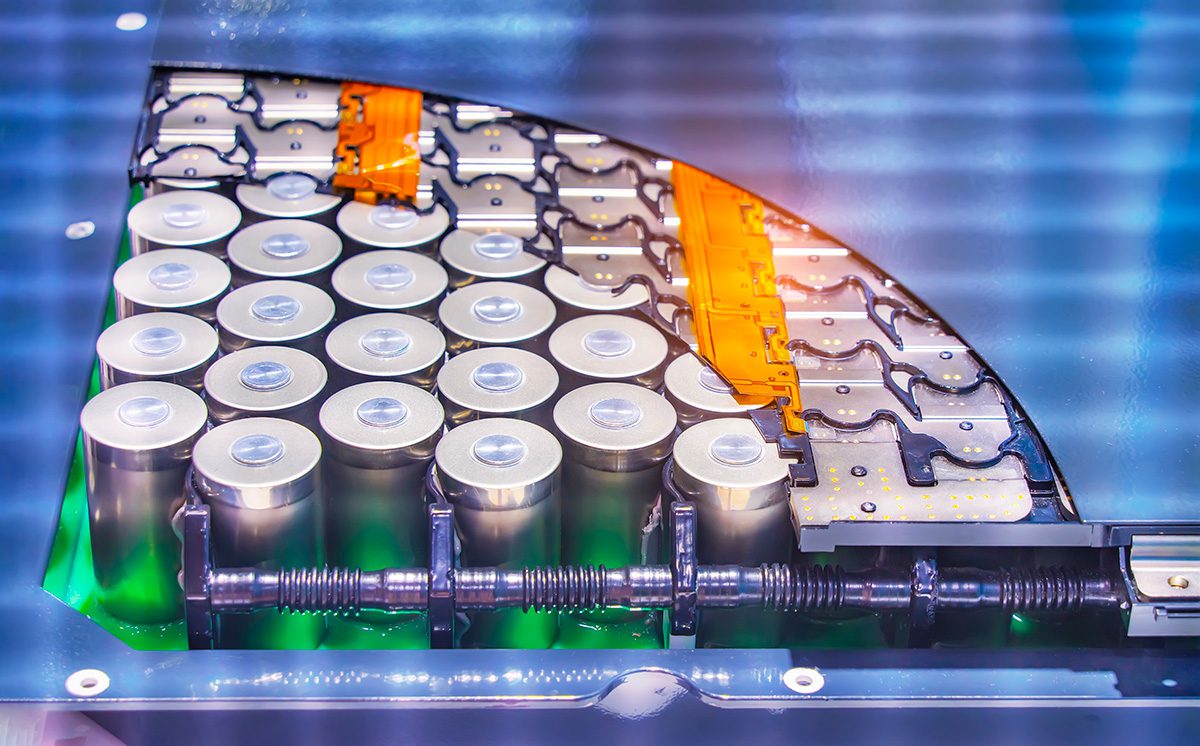
In the relentless pursuit of advanced battery technology, engineers and manufacturers face a formidable challenge: how to significantly increase energy density without compromising safety or driving up costs. This delicate balance forms the core imperative for all cutting-edge battery designs, particularly within the burgeoning electric vehicle (EV) sector. The answer increasingly points towards sophisticated monitoring systems, with Flexible Printed Circuit (FPC)-based cell contact solutions emerging as a pivotal innovation.
Monitoring the state-of-health of individual cells within a battery pack is paramount. Accurate, real-time data on ambient factors like temperature and voltage provides critical intelligence to the Battery Management System (BMS), enabling it to optimize performance and ensure operational safety. For many years, this essential data collection was accomplished through discreet wiring — a method that, while functional, presented considerable inefficiencies and inherent quality limitations.

The Inefficiencies of Traditional Discrete Wiring
Historically, connecting individual battery cells to the BMS involved a labyrinth of discrete wires. Each wire needed to be precisely cut, stripped, and connected, often manually, to temperature sensors and voltage taps across numerous cells. This labor-intensive process was prone to human error, leading to potential miswirings, cold solder joints, or inconsistent connections that could compromise data integrity.
Beyond the manufacturing floor, the sheer volume of discrete wires added significant bulk and weight to battery packs, counteracting efforts to achieve higher energy density and lighter vehicle designs. The long, individual wire runs were also susceptible to electromagnetic interference (EMI), which could corrupt the sensitive voltage and temperature readings sent to the BMS, leading to less accurate state-of-charge and state-of-health estimations.
Furthermore, the vibration and thermal cycling inherent in vehicle operation could stress these numerous individual connections over time, increasing the risk of intermittent faults or complete failures. Such issues could degrade battery performance, shorten its lifespan, and in worst-case scenarios, pose safety risks if critical thermal data was not reliably transmitted.
The Emergence of FPC-Based Cell Contact Solutions
The landscape of battery pack design has undergone a significant transformation with the advent of flexible printed circuit boards (FPCs). These FPC-based cell contact systems represent the newest generation of cell monitoring technology, offering a streamlined and highly reliable alternative to their discrete wiring predecessors. By integrating multiple connections and sensors onto a single, flexible substrate, FPCs dramatically simplify the complexity of battery pack assembly.
The shift to FPC-based cell contact solutions is not merely an incremental improvement; it marks a fundamental change in how battery data is harnessed and managed. These systems consolidate numerous connections into a compact, robust, and often automated assembly process. This innovation directly addresses the twin imperatives of modern battery design: driving down manufacturing costs while simultaneously improving the reliability and precision of data acquisition.
Enhancing Data Quality and Reliability for BMS
The quality of data fed to the BMS is paramount for safely maximizing energy density and ensuring the longevity of a battery pack. FPC-based cell contact solutions excel in this regard by offering superior signal integrity compared to discrete wiring. The precisely engineered traces on an FPC minimize wire length variations and crosstalk, leading to more accurate and consistent voltage and temperature measurements.
This enhanced data reliability allows the BMS to operate with greater confidence, making more precise decisions regarding cell balancing, charging, discharging, and thermal management. A highly accurate BMS can push cells closer to their optimal performance limits without venturing into unsafe operating conditions, directly contributing to higher energy density and extended battery life.
Driving Down Manufacturing Costs and Boosting Efficiency
One of the most compelling advantages of FPC-based cell contact solutions lies in their ability to significantly reduce the cost of battery pack manufacturing. The integrated nature of FPCs means fewer individual components to handle, fewer connections to make, and a substantially simplified assembly process. This lends itself well to automation, reducing reliance on manual labor and minimizing the potential for human error.
Automated assembly of FPC-based systems translates into faster production cycles, reduced rework, and higher manufacturing yields. Furthermore, the inherent design of FPCs is lighter and more compact than bundles of discrete wires, contributing to overall pack weight reduction and potentially lowering material costs over the entire lifecycle of the battery system.
Bolstering Battery Safety and Longevity
Battery safety is non-negotiable, especially as battery packs grow larger and more powerful. Accurate and instantaneous monitoring of cell temperatures and voltages is crucial for detecting anomalies that could lead to thermal runaway or other hazardous conditions. FPC-based cell contact solutions provide this precision, enabling the BMS to identify and respond to potential issues rapidly.
By providing the BMS with cleaner, more reliable data, FPCs empower it to maintain cells within their optimal operating window, preventing overcharge, over-discharge, and extreme thermal stress. This meticulous management not only enhances safety but also contributes significantly to extending the overall lifespan and performance consistency of the battery pack, a critical factor for consumer confidence and product warranty.
A Critical Tool for Modern Battery Pack Efficiency
The advancement in battery technology is a continuous journey, with each innovation building upon the last to deliver more power, greater range, and enhanced safety. FPC-based cell contact solutions are undeniably a key enabler in this progression. Their ability to deliver high-quality data reliably and cost-effectively positions them as an indispensable component for modern battery pack efficiency, particularly in applications like electric vehicles where performance, safety, and cost are tightly intertwined.
As the industry continues to push the boundaries of battery density, the importance of robust and accurate cell monitoring systems will only grow. FPC-based solutions offer a proven pathway to achieving these ambitious goals, ensuring that increased power and capacity come hand-in-hand with uncompromised safety and economic viability.