
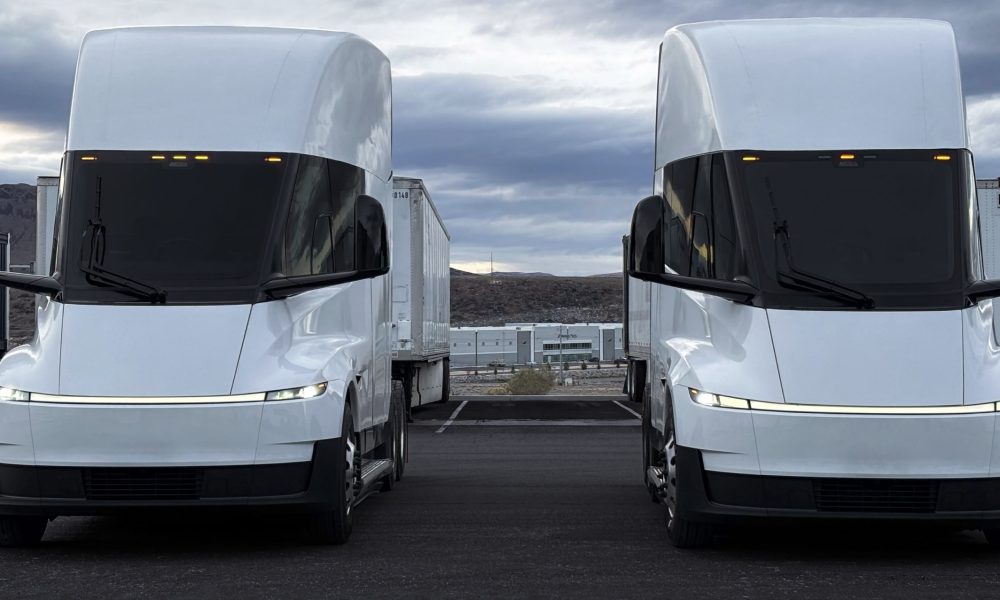
The landscape of heavy-duty trucking is undergoing a significant transformation, with the Tesla Semi emerging as a frontrunner in the electric revolution. As logistics fleets across North America integrate the all-electric Class 8 truck into their operations through pilot programs, a consensus is rapidly forming among professional drivers: the Tesla Semi offers a quieter, quicker, and considerably less physically demanding experience compared to traditional diesel rigs.
This innovative electric truck is not merely an environmentally conscious alternative; it is redefining the daily grind for thousands of kilometres. Drivers consistently highlight its superior power delivery, dramatically lower operating costs, and a suite of advanced features designed to enhance comfort and reduce fatigue, pointing towards a future where electric transport dominates long-haul operations.

Driver Experience: A New Era of Comfort and Control
The transition from a conventional diesel truck to the Tesla Semi represents a significant shift in the driver’s environment. Beyond the absence of engine noise and vibrations, specific design choices are proving pivotal in winning over even the most seasoned truckers.
Ergonomics and Operational Advantages
Key among these is the Tesla Semi’s unique centered driver’s seat, which offers an unobstructed panoramic view, effectively eliminating traditional blind spots and enhancing overall situational awareness. This, combined with expansive touchscreen displays for navigation and vehicle controls, contributes to a safer and more intuitive driving experience.
The instant torque delivery, characteristic of electric powertrains, allows for seamless acceleration and superior responsiveness, a stark contrast to the often sluggish power delivery of diesel counterparts. Furthermore, the complete absence of manual gear-shifting fatigue, a common complaint among long-haul drivers, significantly reduces physical strain over extended shifts.

Early testimonials from drivers participating in these pilot programs underscore these benefits. Dakota Shearer of IMC Logistics recounted an incident where the Tesla Semi’s maneuverability proved invaluable:
“I backed right out of there, no problem. It’s like I’d never done it in the first place. That right there showed me that the technology the Tesla has makes a big difference.”
His colleague, Angel Rodriguez of Hight Logistics, who transitioned from a 13-speed diesel truck, echoed similar sentiments regarding the physical demands of the job:
“It’s just easier on your body. It’s less stressful because you’re not really having to engage the clutch and the stick shift.”
The ease of operation extends beyond just driving. Veteran driver Tom Sterba, a Senior Driver at Saia, tested the Tesla Semi for several days and was particularly impressed with the integrated navigation system and overall vehicle feel.
“The navigation systems in these trucks are just unbelievable. That’s what I love about it,”
Sterba stated.
His profound satisfaction was encapsulated in a remark that has since resonated widely within the trucking community:
“I hope I retire in this truck.”
Such enthusiastic endorsements highlight the profound impact the Tesla Semi is having on driver satisfaction and professional quality of life.
Real-World Validation and Fleet Performance
The positive feedback from drivers is strongly supported by real-world data generated from ongoing pilot programs involving leading logistics providers. These deployments are demonstrating the Tesla Semi’s practical viability and efficiency across diverse operational demands and challenging terrains.
Exceeding Efficiency Expectations
Fleets such as ArcBest, thyssenkrupp Supply Chain Services, and Mone Transport have reported consistent praise for the truck’s performance. The center-seat layout, smooth acceleration, and overall comfort and safety features are repeatedly cited as significant improvements over conventional trucks.
Crucially, the data gathered from these thousands of kilometres of operation reinforces the anecdotal evidence. ArcBest, for instance, successfully logged substantial mileage at highly efficient consumption rates, even when traversing demanding routes like the Donner Pass. In some instances, participating fleets have reported exceeding Tesla’s own internal efficiency targets, a testament to the Tesla Semi’s robust engineering and optimal performance under varied conditions.
This confluence of driver satisfaction and validated operational efficiency paints a clear picture: the Tesla Semi is not only delivering on its promises but, in many cases, surpassing expectations in real-world heavy-duty applications. The vehicle consistently feels quieter, quicker, and markedly less physically demanding than its diesel counterparts, all while offering triple the power and significantly reduced operating costs.
Engineering Innovations: The Latest Upgrades
Further solidifying its position at the forefront of electric trucking, the Tesla Semi recently showcased significant advancements in a segment on Jay Leno’s Garage. This appearance marked the first time an external party had the opportunity to drive the updated long-range production model, revealing key improvements slated for volume production.
Enhanced Performance and Range Capabilities
Joined by Tesla Chief Designer Franz von Holzhausen and Semi Program Director Dan Priestley, Jay Leno explored the refined capabilities of the electric truck. Major upgrades highlighted during the episode include a reduction in the truck’s weight by approximately 1,000 pounds, contributing to improved efficiency and payload capacity.
The updated Tesla Semi also incorporates a new 48-volt architecture, a significant shift that enhances power distribution and reduces wiring complexity. It features fully electric steering, derived from the innovative actuators found in the Cybertruck, offering more precise control and further reducing driver effort.
At the heart of its performance are the new 4680 battery cells, engineered for an impressive lifespan exceeding one million miles. These cells not only contribute to the vehicle’s enhanced range but also promise exceptional durability and reliability over its operational lifetime.
Aerodynamic improvements have further optimized the Tesla Semi’s efficiency, directly impacting its range capabilities. The long-haul version is now capable of achieving an estimated 500-mile range on a single charge, while the shorter-wheelbase standard-range model offers approximately 325 miles. To support these extended ranges, Megachargers have been upgraded to deliver up to 1.2 megawatts of power, enabling the addition of roughly 300 miles of range in just about 30 minutes, drastically cutting down charging times and supporting operational efficiency.
During his drive, hauling heavy loads, Leno expressed astonishment at the Tesla Semi’s maneuverability and effortless power delivery.
“I don’t feel like I’m pulling anything,”
he remarked, underscoring the advanced engineering that belies the truck’s substantial capabilities.
The Road Ahead for Electric Trucking
With hundreds of Tesla Semis already on the road, collectively accumulating over 13.5 million fleet miles, the data unequivocally demonstrates high uptime and operational reliability. This extensive real-world testing and deployment validate the Tesla Semi as a compelling solution for the heavy-duty trucking industry.
The overwhelmingly positive feedback from professional drivers, coupled with continuous technological advancements and proven efficiency, signals a definitive shift towards electrification in commercial transport. Drivers, increasingly impressed by the comfort, performance, and reduced stress offered by the Tesla Semi, are expressing a clear readiness to embrace the electric trucking industry for the long term.
As these electric trucks continue to prove their mettle across diverse operational environments, they are not just winning over individual drivers but are also paving the way for a more sustainable, efficient, and technologically advanced future for global logistics and heavy-duty haulage.