
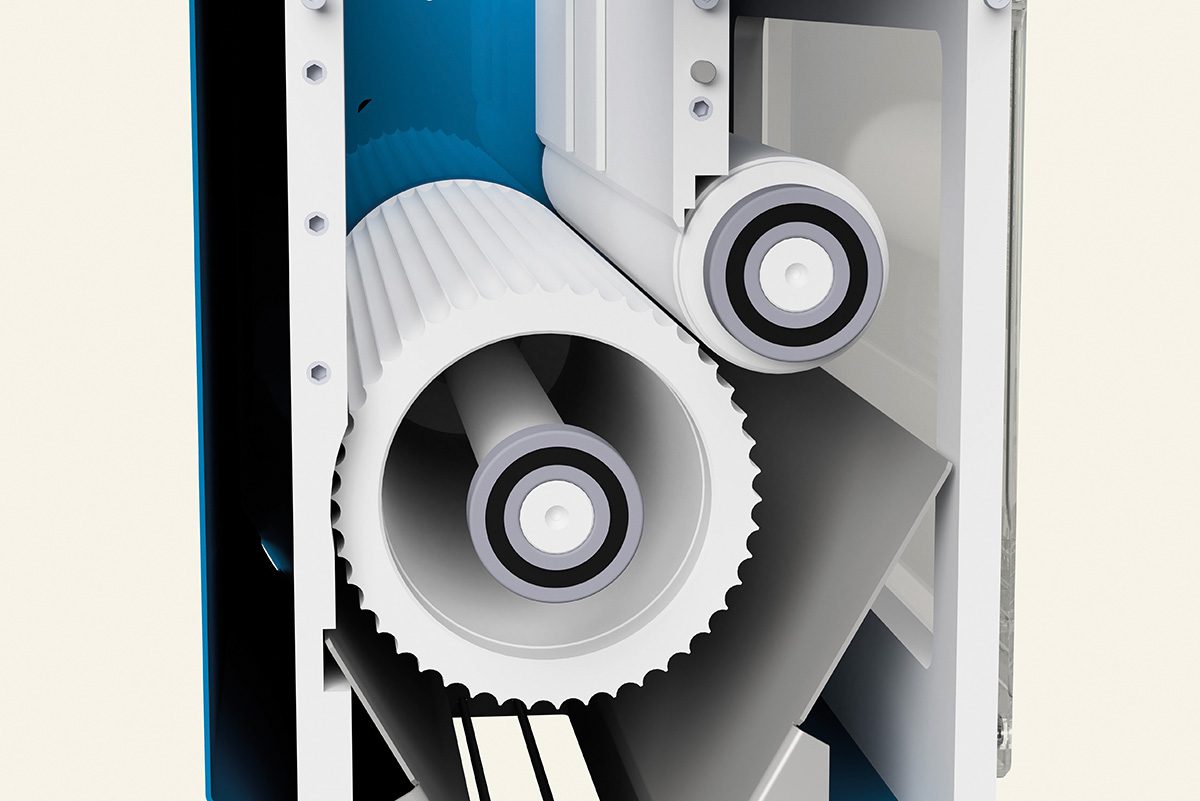
In a significant development for the rapidly evolving electric vehicle (EV) battery sector, Coperion K-Tron has introduced its latest innovation, the RF400 Roller Feeder. This advanced feeding system is specifically engineered to bring unprecedented consistency and efficiency to dry-electrode processing within laboratory and pilot-scale battery production lines. The launch marks a crucial step forward in addressing some of the inherent complexities associated with next-generation battery manufacturing techniques.
The RF400 is poised to become a foundational tool for researchers and manufacturers aiming to perfect the dry-electrode deposition process. By focusing on uniform material distribution and waste reduction, Coperion K-Tron aims to mitigate common production variability issues that often plague early-stage battery development. This precision is vital as the industry seeks to scale up innovative, more sustainable battery technologies.

Precision Engineering for Enhanced Uniformity
At the core of the RF400’s design is a sophisticated mechanism featuring a grooved feed roller meticulously paired with a smooth scraper roller. This combination is engineered to deliver a gentle yet highly consistent feed of electrode dry blends. The unique interaction between these rollers is critical in preventing material bridging at the outlet, a common hurdle that can lead to uneven coating and significant material waste.
The system’s ability to ensure improved material distribution across the calender roller positioned below directly translates into higher quality electrodes. Uniformity in dry-electrode deposition is paramount for achieving consistent electrochemical performance, extended cycle life, and enhanced safety characteristics of the final battery cell. Inconsistent deposition can lead to ‘hot spots’ or areas of lower energy density, compromising the battery’s overall integrity and performance.
The robust construction and meticulous engineering of the RF400 underscore its intended role in demanding pilot line environments, where precision and repeatability are non-negotiable. This level of control allows for more reliable experimentation and a clearer understanding of how material properties influence electrode performance, accelerating the development cycle for new battery chemistries and designs.
Scalability and Smart Integration
Designed with adaptability in mind, the RF400 Roller Feeder supports an adjustable coating width of up to 400 mm. This flexibility makes it an ideal solution for a diverse range of laboratory and pilot-scale battery production setups, accommodating various research and development needs. The ability to precisely control the coating width allows manufacturers to experiment with different cell formats and sizes without requiring multiple specialized feeders, thereby streamlining operations and reducing capital expenditure.
Beyond its mechanical precision, the RF400 seamlessly integrates with Coperion K-Tron’s advanced KCM-III controls and patented Smart Force Transducer weighing technology. This intelligent integration provides operators with real-time monitoring capabilities, offering immediate insights into the feeding process. Such granular control is indispensable for optimizing parameters and ensuring consistent quality throughout a production run.
The KCM-III controls facilitate precise feed-rate management, allowing for minute adjustments to be made on the fly. Coupled with the Smart Force Transducer technology, which measures material flow with exceptional accuracy, the system can dynamically adapt to changing material characteristics. This responsiveness is particularly crucial in dry-electrode manufacturing, where variations in powder properties can significantly impact deposition quality. The ability to automatically compensate for these variations helps maintain uniform deposition, minimizing costly reworks and material waste.
The Promise and Challenges of Dry-Electrode Manufacturing
Dry-electrode manufacturing has garnered considerable attention within the battery industry, largely due to its transformative potential compared to conventional wet coating methods. Traditional wet coating processes, which are standard in current lithium-ion battery production, rely heavily on solvents. These solvents are not only expensive but also pose significant environmental challenges due to their energy-intensive drying requirements and the need for rigorous solvent recovery systems.
The shift towards dry-electrode techniques promises a more sustainable and economically viable pathway for battery production. Key benefits include a significant reduction in energy consumption, as the extensive drying stages associated with solvent-based processes are largely eliminated. Furthermore, the diminished reliance on volatile organic compound (VOC) solvents translates into a smaller environmental footprint and potentially lower operational costs.
However, realizing the full potential of dry-electrode manufacturing comes with its own set of unique challenges. Material handling in a dry state, without the fluidity provided by solvents, becomes inherently trickier. Achieving a uniform deposition of electrode materials across a substrate without the aid of liquid binders demands exceptional precision from feeding and processing equipment. Inconsistent dry deposition can lead to electrodes with non-uniform thickness or density, directly impacting battery performance and safety.
Setting New Industry Standards
It is within this context of both promise and complexity that the RF400 Roller Feeder positions itself as a critical enabler. By providing a reliable and highly precise solution for uniform dry-electrode deposition, Coperion K-Tron is directly addressing one of the most significant technical hurdles in this advanced manufacturing paradigm. The system’s capacity to reduce production variability and waste is particularly valuable at the pilot scale, where iterative development and material optimization are continuous.
Jay Daniel, Head of R&D Feeders and Feeding Systems at Coperion K-Tron, underscored the significance of this innovation, stating, “The RF400 will set a new standard in the industry.” This statement reflects a strong belief in the feeder’s capacity to fundamentally improve the dry-electrode manufacturing process, thereby accelerating the commercialization of more efficient and environmentally friendly battery technologies.
The ability to achieve consistent dry-electrode layers at a pilot scale is paramount for validating new material formulations and process parameters before committing to costly full-scale production. By minimizing the variables introduced by the feeding stage, researchers and engineers can more accurately assess the performance of novel electrode materials and designs, streamlining the R&D process and reducing time-to-market for next-generation EV batteries.
Driving Future Battery Innovation
The introduction of the RF400 Roller Feeder by Coperion K-Tron represents more than just a new piece of equipment; it signifies a strategic investment in the future of sustainable battery manufacturing. As the global demand for electric vehicles continues to surge, the imperative to produce high-performance, cost-effective, and environmentally friendly batteries grows stronger.
Tools like the RF400 play a pivotal role in enabling this transition by providing the precise control and reliability needed to unlock the full advantages of dry-electrode technology. Improved consistency at the pilot stage directly translates into higher quality data for process optimization, ultimately paving the way for more efficient and robust large-scale battery production lines. Coperion K-Tron’s commitment to advancing EV battery engineering through such innovations underscores its position as a key contributor to the electric mobility revolution.