
In a significant development for the electric vehicle (EV) battery sector, Coperion K-Tron has announced the launch of its RF400 Roller Feeder, a sophisticated feeding system engineered to bring unprecedented consistency to dry-electrode processing. This innovative technology is specifically designed for laboratory and pilot-scale battery production lines, addressing critical challenges in advanced battery manufacturing.
The introduction of the RF400 marks a pivotal step in refining the dry-electrode deposition process, which is gaining traction as a more sustainable alternative to conventional wet coating methods. By ensuring uniform deposition of electrode dry blends, the new system promises to mitigate production variability and significantly reduce material waste, paving the way for more efficient and cost-effective battery production.

Advancing Battery Production: The Shift to Dry-Electrode Technology
The global push for sustainable energy solutions and the rapid expansion of the electric vehicle market have placed immense pressure on battery manufacturers to innovate. Traditionally, battery electrodes are produced using a wet coating process, which involves mixing active materials with solvents to create a slurry that is then applied to a current collector.
While effective, this method is energy-intensive, requiring substantial resources for solvent handling and drying. The environmental impact and operational costs associated with these processes have spurred research and development into more efficient alternatives.
Dry-electrode manufacturing has emerged as a promising solution, offering compelling advantages such as lower energy consumption and reduced reliance on harmful solvents. This approach not only shrinks the environmental footprint of battery production but also offers potential cost savings.
However, the transition to dry-electrode processing is not without its complexities. Material handling and achieving uniform deposition of dry powdered materials are inherently trickier compared to their wet counterparts. These challenges necessitate precision engineering and advanced control systems to maintain the quality and performance required for high-grade EV batteries.
The RF400 Roller Feeder: Precision Engineering for Optimal Deposition
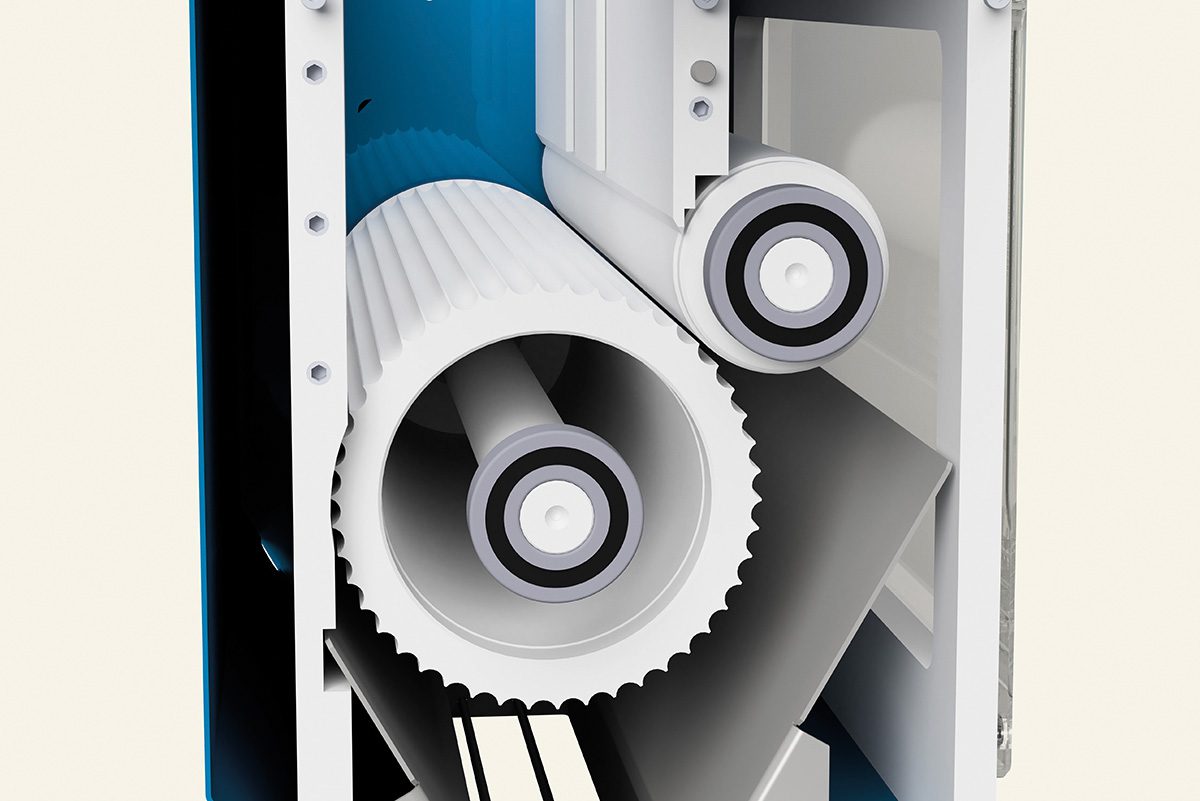
At the heart of Coperion K-Tron’s RF400 system lies a meticulously designed mechanism focused on delivering consistent and gentle material handling. The feeder employs a unique combination of a grooved feed roller paired with a smooth scraper roller. This synergistic design is crucial for ensuring a steady and homogeneous flow of electrode dry blends.
The grooved roller effectively channels the material, preventing clumping and uneven distribution, while the smooth scraper roller ensures that the material is precisely transferred. This dual-roller configuration is instrumental in preventing common issues such as bridging at the outlet, a prevalent challenge in handling dry powdered materials.
Furthermore, this innovative design significantly improves the distribution of the dry blend across the calender roller positioned below. Optimal material distribution is paramount for producing electrodes with consistent thickness and density, which directly impacts battery performance and longevity. The RF400’s mechanical precision thus translates directly into enhanced electrode quality.
Scalability and Integration: A System Built for Innovation
Understanding the developmental nature of advanced battery technologies, Coperion K-Tron has engineered the RF400 to be highly adaptable for research and development as well as pilot production environments. The system supports a coating width adjustable up to 400 mm, offering flexibility to researchers and engineers who need to experiment with various electrode designs and production parameters.
This adjustable width makes the RF400 particularly suitable for scaling up processes from laboratory benches to pilot lines, enabling seamless transition and evaluation of new materials and formulations. Such adaptability is crucial for accelerating the pace of innovation in battery manufacturing.
Beyond its mechanical ingenuity, the RF400 is designed for seamless integration into existing advanced control ecosystems. The unit fully integrates with Coperion K-Tron’s KCM-III controls and leverages its proprietary Smart Force Transducer weighing technology. This integration empowers operators with real-time monitoring capabilities, allowing for instantaneous adjustments to feed rates and other critical parameters.
The ability to make precise feed-rate controls and adapt to changing material characteristics in real-time is a game-changer for maintaining consistency and optimizing yield. This level of control minimises waste, maximises material utilisation, and ensures that every batch of electrodes meets stringent quality standards. This smart integration further solidifies the RF400’s role in advancing dry-electrode deposition technology.
Addressing the Nuances of Dry-Electrode Deposition
The inherent challenges of dry-electrode manufacturing, particularly in achieving uniform deposition, have often been a bottleneck in its widespread adoption. Dry materials tend to behave differently than slurries, presenting unique issues related to flowability, electrostatic charges, and consistency. The RF400 directly confronts these complexities.
By providing a controlled, gentle, and consistent feeding mechanism, the RF400 mitigates the risk of material segregation and uneven layering, which can compromise the performance of the final battery cell. Its design ensures that the dry-electrode material is presented to the subsequent processing stages in an optimal state, thereby maximising the efficiency and effectiveness of the entire production line.
This focus on precision in dry-electrode deposition is crucial for industries reliant on high-performance batteries, from consumer electronics to large-scale grid storage and especially electric vehicles. The consistency achieved through the RF400 translates directly into higher energy density, longer cycle life, and improved safety characteristics for the batteries produced.
An Industry Standard in the Making
The potential impact of the RF400 Roller Feeder on the battery manufacturing landscape is significant. By simplifying the intricate process of dry-electrode deposition and ensuring high levels of consistency, Coperion K-Tron is setting a new benchmark for the industry. This innovation is expected to accelerate the adoption of dry-electrode technologies, contributing to a more sustainable and efficient future for battery production worldwide.
Jay Daniel, Head of R&D Feeders and Feeding Systems at Coperion K-Tron, underscored the significance of this development, stating, “The RF400 will set a new standard in the industry.” This statement reflects the confidence in the system’s ability to address long-standing challenges and unlock new possibilities in battery manufacturing.
As the demand for electric vehicles and renewable energy storage solutions continues to surge, advancements in core manufacturing processes like dry-electrode deposition become increasingly vital. The RF400 Roller Feeder represents a timely and crucial innovation, poised to enhance the efficiency, sustainability, and quality of next-generation EV batteries and beyond, furthering the global transition to cleaner energy.