
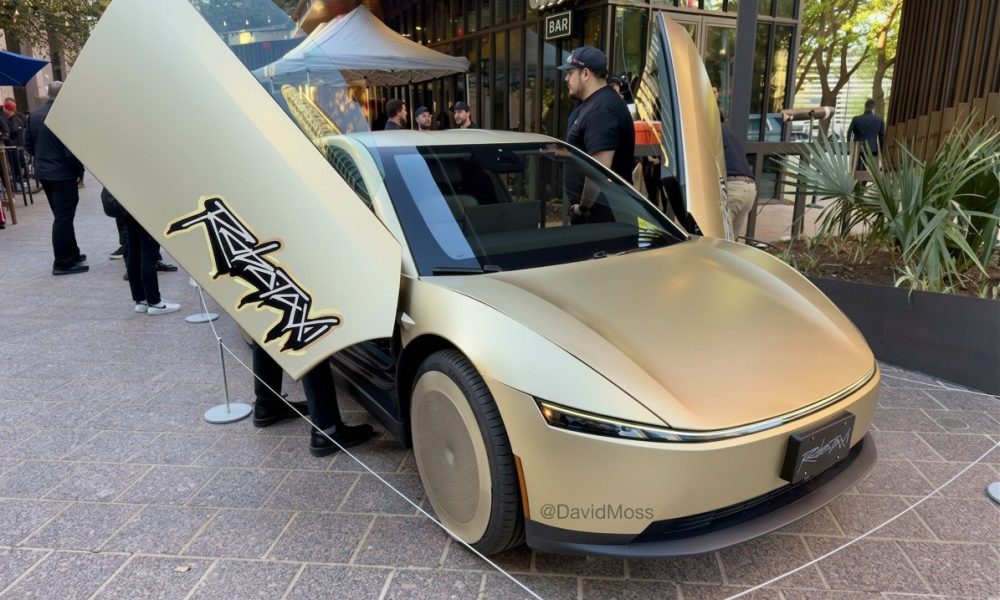
In the rapidly evolving landscape of autonomous transportation, where ground-breaking technological advancements often capture the lion’s share of headlines, a seemingly minor design update from Tesla can still carry substantial strategic weight. Such is the case with the recent visual transformation observed on the company’s highly anticipated Cybercab, now prominently featuring a distinctive new ‘ROBOTAXI’ logo graphic.
This subtle yet impactful rebranding initiative, first spotted by keen observers in downtown Austin at a Tesla Autonomy Popup, suggests a deliberate shift in how the electric vehicle giant envisions its self-driving fleet integrating into the fabric of everyday urban life. The updated iconography is more than just a stylistic flourish; it is a clear indication of a mature product poised for widespread deployment and public engagement.

The Unveiling: A Glimpse in Austin
The new branding first came into public view in mid-March 2026, when Tesla’s Cybercab, the foundation for the upcoming Tesla Robotaxi service, was showcased in downtown Austin. It was here that sharp-eyed individuals noticed the fresh ‘ROBOTAXI’ emblem adorning the vehicle’s doors. This sighting quickly garnered attention across social media platforms, highlighting the public’s intense interest in every nuance of Tesla’s autonomous ventures.
An observation shared by David Moss on X on March 13, 2026, featuring the Cybercab with its new graphic at the Autonomy Popup, underscored the quiet significance of the change. Such public displays offer valuable insights into the iterative development and branding strategies employed by the company as it transitions from concept to commercial reality.
From Minimalist to Maverick: The New Aesthetic
The most striking element of this update is the complete overhaul of the typography used to identify the autonomous vehicle. The updated lettering is bold, graffiti-inspired, and unapologetically street-smart. Rendered in black with dripping white accents and a glowing yellow outline, the font evokes urban energy and playful irreverence.

This starkly contrasts with the sleek, minimalist typography that previously defined earlier Cybercab prototypes. That earlier aesthetic often communicated precision engineering and a clean, futuristic vision, consistent with Tesla’s broader design language. The shift towards a more dynamic and expressive font represents a conscious departure, embracing a style that feels more human, almost rebellious.
The new logo’s vibrant design ensures it pops against the smooth, metallic body of the Cybercab. This visual choice effectively transforms the autonomous pod from merely a futuristic mode of transport into what could be perceived as a rolling piece of public art. Such an aesthetic choice aims to make the vehicle both noticeable and memorable within bustling city environments.
Strategic Implications of a Font Choice
Designers universally understand that fonts are silent brand ambassadors; they communicate values, personality, and accessibility long before a consumer interacts with the product. Tesla’s traditional sans-serif aesthetic has consistently projected an image of precision engineering, technological prowess, and the sleek ‘Silicon Valley cool’ associated with innovation.
The introduction of the new Robotaxi script, however, leans heavily into themes of accessibility and fun. This stylistic pivot suggests that the Tesla Robotaxi is intended to be approachable and inviting, rather than intimidating or exclusively for a tech-savvy elite. For a service designed to ferry a diverse range of passengers through city streets around the clock, cultivating an image of friendliness and ease of use is paramount.
This rebranding signals that the Tesla Robotaxi is envisioned as a mobility solution for everyone, seamlessly integrating into daily routines across various demographics. The visual language chosen aims to convey a sense of inclusivity and widespread availability, making the autonomous future feel less distant and more tangible for the general public.
Timing and Vision: Ready for Deployment
The timing of this design refresh is far from coincidental. With regulatory approvals for unsupervised autonomy progressing and Tesla actively preparing to scale Cybercab production, the company is evidently transitioning from a prototype showcase phase to one focused on fleet deployment. A distinctive and easily recognizable logo becomes a crucial asset in dense urban environments, vital for rider recognition and enhancing brand recall.
This move also aligns seamlessly with CEO Elon Musk’s long-standing ethos: to make the future feel exciting, engaging, and innovative, rather than sterile or overly utilitarian. The new logo infuses a sense of dynamic energy into the Tesla Robotaxi, reflecting a broader corporate vision that prioritizes making advanced technology accessible and enjoyable for the mass market.
Minor adjustments, such as a change in font or graphic, often foreshadow larger strategic movements within Tesla. The company has a well-documented history of obsessing over intricate details, from the tactile experience of door handles to the intuitive design of screen interfaces, and even the ergonomic curvature of a steering wheel.
Applying this same meticulous care to updating the Tesla Robotaxi’s font reflects a comprehensive approach to consumer-facing autonomy. It signifies that the final product is not merely a piece of advanced machinery; it is an experience designed to be personal, memorable, and unequivocally appealing to its users. The visual identity plays a key role in shaping this user experience.
Paving the Way for Mass Adoption
In an industry characterized by a relentless race toward the deployment of self-driving fleets, Tesla’s willingness to refine even the smallest visual cues demonstrates a profound confidence in its strategic direction. This design evolution is a testament to the company’s belief that every element, no matter how minor, contributes to the overall perception and eventual acceptance of its autonomous offerings.
While a new font alone will not single-handedly launch the extensive Tesla Robotaxi network, it is a critical component in building brand familiarity and fostering public trust. It is these carefully considered details that can help millions of users embrace the autonomous future with enthusiasm, transforming what was once a futuristic concept into a seamless and enjoyable part of their daily lives.
The refreshed branding of the Tesla Robotaxi is more than an aesthetic update; it is a clear statement of intent, signaling Tesla’s readiness to introduce its vision of urban mobility to a global audience, one memorable ride at a time.