
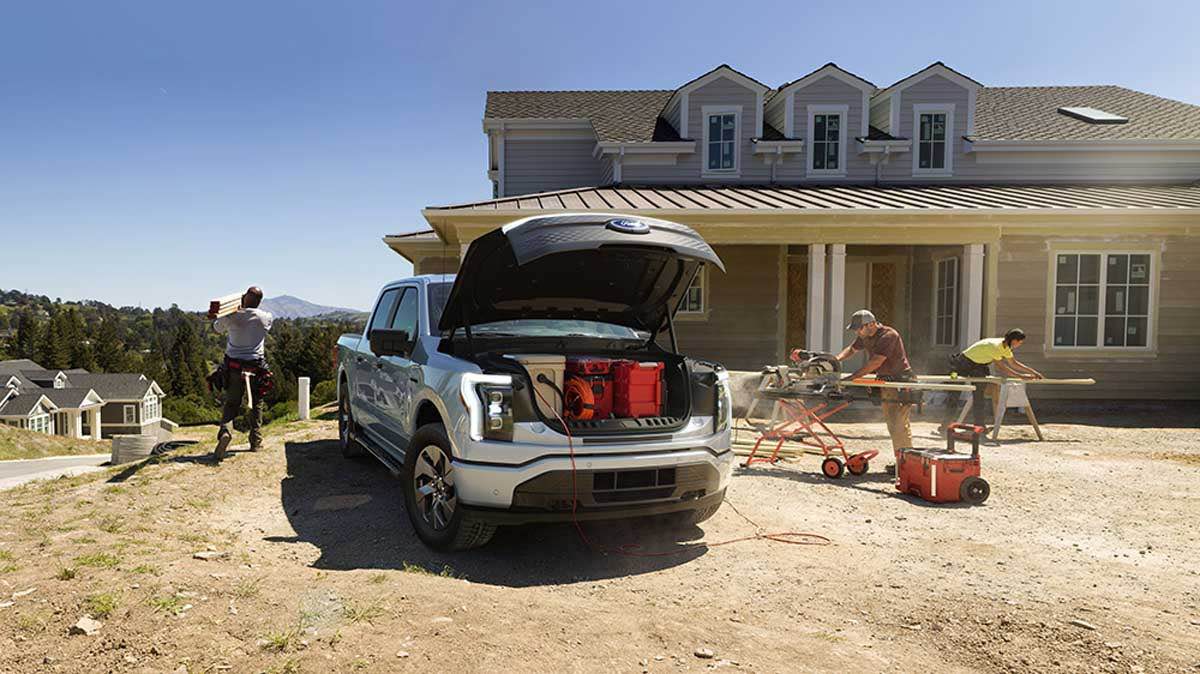
Owners of the Ford F-150 Lightning electric ute in Australia are grappling with a dual crisis: a critical nationwide recall advising against DC fast charging and the sudden receivership of AusEV’s parent company, Bosscap, the firm responsible for converting and distributing these vehicles locally. The developments have cast a shadow over the approximately 150 Australian drivers who invested in the powerful electric pickups.
The situation escalated significantly over eight days in March 2026, creating considerable uncertainty for owners. The combination of a safety recall, which necessitates a shift to slower AC charging, and the insolvency of their primary warranty provider, has left many in a precarious position regarding vehicle maintenance and potential repair costs.
The Initial Promise of the Ford F-150 Lightning Electric Ute
The Ford F-150 Lightning electric ute was first unveiled globally in May 2021, with initial deliveries commencing a year later. Hailed as a game-changer, the all-electric pickup was envisioned to redefine utility and capability in the EV segment.
It boasted impressive specifications, including a substantial driving range of 370 kilometres for the base model and up to 515 kilometres for the premium variants. Beyond its range, the Ford F-150 Lightning electric ute also integrated advanced vehicle-to-grid (V2G) and vehicle-to-load (V2L) capabilities.
These features promised versatility, allowing the ute to power a diverse array of equipment, from construction tools at a worksite to recreational vehicles like caravans, and even providing backup power for a home during outages. Its potential to serve as a mobile power solution garnered significant attention and optimism.
Australian Market Entry and Initial Costs
Despite its global fanfare, direct availability of the Ford F-150 Lightning electric ute in Australia through official Ford channels remained limited. It was through the efforts of Queensland-based AusEV, an independent company with no direct affiliation to Ford, that these vehicles began to appear on Australian roads.
AusEV undertook the complex process of converting the left-hand drive Ford F-150 Lightning electric utes to right-hand drive, a necessary modification for compliance with Australian road regulations. This bespoke conversion process, coupled with import duties and other associated costs, made the vehicles a premium offering.
When the first models became available to Australian consumers in early 2024, prices for the converted Ford F-150 Lightning electric ute started at a hefty $225,000, reflecting the significant investment required to bring these specialized vehicles to the local market.
Ford’s Evolving Global Strategy and Local Repercussions
The trajectory of the Ford F-150 Lightning electric ute has been subject to significant shifts in Ford’s global production strategy. In October of the previous year, the American automotive giant announced a halt in the production of the F-150 Lightning, citing a combination of slower-than-anticipated demand and broader strategic re-evaluations, including the return of Donald Trump as president of the United States and a change in leadership which came hand-in-hand with a lowering of EV ambitions.
These strategic adjustments were quickly followed by industry reports suggesting the company was contemplating discontinuing the electric ute entirely. A month later, these speculations were largely confirmed when Ford unveiled plans to reinvent the vehicle as an extended-range electric model, signaling a revised approach to its electric truck offerings.
These fundamental changes by Ford are now being cited as the primary catalyst for the financial distress experienced by Bosscap Group, the Australian vehicle import company that served as the parent entity to AusEV. The sudden alteration in global production directly impacted the availability of the core platform upon which Bosscap’s business model relied.
Bosscap Group’s Receivership and Warranty Implications
The challenging environment culminated in Bosscap Group being placed into receivership on March 17, as announced in a LinkedIn post by the company. This move effectively suspended all operations while receivers commenced an assessment of the business’s viability and assets.
Bosscap explicitly attributed its downfall to external factors, stating, “a sudden change in global production strategy from Ford materially impacted the availability of the underlying platform the business relied on. This decision which was outside of its control.”
A critical consequence of this development is Bosscap’s inability to honour warranty repair works for the Ford F-150 Lightning electric ute. This announcement arrived at a particularly problematic time, coinciding almost immediately with a crucial safety advisory from the Australian government.
Urgent Safety Recall Issued for Ford F-150 Lightning Electric Ute
Adding to the challenges, the Australian government’s Vehicle Recalls website subsequently issued a recall notice affecting 146 Ford F-150 Lightning electric utes. The recall highlights a significant safety concern related to the Combined Charging System (CCS2) charge port installed on these vehicles.
According to the recall documentation, the charge port “may experience increased electrical resistance during high-power Direct Current (DC) fast charging causing the internal charging pins to overheat.” This overheating poses a serious risk, prompting an urgent recommendation for owners.
The recall mandates that owners “avoid charging the vehicle using DC fast chargers” and instead exclusively use AC charging. This effectively means that owners are advised to use ‘trickle charging’ methods to mitigate the risk. A stark warning accompanied the notice: “If a person makes direct contact with the overheated charge port pins immediately after a charging session, there is a risk of burns or serious injury.”
Path Forward for Affected Owners
With Bosscap and AusEV no longer in a position to address warranty repairs or facilitate the necessary rectifications for the recall, owners of the affected Ford F-150 Lightning electric ute vehicles are now directed to Performax International.
Performax International, recognized as Australia’s largest independent importer, converter, and retailer of American vehicles, has stepped forward to offer assistance. Owners are advised to contact Performax to schedule an inspection and undertake the required rectification work outlined in the recall notice.
It is important to note, as explicitly stated in the recall, that “Performax did not design or modify these vehicles or supply them to the Australian market.” Their involvement is purely in the interest of public safety. However, the recall also cautions that “A cost may be incurred for these repairs,” indicating that owners might bear the financial burden for the necessary fixes.
Further contact information for Performax International and complete details regarding the recall can be accessed directly via the official recall notice here.
Broader Implications for the Australian EV Market
The unfolding situation with the Ford F-150 Lightning electric ute and its Australian distributor underscores the complexities inherent in importing and modifying vehicles not officially supported by their original manufacturers. It highlights the potential risks for consumers who opt for such specialized vehicles, particularly when the converting entity faces unforeseen financial difficulties.
For the approximately 150 owners, this represents a significant challenge, navigating a critical safety recall while facing potential out-of-pocket expenses for repairs due to the distributor’s collapse. The incident serves as a salient reminder of the importance of robust support and warranty frameworks within the rapidly evolving electric vehicle landscape.