
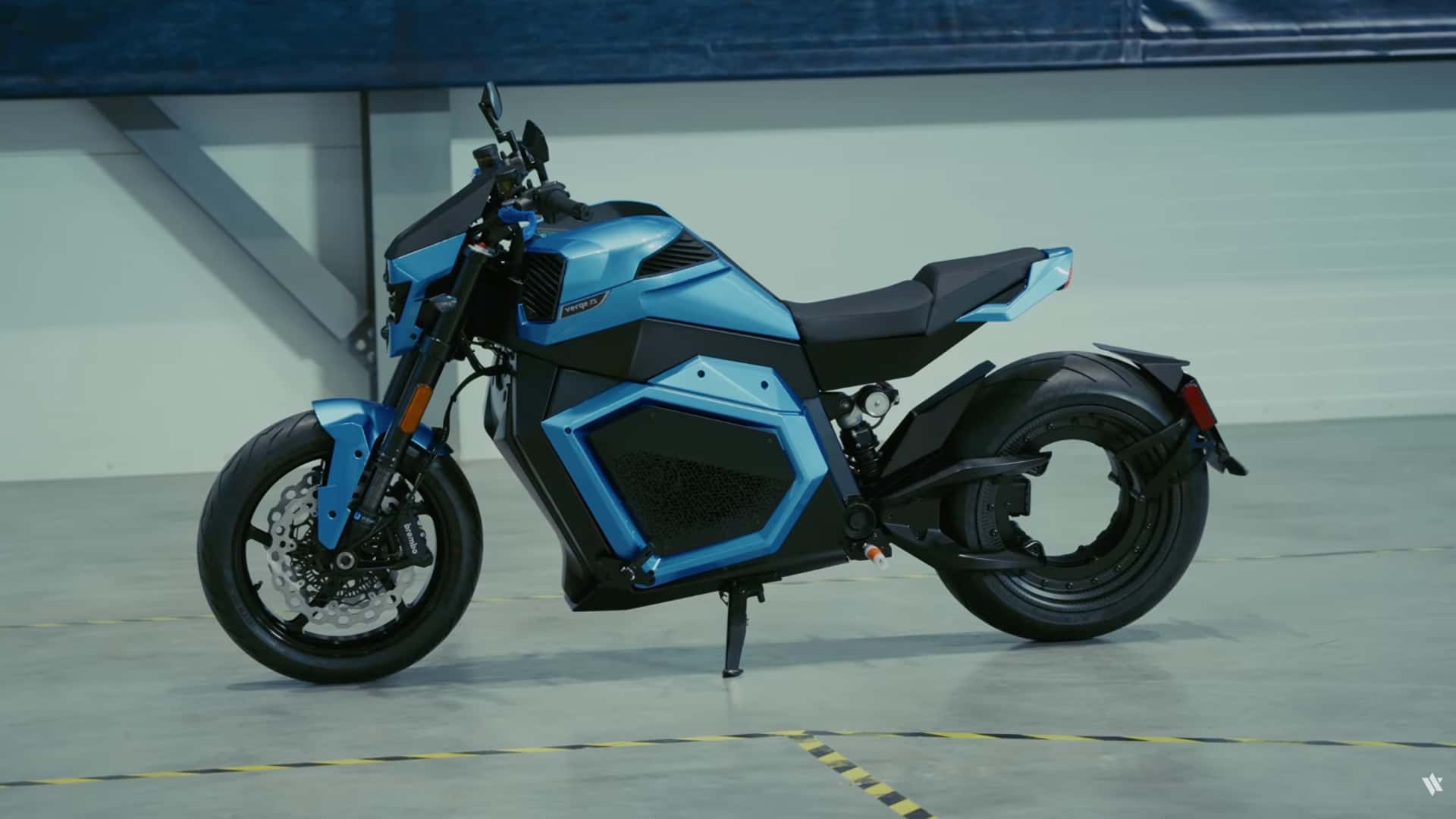
Helsinki, Finland – In a significant development for the electric vehicle industry, Estonian manufacturer Verge Motorcycles announced on Tuesday the commencement of production for what it asserts is the world’s first solid-state electric motorcycle. The vehicle in question is the second-generation TS Pro model, now purportedly powered by an all-solid-state battery developed by Finnish startup Donut Lab.
Should these claims be substantiated, this marks a monumental leap forward, positioning the Verge TS Pro not just as the first solid-state battery motorcycle but potentially the inaugural production electric vehicle of any kind to feature an all-solid-state battery pack available to consumers.
The Promise and Peril of Solid-State Battery Technology
Solid-state batteries have long been hailed by researchers and industry experts as the ‘holy grail’ of energy storage technology. They promise revolutionary improvements across several critical metrics: extended range, significantly faster charging times, enhanced safety due to the absence of flammable liquid electrolytes, and superior longevity over traditional lithium-ion batteries.
Despite these compelling advantages, the commercialization of solid-state batteries has remained an formidable challenge. The complexities involved in manufacturing them at scale, particularly in ensuring defect-free production, have prevented major automotive players like Toyota, CATL, and Samsung, alongside numerous innovative startups, from bringing them to market. While functional solid-state test beds have emerged, such as a Ducati motorcycle powered by QuantumScape cells unveiled last year, none have successfully transitioned to mass production and sale to the general public with truly all-solid-state cells.
Donut Lab’s Audacious Claims and Industry Scrutiny
The battery technology at the heart of Verge’s new motorcycle originates from Donut Lab, a Finnish startup that made considerable waves at the Consumer Electronics Show (CES) earlier this year. Donut Lab presented bold performance figures for its ‘production-ready’ all-solid-state battery, including an impressive energy density of 400 Wh/kg, an astonishing 100,000 charging cycles, complete independence from rare-earth materials, and a full charge capability in an extraordinary five minutes.

To contextualize these figures, the most advanced mainstream electric vehicle batteries currently achieve an energy density of approximately 200-250 Wh/kg. Furthermore, even high-tech Chinese electric vehicles from manufacturers like BYD, equipped with megawatt charging capabilities, do not achieve a 0-100% charge in a mere five minutes, underscoring the ambitious nature of Donut Lab’s assertions.
The initial announcement from Donut Lab was met with immediate and widespread skepticism from industry experts, largely due to the absence of independent data to corroborate its groundbreaking claims. While the company has since released some independent test results, these have notably omitted crucial details regarding the battery’s underlying chemical composition and its definitive cycle life, leaving key technical specifics ambiguous.
Verge TS Pro: Specifications and Pricing
The new solid-state electric motorcycle, the Verge TS Pro, will be offered in two distinct variants to cater to varying consumer demands. The Standard Battery model features a 20.2 kWh total capacity, with 17 kWh being usable, and is projected by the manufacturer to deliver an estimated range of 217 miles on a single charge.
For riders seeking extended travel capabilities, the Large Battery variant steps up considerably, offering a 33.3 kWh total capacity (30 kWh usable), translating to an impressive manufacturer-estimated range of 370 miles. This robust range positions the TS Pro competitively within the high-performance electric motorcycle segment.
Pricing for the Verge TS Pro in the U.S. market begins at $29,990, exclusive of applicable taxes and fees. Opting for the Large Battery variant will incur an additional cost of $5,000. A reservation fee of $100 is required to secure an order for this innovative solid-state electric motorcycle.
Revolutionary Charging and Potent Performance
While the range performance of the standard TS Pro pack is comparable to its outgoing lithium-ion predecessor, the second-generation solid-state electric motorcycle truly distinguishes itself through its dramatically improved charging speed. The first-generation TS Pro required approximately 35 minutes to charge from 20% to 80% capacity. In stark contrast, the new solid-state model boasts an ability to charge from 10% to 80% in roughly 12 minutes.
Verge further claims a peak charging rate of 200 kW, an exceptionally high figure for a motorcycle with a relatively smaller battery pack. If this charging performance is validated in real-world testing and by independent assessments, it would represent a genuinely impressive advancement for the electric two-wheeler sector.
Beyond its advanced battery, the Verge TS Pro delivers formidable performance. Both variants are engineered to provide 737 pound-feet of torque, channeled through the company’s signature hubless rear-wheel motor design. This powertrain enables the solid-state electric motorcycle to accelerate from 0 to 60 miles per hour in a rapid 3.5 seconds, offering a thrilling riding experience.
Anticipation and Future Verification
Verge Motorcycles had previously informed InsideEVs in February that deliveries for customers with early reservations were slated to commence in the first quarter. Those placing new orders for the solid-state electric motorcycle now can anticipate a waiting period, with deliveries expected towards the end of the year.
The industry awaits further independent verification of Donut Lab’s battery technology, particularly regarding its full technical specifications and long-term performance data. Teardowns of customer bikes will also be crucial in shedding light on the exact composition and real-world efficacy of this much-talked-about solid-state battery. The journey of the Verge TS Pro will be closely watched as it seeks to redefine benchmarks in electric two-wheeler technology.