
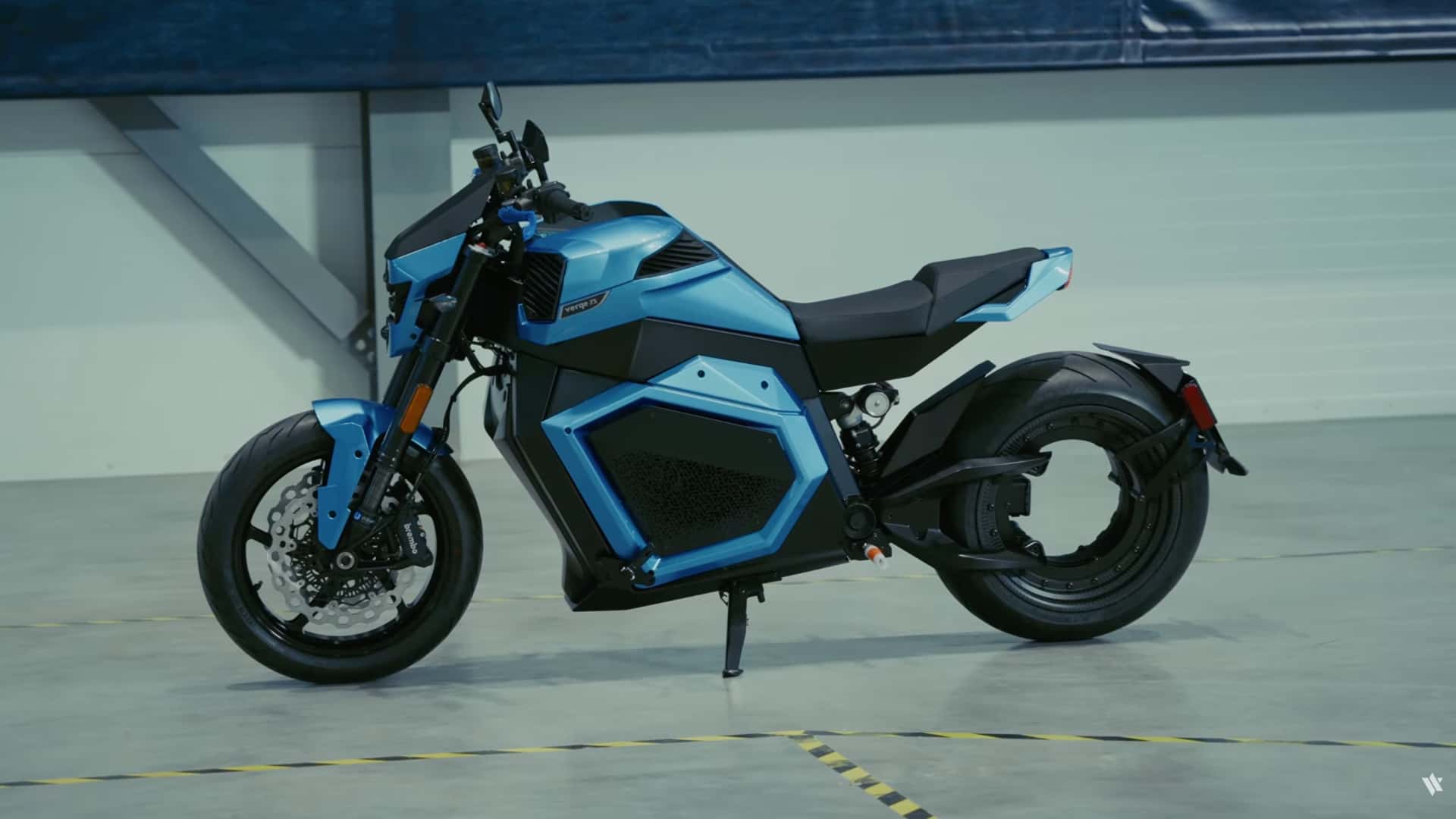
In a development that could herald a new era for electric mobility, Estonian manufacturer Verge Motorcycles has announced the commencement of production for what it claims is the world’s first solid-state electric motorcycle. The vehicle in question is the second-generation Verge TS Pro, now equipped with an all-solid-state battery developed by the Finnish startup Donut Lab.
This bold assertion, if independently verified, would mark a monumental leap not only for the two-wheeled electric vehicle segment but for the entire automotive industry. It would signify the first instance of a production electric vehicle of any kind featuring an all-solid-state battery pack available to regular consumers.
The Promise and Peril of Solid-State Battery Technology
For years, researchers and industry experts have heralded solid-state batteries as the ‘holy grail’ of energy storage. Their theoretical advantages over conventional lithium-ion batteries are significant, promising to alleviate common electric vehicle concerns such as range anxiety and lengthy charging times, while simultaneously enhancing safety and extending battery longevity.
Unlike traditional lithium-ion batteries which use liquid electrolytes, solid-state batteries employ a solid electrolyte. This fundamental difference is key to their potential benefits, offering higher energy density, increased safety due to the absence of flammable liquid components, and potentially longer lifespans with more charge cycles.
Overcoming Manufacturing Hurdles
Despite their undeniable potential, bringing solid-state batteries to mass production has proven extraordinarily challenging. The intricate material science involved and the difficulty in manufacturing them at scale without introducing defects have stalled major automakers and numerous startups alike.

Giants like Toyota, CATL, and Samsung have invested heavily in solid-state battery research and development for years, yet none have managed to commercialise them for wide consumer adoption. This backdrop underscores the ambitious nature of Verge Motorcycles’ claim and the significance it holds.
While functional solid-state test beds have been showcased previously—such as a Ducati motorcycle powered by QuantumScape cells unveiled last year—these were prototypes not intended for sale to the general public. The distinction of a ‘production vehicle’ that consumers can purchase is critical.
Donut Lab’s Ambitious Claims and Industry Scrutiny
The solid-state battery at the heart of the new Verge TS Pro is supplied by Donut Lab, a Finnish startup that made significant waves at CES earlier this year. Donut Lab had then asserted it had built the world’s first production-ready all-solid-state battery, making some truly remarkable claims.
Among these claims were an astonishing 400 Wh/kg energy density, an impressive 100,000 charging cycles, complete independence from rare-earth materials, and the capability to achieve a full charge in a mere five minutes. To put these figures into perspective, the most advanced mainstream electric vehicle batteries currently available typically hover around 200-250 Wh/kg in energy density.
Furthermore, even cutting-edge electric cars from manufacturers like BYD in China, known for their megawatt charging capabilities, do not achieve a 0-100% charge in just five minutes. These figures from Donut Lab were met with immediate skepticism from industry experts, largely due to the absence of independent data to substantiate such extraordinary performance.
Partial Verification and Lingering Questions
Responding to the initial doubts, Donut Lab has since published independent test results. However, these results have not fully revealed the battery’s underlying chemistry or provided comprehensive data on its cycle life, leaving critical pieces of the puzzle still in question.
Despite the lingering uncertainties, Donut Lab had previously stated that its advanced solid-state cells would be integrated into actual production motorcycles by the end of the first quarter. Verge Motorcycles’ latest announcement suggests that this timeline has been met, with at least one Verge TS Pro unit already produced.
The Verge TS Pro: Specifications and Market Entry
The new solid-state electric motorcycle, the Verge TS Pro, will be available in two distinct variants to cater to varying consumer needs. The Standard Battery option is equipped with a 20.2 kWh capacity (17 kWh usable), offering a manufacturer-estimated range of 217 miles.
For riders seeking extended range, the Large Battery variant boasts a substantial 33.3 kWh capacity (30 kWh usable), projecting an impressive 370 miles of range on a single charge. This positions the Verge TS Pro as a formidable contender in the high-performance electric motorcycle market.
Pricing and Reservations
Potential buyers in the U.S. can expect prices for the solid-state electric motorcycle to start at $29,990, exclusive of taxes and fees. Opting for the larger battery pack will incur an additional cost of $5,000, bringing the total to $34,990. A reservation fee of $100 is required to secure an order for this groundbreaking vehicle.
Interestingly, the range offered by the standard battery pack is comparable to that of the outgoing lithium-ion model. However, where the second-generation solid-state electric motorcycle truly distinguishes itself is in its dramatic improvement in charging speed.
Redefining Charging Standards for Two-Wheelers
The previous generation of the TS Pro could achieve a 20% to 80% charge in approximately 35 minutes. The new solid-state powered bike dramatically cuts this time, claiming to charge from 10% to 80% in roughly 12 minutes. This substantial reduction in charging time is pivotal for enhancing rider convenience and reducing range anxiety.
Furthermore, Verge Motorcycles asserts a peak charging rate of 200 kW for the new TS Pro. This figure is exceptionally high for a motorcycle with a relatively small battery pack. If this claimed charging performance holds true in real-world testing and independent verification, it would represent a genuinely impressive feat of engineering.
Uncompromising Performance on the Road
Beyond its advanced battery technology, the Verge TS Pro maintains its high-performance credentials. Both variants are designed to deliver an astounding 737 pound-feet of torque, channeled through the company’s distinctive hubless rear-wheel motor. This immense power enables the solid-state electric motorcycle to sprint from 0 to 60 miles per hour in a rapid 3.5 seconds.
Paving the Way for Future Electric Mobility
According to information shared by Verge Motorcycles in February, deliveries for early reservation holders are anticipated to commence during the first quarter. Those placing new orders now are expected to receive their solid-state electric motorcycle units towards the end of the year.
The advent of a production solid-state electric motorcycle represents a significant moment for the entire electric vehicle industry. Its success could accelerate the adoption of solid-state battery technology across various segments, potentially offering solutions to current limitations in range, charging infrastructure, and safety for electric cars, buses, and other applications.
Continued Scrutiny and Future Prospects
As the first Verge TS Pro units begin to reach customers, the focus will undoubtedly shift towards independent verification. Industry observers will be keenly awaiting further test results from Donut Lab, particularly regarding the battery’s full chemical composition and comprehensive cycle life data.
Equally anticipated are real-world reviews and potential teardowns of customer bikes, which will provide crucial insights into the precise nature and performance of this pioneering solid-state battery. The journey of the Verge TS Pro will be closely watched, as it carries the torch for a technology long considered revolutionary yet elusive in mass production.