
Tesla is marking a pivotal moment in its history with the official winding down of production for its foundational luxury electric vehicles, the Model S and Model X. The iconic duo, which propelled Tesla into the mainstream automotive consciousness, is now entering its final chapter, paving the way for the company’s ambitious shift towards an autonomous future centered on robotics. Elon Musk, CEO of Tesla, has signaled that this significant transition will not pass unnoticed, hinting at an “official ceremony” to commemorate the end of an era for these pioneering vehicles.
The move formalizes what Musk had previously articulated during the company’s Q4 2025 earnings call in January, where he stated, “time to basically bring the Model S and X programs to an end with an honorable discharge.” This strategic pivot underscores Tesla’s relentless pursuit of innovation, even as it bids adieu to the models that defined its early success and established its formidable presence in the global automotive industry.
The Official Wind-Down and Final Opportunities
The operational aspects of this transition began to materialize on March 27, when U.S. customers received farewell emails, signaling the imminent conclusion of new factory builds for both Model S and Model X. Simultaneously, Tesla’s official website was updated to reflect this change, now presenting only a limited selection of inventory units available for immediate purchase. This means prospective buyers no longer have the option to configure a custom Model S or Model X, marking a clear departure from previous sales models.
For those still hoping to acquire one of these automotive icons, the window of opportunity is rapidly closing. The remaining U.S. inventory units are reportedly discounted, offering a final chance to own a piece of Tesla’s groundbreaking past. This phased withdrawal from the market allows Tesla to manage its remaining stock while redirecting manufacturing resources.
Musk Teases an Unprecedented Farewell Ceremony
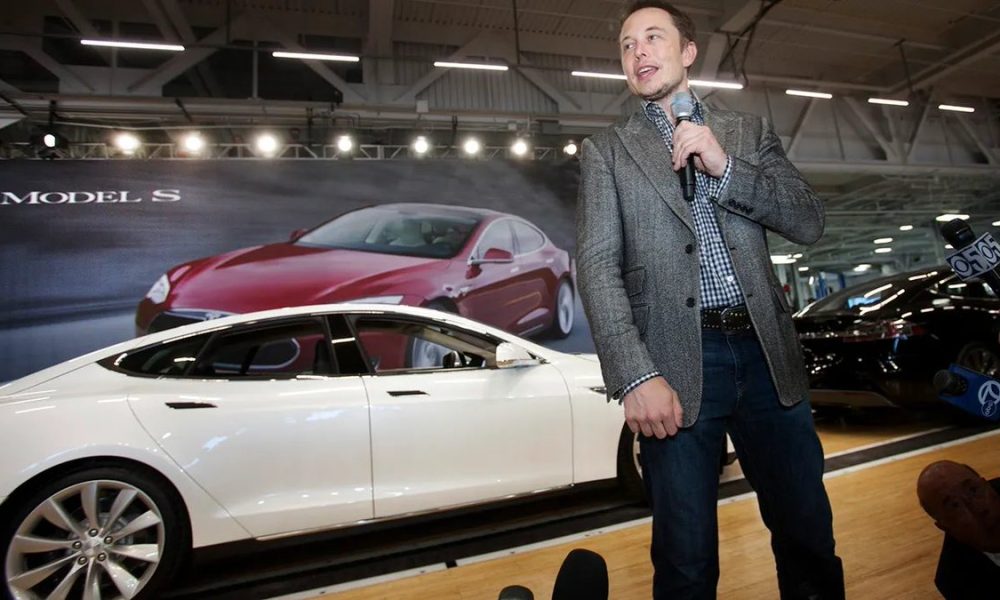
Adding a layer of sentiment to this strategic shift, Elon Musk took to X (formerly Twitter) on April 1, 2026, to share a nostalgic throwback photo. The image captured Musk speaking at the Model S production launch in 2012, serving as a powerful visual reminder of the vehicles’ origins and impact. In his post, Musk announced:

Custom orders of the Tesla Model S & X have come to an end. All that’s left are some in inventory.
We will have an official ceremony to mark the ending of an era. I love those cars.
This was me at production launch 14 years ago: pic.twitter.com/6kvCf9HTHc
— Elon Musk (@elonmusk) April 1, 2026
The mention of an “official ceremony” is particularly noteworthy. Historically, Tesla has not organized formal farewell events for its vehicles, making this announcement a departure from established company practice. Musk’s explicit wording suggests that this will be a deliberate, public acknowledgment rather than a quiet discontinuation of the production line. Given the context of his X post, which features him on a stage with a microphone and an audience at the Fremont factory, it is not unreasonable to anticipate a closing ceremony held at the very location where these vehicles first came to life.
The exact nature and accessibility of this event remain subjects of speculation. Whether it will be a public gathering, a private affair for employees, or a moment livestreamed across social media platforms like X, the ceremony promises to be a significant event for Tesla enthusiasts and the broader automotive community. It underscores the profound impact of the Tesla Model S and Model X legacy.
The Pioneering Tesla Model S and Model X Legacy
The Model S first made its debut nearly fifteen years ago, profoundly changing perceptions of electric vehicles. As Tesla’s first fully in-house designed vehicle, it was engineered to be more than just an electric car; it was conceived as a high-performance, long-range luxury sedan that could compete with, and often outperform, its internal combustion engine counterparts. Its sleek design, impressive acceleration, and groundbreaking range on a single charge shattered the prevailing stereotypes of electric cars as slow, impractical, or unattractive.
The success of the Model S demonstrated unequivocally that electric vehicles could be fast, desirable, and capable of long-distance travel, effectively challenging the status quo of the global automotive industry. It proved that an electric powertrain could offer a superior driving experience, characterized by instant torque, quiet operation, and a refined ride quality.
Following in 2015, the Model X continued this tradition of innovation, venturing into the SUV segment with its distinctive and attention-grabbing falcon-wing doors. Beyond their aesthetic appeal, these doors offered practical benefits, providing easier access to the rear seats in confined spaces. The Model X was also among the first all-electric SUVs on the market, carving out a new niche and demonstrating the versatility of Tesla’s electric platform.
Together, the Model S and Model X served as flagships that not only propelled Tesla to prominence but also exerted immense pressure on traditional automakers. Their success forced legacy manufacturers to take all-electric transportation seriously, prompting significant investments in EV research and development across the industry. Crucially, the revenue generated from these two luxury models also helped fund the development of Tesla’s more affordable, mass-market vehicles, the Model 3 and Model Y, which have since become global best-sellers.
Shifting Towards an Autonomous and Robotic Future
Despite their monumental contributions, by 2025, the sales figures for both the Model S and Model X had become a mere “rounding error” in Tesla’s overall sales portfolio. This decline, coupled with Tesla’s strategic objectives, necessitated a reallocation of resources. Elon Musk was transparent about the company’s future direction, stating, “We are going to convert that production space to an Optimus factory. It’s part of our overall shift to an autonomous future.” This declaration underlines a profound strategic pivot, moving beyond electric vehicles as the sole focus of Tesla’s manufacturing efforts.
The ambition behind this transition is to dedicate valuable manufacturing floor space to the development and mass production of Tesla’s humanoid robot, Optimus. This strategic decision signals a deeper commitment to artificial intelligence and robotics, positioning these technologies as central to Tesla’s long-term growth and its vision for a future dominated by autonomous systems.
The Rise of Optimus: A New Chapter for Fremont
This strategic shift is already well underway at the Fremont factory, a site steeped in Tesla’s production history. As of January 2026, Tesla officially commenced Optimus Gen 3 production at its Fremont facility, setting an ambitious target run rate of one million units per year. This demonstrates a clear and accelerated commitment to bringing humanoid robots to market at scale.
The Optimus Gen 3 robot is engineered with advanced capabilities, featuring an impressive 22 degrees of freedom per hand, allowing for highly dexterous manipulation of objects. It operates on Tesla’s custom-designed AI5 chip, a testament to the company’s vertical integration in hardware and software development. Furthermore, the robot shares the same neural network architecture as Tesla’s Full Self-Driving (FSD) system, hinting at sophisticated AI capabilities and learning potential. This shared architecture is expected to accelerate the robot’s ability to understand and interact with complex real-world environments, leveraging years of development in autonomous driving technology.
Complementing the Fremont efforts, a dedicated Optimus factory is also under construction at Gigafactory Texas, with an even more ambitious planned annual capacity of 10 million units. The production lines that once meticulously crafted the Model S and Model X are now being strategically converted and repurposed to support this massive ramp-up in Optimus production. This transformation underscores Tesla’s vision of a future where humanoid robots play a crucial role in various sectors, from manufacturing to logistics and beyond. Further insights into this monumental project can be found in the article: Elon Musk’s $10 Trillion robot: Inside Tesla’s push to mass produce Optimus.
Continued Support for Existing Tesla Model S and Model X Owners
Even as production of the Model S and Model X ceases, Tesla has affirmed its unwavering commitment to existing owners. The company has confirmed that it will continue to provide comprehensive support, including service, regular software updates, and the availability of parts for as long as individuals own their vehicles. This assurance is critical for maintaining customer trust and ensuring the longevity of these high-value assets. It reflects Tesla’s dedication to its installed base, ensuring that the Tesla Model S and Model X legacy continues for their current owners.
The discontinuation of the Model S and Model X production lines represents more than just the end of two vehicle models; it symbolizes Tesla’s evolution from an electric car manufacturer to a diversified technology company deeply invested in AI and robotics. The upcoming ceremony, hinted at by Musk, will undoubtedly be a poignant moment, celebrating the immense contributions of these vehicles while simultaneously looking forward to a future radically redefined by autonomous technology and the Optimus project.