
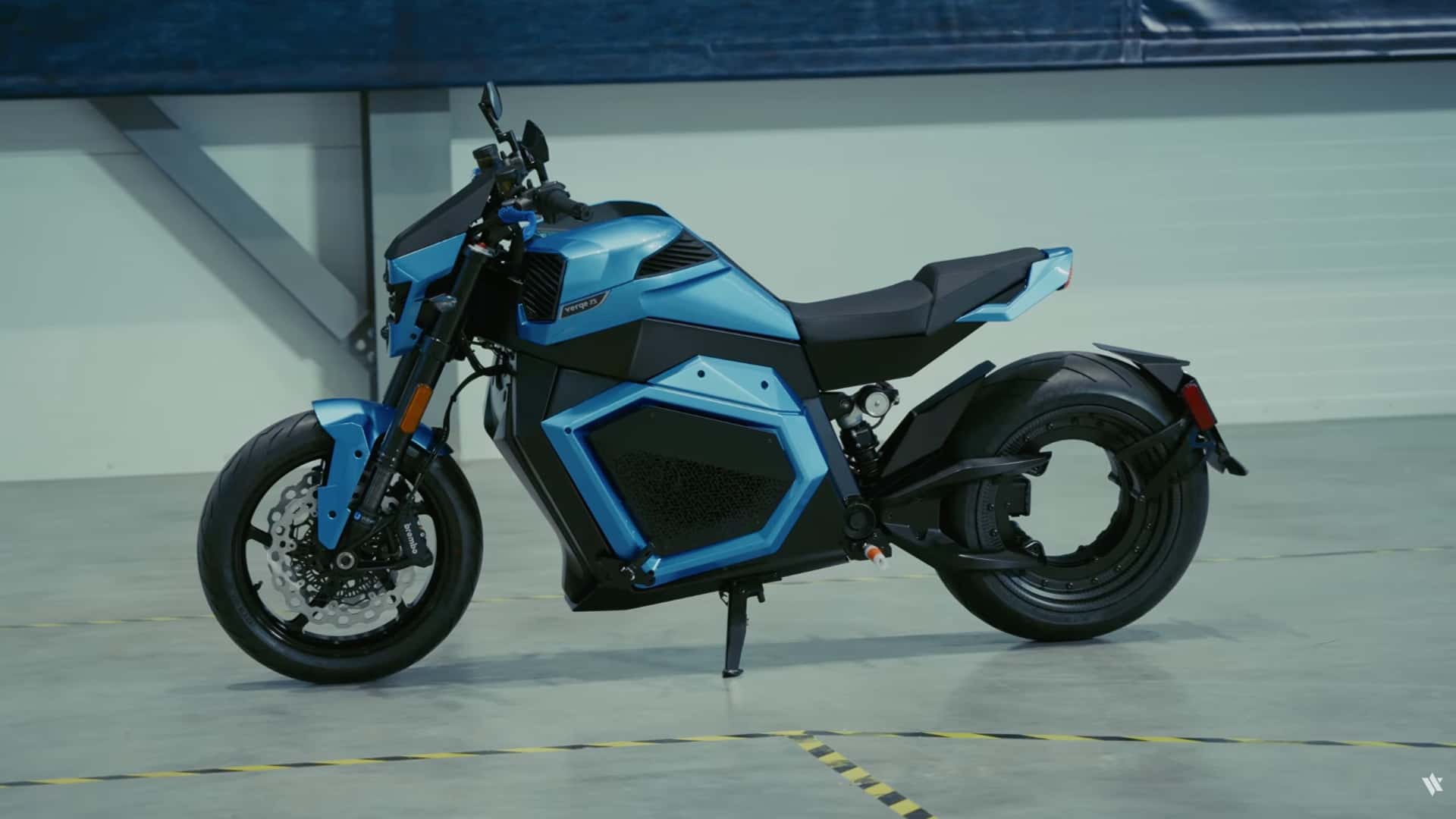
Estonian manufacturer Verge Motorcycles has announced a significant milestone in electric vehicle technology, claiming to have commenced production of the world’s first solid-state battery electric motorcycle. The vehicle in question is the second-generation TS Pro model, which now integrates an all-solid-state battery system developed by the Finnish startup Donut Lab. This development, if its ambitious claims are fully realised, marks a potentially transformative moment for the broader electric vehicle industry.
The introduction of a production vehicle with an all-solid-state battery pack would not only be a first for motorcycles but for any type of electric vehicle globally. While prototype and testbed solid-state battery applications have been showcased before, bringing such a technology to consumer production has long been considered a formidable challenge that even major automotive giants have yet to overcome at scale.

The Elusive Promise of Solid-State Battery Technology
For years, researchers and industry experts have heralded solid-state batteries as the ‘holy grail’ of energy storage. This advanced battery chemistry promises to address critical limitations inherent in traditional lithium-ion batteries, including concerns over range, charging speed, and overall safety. Proponents suggest that solid-state technology could significantly extend vehicle range, drastically reduce charging times, and enhance thermal stability, thereby mitigating fire risks. Additionally, it offers the potential for greater longevity and higher energy density.
Despite these immense potential advantages, the commercial-scale manufacturing of solid-state batteries without critical defects has proven exceptionally difficult. The complex engineering involved in creating a stable and efficient solid electrolyte that can withstand numerous charge-discharge cycles has prevented large-scale adoption. Leading global players such as Toyota, CATL, and Samsung, along along with numerous emerging startups, have invested heavily in research and development, yet mass production has remained elusive.
Donut Lab’s Bold Claims and Initial Industry Scrutiny
The Finnish startup Donut Lab garnered significant attention at the Consumer Electronics Show (CES) earlier this year with a series of remarkable assertions about its proprietary all-solid-state battery. The company claimed an extraordinary energy density of 400 Wh/kg, a cycle life of 100,000 charges, zero reliance on rare-earth materials, and, perhaps most strikingly, the ability to achieve a full charge in a mere five minutes.

To contextualise these figures, current best-in-class mainstream electric vehicle batteries typically offer energy densities in the range of 200-250 Wh/kg. Furthermore, even the most advanced electric vehicles from manufacturers like BYD, equipped with megawatt charging capabilities, do not achieve a 0-100% charge in a five-minute window. Such ambitious claims from a relatively new player naturally met with immediate skepticism from industry experts, particularly due to the initial absence of independent verification data.
Donut Lab has since released some independent test results; however, these publications have not fully disclosed crucial details regarding the battery’s underlying chemical composition or its comprehensive cycle life performance. This omission has left significant questions unanswered within the scientific and engineering communities, fueling continued debate and anticipation for more complete data.
Verge Motorcycles Paves the Way for Production
Donut Lab’s initial announcement at CES also included a promise that its innovative cells would be integrated into actual production motorcycles by the end of the first quarter of the year. Verge Motorcycles’ latest announcement confirms this projection, indicating that at least one TS Pro unit featuring the new solid-state battery has rolled off its production line. This development signifies a critical step forward, moving the technology from a laboratory or prototype setting to tangible manufacturing.
This commencement of production means that the industry will soon have the opportunity to scrutinise these significant claims in a real-world context, as the highly anticipated solid-state battery electric motorcycle becomes available. The collaboration between Verge Motorcycles, known for its distinctive design and performance, and Donut Lab, with its groundbreaking battery technology, positions this motorcycle as a key indicator of future advancements in the electric mobility sector.
Introducing the Second-Generation TS Pro: Variants and Pricing
The new Verge TS Pro solid-state battery electric motorcycle will be offered in two distinct variants, catering to different performance and range requirements for the discerning rider. The Standard Battery model is equipped with a 20.2 kWh capacity, offering 17 kWh of usable energy, and is rated for a manufacturer-estimated range of 217 miles on a single charge. This variant aims to provide a robust performance suitable for varied riding conditions.
For riders seeking extended range, the Large Battery option elevates the capacity to 33.3 kWh, with 30 kWh available for use, promising an impressive manufacturer-estimated range of 370 miles. This significantly increased range positions the TS Pro as a leader in long-distance electric motorcycle travel. In the U.S. market, pricing for the standard model begins at $29,990, excluding applicable taxes and fees. Opting for the Large Battery variant will incur an additional cost of $5,000, while a reservation fee of $100 is required to secure an order.
Revolutionary Charging Capabilities and Uncompromised Performance
While the range of the standard solid-state pack is comparable to the outgoing lithium-ion model, the second-generation TS Pro truly distinguishes itself through its advancements in charging speed. The previous lithium-ion powered TS Pro model required approximately 35 minutes to charge from 20% to 80% capacity. In stark contrast, the new solid-state battery electric motorcycle is projected to achieve a 10% to 80% charge in roughly 12 minutes.
This dramatic reduction in charging time is attributed to a claimed peak charging rate of 200 kW, a figure considered unusually high and genuinely impressive for a motorcycle with a relatively small battery pack. If this performance translates reliably into real-world testing, it represents a substantial leap forward in user convenience and practicality for electric two-wheelers, directly addressing one of the primary concerns of electric vehicle adoption.
Beyond charging, the TS Pro maintains its high-performance credentials. Both variants deliver an formidable 737 pound-feet of torque, harnessed through the company’s distinctive hubless rear-wheel motor. This powerful drivetrain allows the solid-state battery electric motorcycle to accelerate from 0 to 60 miles per hour in a swift 3.5 seconds, offering an exhilarating riding experience that aligns with the expectations of high-performance electric motorcycles.
Market Entry and Future Scrutiny
Verge Motorcycles had previously indicated that deliveries for its early reservation holders of the solid-state TS Pro would commence within the first quarter of the year. For new orders placed currently, customers can expect to receive their motorcycles towards the end of the year. This phased delivery approach allows the company to manage initial production and logistics while scaling up to meet demand.
As these first production models reach consumers, the focus will intensify on independent verification. The industry eagerly awaits further comprehensive test results from Donut Lab to fully corroborate its battery claims, particularly concerning the undisclosed chemistry and long-term cycle life data. Additionally, the eventual teardowns of customer bikes by independent evaluators will provide crucial insights into the precise composition and engineering of this groundbreaking solid-state battery electric motorcycle, offering a definitive assessment of its revolutionary potential in the electric mobility landscape.