
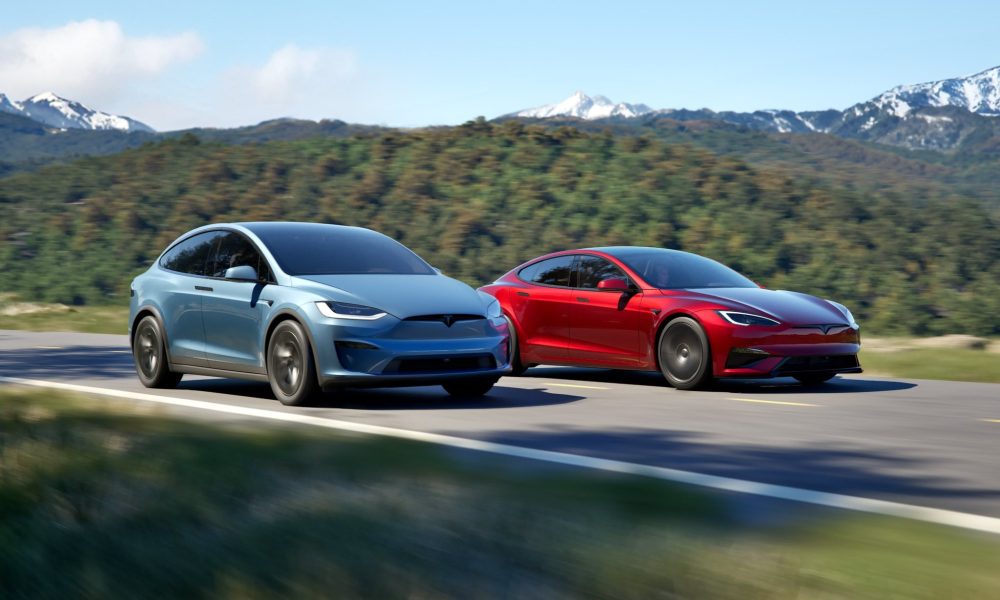
In a pivotal strategic move marking the conclusion of an era, Tesla has officially ceased accepting custom orders for its luxury sedan, the Model S, and its iconic SUV, the Model X. Effective April 1, 2026, prospective buyers will now be directed exclusively to existing inventory, signaling a significant pivot for the electric vehicle pioneer.
This development underscores Tesla’s commitment to reallocate manufacturing resources towards its burgeoning artificial intelligence and robotics initiatives, most notably the Optimus humanoid robot. The decision brings to a close the personalized configuration options that have long been a hallmark of the premium Tesla ownership experience for these two foundational models.
A Strategic Transition: Phasing Out Flagship Customisation
The immediate consequence of this policy change is the removal of the custom order configurator from Tesla’s official website. Visitors navigating to tesla.com/model-s and tesla.com/modelx are no longer presented with the design studio interface that allowed for the selection of paint, wheels, interior options, or performance upgrades. Instead, the focus has entirely shifted to a curated selection of pre-built vehicles currently available in stock for immediate purchase or lease.
The change was confirmed by Tesla CEO Elon Musk himself, who took to the social media platform X to announce the monumental shift. In a direct post, Musk stated: “Custom orders of the Tesla Model S & X have come to an end. All that’s left are some in inventory.”
Musk further conveyed the sentimental weight of the decision, adding, “We will have an official ceremony to mark the ending of an era. I love those cars.” The statement was accompanied by a throwback photo from the Model S production launch in 2012, highlighting the 14-year journey of these electric vehicles.

Custom orders of the Tesla Model S & X have come to an end. All that’s left are some in inventory.
We will have an official ceremony to mark the ending of an era. I love those cars.
This was me at production launch 14 years ago: pic.twitter.com/6kvCf9HTHc
— Elon Musk (@elonmusk) April 1, 2026
This strategic move was initially foreshadowed during Tesla’s Q4 2025 earnings call in January. During the call, Musk indicated that it was time for an “honorable discharge” of the Model S and Model X programs. This decision aims to liberate valuable resources and manufacturing capacity at the Fremont factory, redirecting them toward the ambitious development and production of the Optimus humanoid robot and advanced autonomous vehicle initiatives.
The Enduring Legacy of the Model S and Model X
Introduced in 2012, the Tesla Model S was nothing short of revolutionary, effectively challenging the perception of what an electric vehicle could be. It quickly became renowned for its class-leading range, exhilarating acceleration, and sophisticated design, establishing Tesla as a formidable contender in the premium automotive segment. The Model S demonstrated that electric cars could not only compete with, but often surpass, traditional internal combustion luxury vehicles.
Following in 2015, the Tesla Model X further solidified the company’s innovative reputation. Its distinctive falcon-wing doors became an instant icon, turning heads and cementing its place as one of the first all-electric SUVs on the market. Both the Model S and Model X were instrumental in proving the viability and desirability of electric vehicles in the luxury segment, directly influencing legacy automakers to seriously pursue their own EV strategies.
Evolving Market Dynamics and Production Efficiency
Despite their groundbreaking contributions, the sales volumes of the Tesla Model S and Model X have experienced a decline in recent years. As Tesla expanded its product portfolio with the higher-volume Model 3 sedan and Model Y SUV, the flagship models began to represent a progressively smaller fraction of the company’s overall deliveries.
The diminishing sales figures rendered the continued custom production of these models increasingly inefficient for Tesla. The company’s strategic pivot toward mass-market vehicles and, more recently, advanced AI and robotics, necessitated a streamlining of its manufacturing operations. This move allows Tesla to focus its production prowess on ventures with greater long-term growth potential, such as robotaxis and next-generation vehicle platforms.
Final Opportunities: Securing a New Model S or Model X
For prospective buyers still eager to acquire a new Tesla Model S or Model X, the window of opportunity is rapidly closing. The remaining U.S. inventory vehicles, some of which are nearly new, may present a unique chance to obtain these iconic electric vehicles. These units could potentially include attractive incentives such as lifetime free Supercharging, Full Self-Driving (Supervised) capability, and premium connectivity, depending on their specific configuration and original purchase terms.
Leasing options are also available for select Model X units, with prices starting around $1,699 per month. However, potential buyers are advised that exact pricing and availability are subject to frequent fluctuations as the remaining stock is depleted. International markets, including regions in Europe and China, have already implemented similar restrictions on custom orders for these models in recent months, setting a precedent for this global shift.
The Road Ahead: Optimus and Tesla’s AI-Driven Future
The discontinuation of custom orders for the Model S and Model X aligns seamlessly with Tesla’s overarching strategy to rationalize its product lineup and redeploy its considerable manufacturing capabilities towards groundbreaking innovations in autonomy and AI. The company has explicitly stated that once the current inventory of these models is exhausted, new Model S and Model X vehicles will no longer be offered for sale.
This strategic realignment is fundamentally driven by Tesla’s ambitious plans for the Optimus humanoid robot. During the Q4 2025 earnings call, Musk highlighted the intention to convert the existing production space at the Fremont factory, previously dedicated to the Model S and Model X, into an “Optimus factory.”
Indeed, the production of Optimus Gen 3 robots commenced at the Fremont factory in January 2026, with an aggressive target run rate of one million units per year. Furthermore, a dedicated Optimus factory is under construction at Gigafactory Texas, slated for an even larger annual capacity of 10 million units. This massive redirection of resources underscores Tesla’s profound commitment to becoming a leader in robotics and artificial intelligence.
Continued Support for Owners and a Fitting Farewell
While the cessation of new custom orders marks a significant change, Tesla has reassured its loyal customer base. The company has affirmed its commitment to continue supporting existing Model S and Model X owners with comprehensive service, regular software updates, and the availability of necessary parts for the foreseeable future. This ensures that current owners can maintain their vehicles and continue to enjoy the Tesla experience.
For the legions of loyal owners and dedicated fans who have championed these vehicles since their inception, the promise of an “official ceremony” offers a fitting opportunity to commemorate the legacy of the Model S and Model X. Details regarding this ceremony remain scarce, but it is expected to serve as a poignant farewell to two vehicles that were pivotal in shaping the modern electric vehicle landscape.
In the interim, the website’s configuration change serves as an unambiguous signal: the era of custom-built flagship Tesla Model S and Model X vehicles has quietly drawn to a close. Tesla’s strategic focus has decisively shifted toward a future where artificial intelligence, advanced robotics, and autonomous driving take center stage, propelling the company into its next chapter of innovation.