
The United States has entered a new era of electric vehicle (EV) charging with the deployment of Alpitronic’s HYC1000 megawatt EV chargers. These advanced units, currently undergoing testing at the company’s North American headquarters in Charlotte, North Carolina, represent a significant leap in charging technology, capable of delivering up to 1,000 kilowatts (kW) of power to a single port. While this marks a monumental step forward for electric vehicle charging infrastructure, it also highlights a critical challenge: the power output of these chargers significantly exceeds the acceptance rates of most electric vehicles currently available in the U.S. market.
Key Takeaways
- Alpitronic’s HYC1000 megawatt EV chargers are being tested in North Carolina, offering up to 1,000 kW for semi-trucks and 600 kW for passenger EVs.
- Current U.S. passenger EVs cannot fully utilize this power, with top models peaking around 400 kW.
- The technology aims to revolutionize charging speeds, making EV refueling comparable to gasoline cars and addressing a key barrier to mass adoption.
- Alpitronic is rapidly expanding its footprint through partnerships with major charging networks across the nation.
- These chargers feature modular design, supporting NACS, CCS, and MCS standards, along with smart power distribution for optimized efficiency.
The Dawn of Megawatt Charging in the U.S.
Alpitronic, an Italian charging hardware provider, is at the forefront of this technological shift. The introduction of its HYC1000 megawatt EV chargers signals a future where electric vehicles can be recharged in minutes rather than hours. These state-of-the-art systems are designed not only for the burgeoning passenger EV market but also for heavy-duty electric trucks, offering unprecedented power delivery.

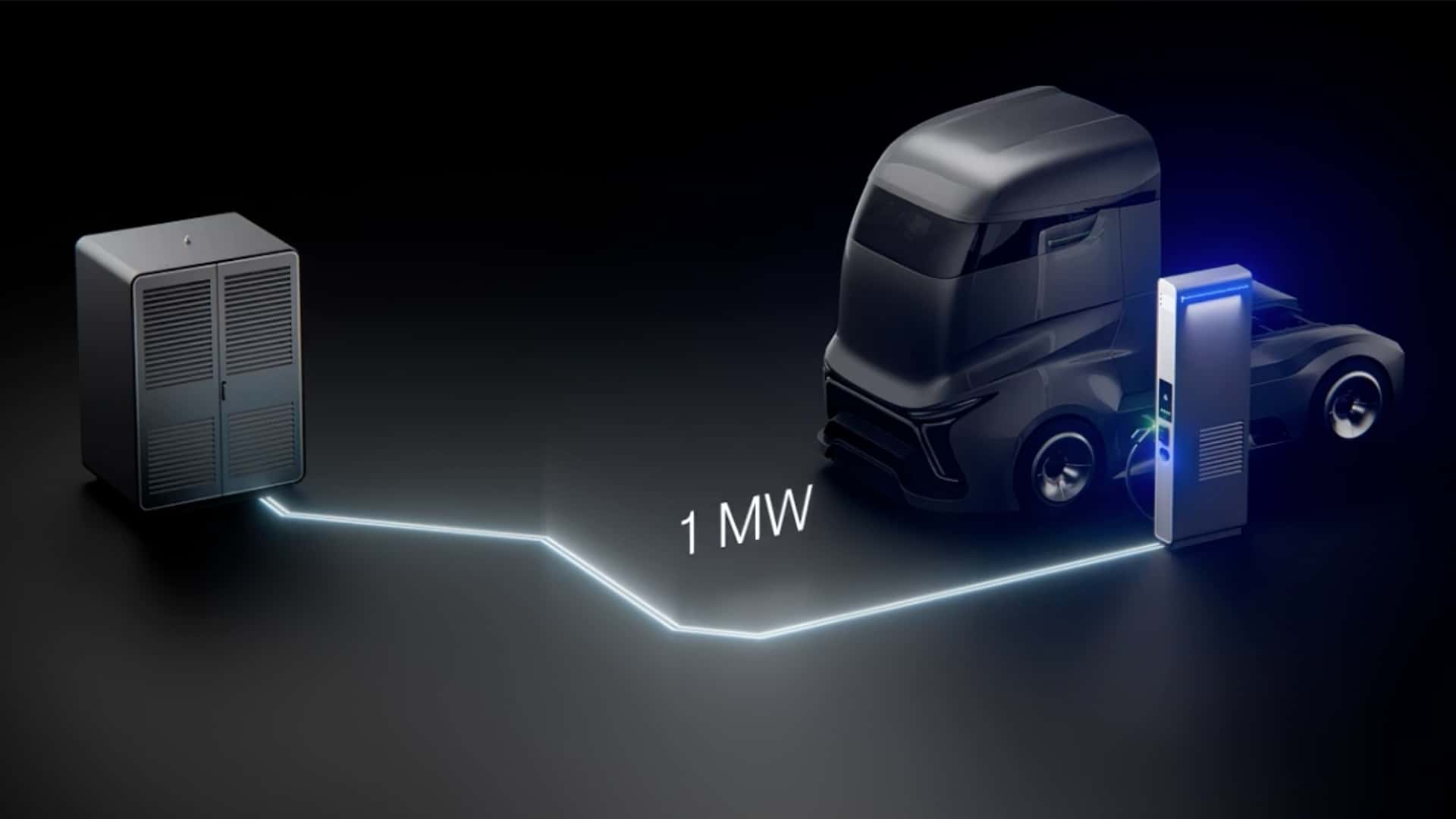
Specifically, the HYC1000 can supply up to 1,000 kW to a single port dedicated to semi-trucks, utilizing the Megawatt Charging Standard (MCS). For passenger EVs, the chargers can deliver a formidable 600 kW. This level of power promises to drastically reduce charging times, potentially alleviating range anxiety and accelerating the transition to electric mobility.
A Leap Beyond Current EV Capabilities
Despite the advanced capabilities of these new megawatt EV chargers, a notable gap exists between the charger’s output and the maximum charging rates accepted by today’s fastest electric vehicles in the United States. Current high-performance EVs, such as the Porsche Cayenne Electric, BMW iX3, and Lucid Gravity, typically top out at around 400 kW. This means that while the infrastructure is becoming ready, the automotive industry needs to adapt its battery technology and vehicle architecture to fully leverage these ultra-fast charging speeds.
This technological disparity presents both a challenge and an opportunity. It challenges automakers to innovate faster, developing electric vehicles with higher charging acceptance rates. Simultaneously, it creates an opportunity for a truly seamless and rapid recharging experience, making EV ownership more attractive and convenient for a broader segment of the population, thereby addressing one of the critical bottlenecks in the mass adoption of electric vehicles.

Alpitronic’s Expanding Footprint in North America
Alpitronic has rapidly established itself as a significant player in the U.S. electric vehicle charging landscape. In a relatively short period, the company has secured crucial partnerships with prominent charging networks and automotive brands. These include Ionna, Walmart, Mercedes-Benz High Power Charging, Electrify America, and BP Pulse.
These collaborations have led to the widespread deployment of hundreds of Alpitronic’s HYC400 chargers nationwide, setting the stage for the next generation of charging technology. The introduction of the HYC1000 megawatt EV chargers further solidifies Alpitronic’s position as a leader in innovative power delivery solutions for the growing electric vehicle market.
Innovative Design and Flexible Power Delivery
The design of the HYC1000 megawatt EV chargers is as impressive as their power output. These units are characterized by their slim, tall rectangular form factor, with each dispenser designed to accommodate two cables. This compact yet powerful design facilitates easier integration into various charging sites.
Versatility is a core feature, as the chargers are configurable to support multiple charging standards. They can incorporate the Tesla-style North American Charging Standard (NACS) cables, the Combined Charging System (CCS) cables, and the heavy-duty Megawatt Charging Standard (MCS) cable. This adaptability allows network providers to customize installations based on the specific needs of their clientele, whether it’s passenger cars or commercial fleets.
Enhancing user experience, each unit is equipped with swinging arms at the top to manage cable weight, a vehicle-facing touchscreen displaying real-time charging details, and an integrated card reader for convenient payment processing. Mike Doucleff, President of Alpitronic Americas, detailed these operational aspects in a recent video, emphasizing the user-centric design.
The Mechanics of Smart Power Management
Each individual tower of the HYC1000 megawatt EV chargers features two plugs, both capable of simultaneously delivering up to 600 amps and 1,000 volts, translating to 600 kW of power. This capacity surpasses the fastest existing chargers in the U.S., such as Tesla V4 Superchargers and the Gravity Charging Center in New York City, which currently reach peaks of 500 kW.
The modularity of these megawatt EV chargers extends to their internal architecture, demonstrating sophisticated power management. The main cabinet houses eight 125 kW silicon carbide power modules, designed to power up to eight individual charging towers. Furthermore, each 125 kW module is subdivided into 62.5 kW units, enabling extremely precise and dynamic power distribution based on the specific demand at each charging stall.
This distributed power delivery system ensures optimal efficiency. For instance, if an EV with a 150 kW peak charging rate, like a Chevy Equinox EV, is charging alongside a Hyundai Ioniq 5 that can accept up to 350 kW, the system can accurately deliver the required power to each vehicle. This intelligent management prevents power wastage and ensures that each car receives its maximum possible charging speed without impacting others. Such smart power allocation is particularly beneficial because electric vehicles typically draw their full charging power at lower states of charge, with speeds gradually tapering off as the battery fills.
It is worth noting that Alpitronic is not alone in implementing dynamic load balancing. Leading charging providers such as Tesla, ChargePoint, and Electrify America have also adopted similar intelligent power management strategies to optimize their networks.
Global Context and Future Outlook
While megawatt EV chargers are just beginning to gain traction in the U.S. passenger vehicle market, the technology is already more democratized in other regions. In China, for example, mass-market models from manufacturers like BYD and Geely are increasingly featuring megawatt-capable charging. This global precedent suggests that the adoption curve for such high-power charging could accelerate rapidly in North America once compatible vehicles become more prevalent.
Alpitronic is also not the sole innovator in the megawatt charging space within the U.S. Tesla has been rolling out its Megachargers specifically for its Semi electric trucks, and Kempower is another company planning to deploy similar high-power solutions for electric semi-trucks. The collaboration between Alpitronic and Mercedes-AMG further underscores this trend, with a special version of the HYC1000 demonstrating 1,000 kW delivery to a passenger EV, the Concept AMG GT XX, during tests in Italy last year.
Driving EV Adoption Forward
The arrival of megawatt EV chargers in the U.S. represents a significant milestone for the electric vehicle industry. While current vehicle capabilities may lag behind the charger’s potential, this technological advancement creates strong incentives for automakers to push the boundaries of EV battery and charging technology. As more vehicles become capable of utilizing these ultra-fast charging rates, the convenience of electric vehicle ownership will dramatically increase, potentially making recharging as quick and effortless as refueling a conventional gasoline car.
Ultimately, the widespread deployment and adoption of such advanced charging infrastructure are critical for fostering mass EV adoption. The promise of significantly reduced charging times will help mitigate range anxiety and overcome perceived inconveniences, paving the way for a more electrified future of transportation.
Frequently Asked Questions (FAQ)
What are Alpitronic HYC1000 megawatt EV chargers?
Alpitronic HYC1000 megawatt EV chargers are advanced electric vehicle charging units capable of delivering extremely high power. They can provide up to 1,000 kilowatts (kW) for heavy-duty trucks and up to 600 kW for passenger electric vehicles, significantly faster than most chargers currently available.
Where are these new megawatt EV chargers being tested?
These cutting-edge megawatt EV chargers are currently undergoing testing at Alpitronic’s North American headquarters, located in Charlotte, North Carolina. This testing phase is crucial for optimizing performance and ensuring readiness for broader deployment across the U.S. charging network.
Can current electric vehicles fully utilize the power of Alpitronic’s HYC1000 chargers?
No, most current electric vehicles in the U.S. cannot fully utilize the HYC1000’s maximum power output. While the chargers can deliver up to 600 kW for passenger EVs, top-tier models like the Porsche Cayenne Electric and Lucid Gravity typically peak at around 400 kW, indicating a need for future EV battery advancements.
How do these megawatt EV chargers help accelerate EV adoption?
By drastically reducing charging times, megawatt EV chargers address a key concern for potential EV buyers: the time it takes to recharge. This ultra-fast charging experience, akin to refueling a gasoline car, enhances convenience, reduces range anxiety, and makes electric vehicle ownership a more seamless transition for consumers.
What charging standards do Alpitronic’s HYC1000 chargers support?
The Alpitronic HYC1000 megawatt EV chargers offer broad compatibility, supporting multiple industry standards. They can be configured with Tesla-style North American Charging Standard (NACS) cables, Combined Charging System (CCS) cables, and the Megawatt Charging Standard (MCS) specifically for heavy-duty electric trucks.
How does the HYC1000 manage power distribution for multiple vehicles?
The HYC1000 features a sophisticated modular design with distributed power delivery. Its main cabinet contains eight 125 kW silicon carbide power modules, further subdivided into 62.5 kW units. This allows for precise and dynamic power allocation to each charging stall, optimizing charging speeds for different EV models simultaneously without wasted capacity.
Are other companies developing megawatt EV charging solutions in the U.S.?
Yes, Alpitronic is part of a growing trend. Tesla has deployed Megachargers for its Semi electric trucks, and Kempower is also planning to roll out megawatt charging solutions for heavy-duty electric vehicles in the U.S., indicating a broader industry shift towards higher power charging.