
Key Takeaways
- Ionna and Circle K have announced a major partnership to install hundreds of high-powered electric vehicle charging stations across the United States.
- The collaboration will see Ionna take operational control and upgrade Circle K’s existing 378 EV charging ports at 93 locations, significantly expanding Ionna’s footprint.
- All new Ionna stations will feature 400-kilowatt charging dispensers supporting both CCS and Tesla-style NACS connectors, aiming for faster and more accessible charging.
- This strategic alliance underscores a broader industry trend where convenience retailers and gas station chains are integrating EV charging infrastructure to meet anticipated long-term electric vehicle adoption.
- The partnership aims to address a critical hurdle to EV adoption: access to reliable and convenient public fast-charging stations, by offering amenities akin to traditional fuel stops.
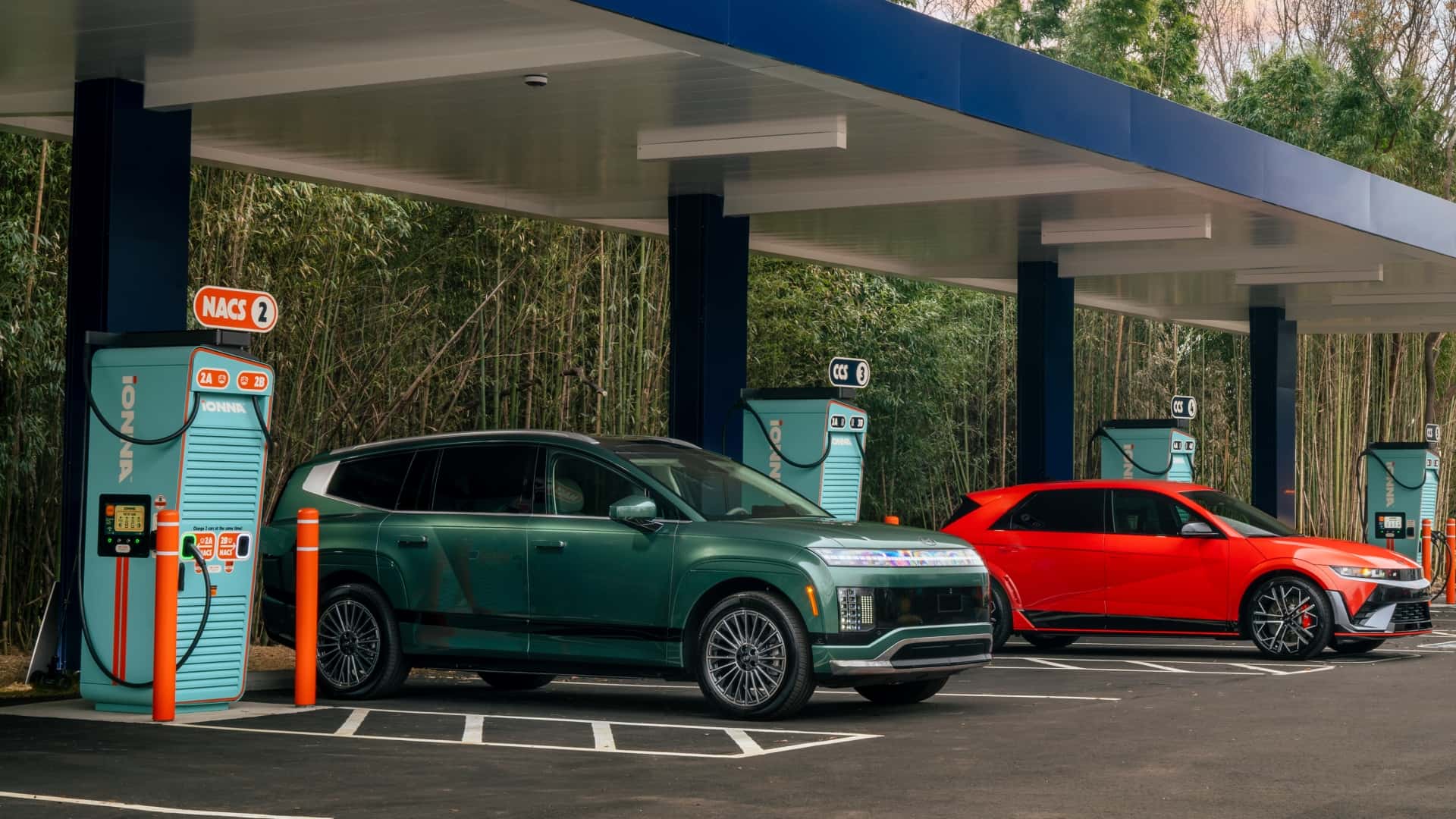
In a significant move poised to reshape the electric vehicle (EV) charging landscape across the United States, Ionna, a consortium backed by major automakers, has announced a sweeping partnership with convenience store giant Circle K. This strategic alliance will see Ionna rapidly install hundreds of its high-powered EV charging stations at Circle K locations nationwide, simultaneously taking over and upgrading the retailer’s existing charging infrastructure.
The announcement, made on Tuesday, April 14, comes amidst a dynamic period for the electric vehicle market. While some reports indicate a recent cooling in EV sales growth in the U.S. following the conclusion of certain federal tax credits in 2023, the commitment to expanding charging infrastructure continues unabated, particularly for direct current (DC) fast chargers.
Strategic Expansion of the EV Charging Network
The core of the Ionna-Circle K collaboration involves a dual strategy: the deployment of new, cutting-edge charging stations and the integration of an established network. Ionna plans to bring its advanced ‘Rechargeries’ to more than 350 Circle K sites across the country. This effort directly supports Ionna’s ambitious goal of establishing 30,000 charging bays by 2030, a target that positions it as one of the fastest-growing charging networks in the U.S.
A notable aspect of this agreement is Ionna’s assumption of operations for Circle K’s current EV charging network. According to data from the U.S. government’s Alternative Fuels Data Center, Circle K presently operates 378 EV charging ports across 93 locations. These existing assets will now be absorbed into the broader Ionna network.
Ionna has committed to “rapidly convert and upgrade approximately 85 existing Circle K charging sites.” This means current Circle K stations are slated for modernization, promising EV drivers a more streamlined, user-friendly, and significantly faster charging experience. This integration is crucial for building a cohesive and reliable EV charging network.
Ionna’s Advanced Charging Technology
A key differentiator for Ionna’s network is its commitment to high-powered charging solutions. All Ionna stations are equipped with 400-kilowatt charging dispensers. This substantial power output is designed to significantly reduce charging times, a critical factor for driver convenience and reducing range anxiety.
Furthermore, these stations are built for universal compatibility, supporting both the Combined Charging System (CCS) and the North American Charging Standard (NACS), commonly known as the Tesla-style connector. This dual-standard approach ensures that a wide array of electric vehicles, regardless of manufacturer, can utilize Ionna’s charging infrastructure, enhancing accessibility for the growing EV fleet.
Addressing the Public Charging Challenge
Access to reliable, efficient, and readily available public fast-charging stations remains one of the primary hurdles to the broader adoption of electric vehicles. While residential charging addresses daily needs for many EV owners, the availability of robust public EV charging network infrastructure is essential for long-distance travel, urban dwellers without home charging, and overall consumer confidence.
Industry analysts and government bodies consistently highlight that a lack of adequate charging options contributes to consumer hesitation in transitioning to EVs. Initiatives like the Ionna-Circle K partnership are vital in systematically dismantling these barriers by deploying high-capacity chargers in convenient, familiar locations.
The Rise of Retailer-Led EV Charging Hubs
The partnership between Ionna and Circle K is not an isolated event but rather a continuation of a burgeoning trend within the automotive and retail sectors. Convenience stores and traditional gas station chains are increasingly recognizing the imperative and opportunity to integrate EV charging capabilities into their business models. This trend is driven by several compelling factors, creating a symbiotic relationship between EV charging providers and retail giants.
For EV drivers, these retail partnerships offer a much-needed replication of the familiar gas-station and rest-stop experience. Modern EV charging stations, particularly fast chargers, demand a longer dwell time than a typical gasoline refuel. By locating these chargers at convenience stores like Circle K, drivers gain access to essential amenities such as restrooms, restaurants, cafes, and Wi-Fi during their charging sessions. This transforms what could otherwise be a mundane wait into a more productive or comfortable stop, enhancing the overall EV ownership experience.
The opportunity for retailers is equally compelling. While a conventional gas stop might take merely 5-10 minutes, an EV driver typically spends 20-40 minutes at a fast charger, depending on their vehicle and desired charge level. This extended dwell time presents a significantly greater sales opportunity for in-store purchases, including snacks, beverages, and other merchandise. Retailers view this as a strategic move to future-proof their business models as the energy transition progresses.
Broader Industry Context and Partnerships
The landscape of retail-integrated EV charging is rapidly expanding. Ionna itself previously forged partnerships with other major convenience store chains, including Sheetz and Wawa, highlighting a deliberate strategy to embed its charging infrastructure within high-traffic retail environments. These collaborations are integral to building a robust and accessible EV charging network across diverse geographies.
Beyond Ionna, other significant players are also making substantial inroads. General Motors, for instance, has continued its collaboration with EVGo to expand charging options at Pilot and Flying J travel centers. Similarly, Mercedes-Benz High Power Charging is installing its fast chargers at Buc-ee’s, the well-known Texas-based travel center chain. These various partnerships collectively underscore a concerted effort across the automotive and retail sectors to build out comprehensive charging solutions. Despite the cooling in some segments of EV sales, the nationwide build-out of DC fast chargers has continued at a record pace, reflecting long-term confidence in the EV market trajectory.
The Road Ahead for Electric Mobility
The continuous expansion of the EV charging network, particularly through strategic partnerships with established retailers, is foundational to accelerating the widespread adoption of electric vehicles. By addressing critical concerns around charging availability, speed, and convenience, these initiatives help to normalize the EV experience, making it more comparable and, in many aspects, superior to traditional gasoline vehicle ownership.
As governments, automakers, and energy providers continue to push for sustainable transportation solutions, collaborations like the Ionna-Circle K partnership will be instrumental. They not only provide essential infrastructure but also contribute to a broader ecosystem that supports the transition to a more electric future, fostering greater consumer confidence and paving the way for sustained growth in the EV market.
Frequently Asked Questions About EV Charging Network Expansion
What is the primary goal of the Ionna-Circle K partnership?
The partnership aims to significantly expand the public EV charging network across the U.S. by installing hundreds of new high-powered Ionna charging stations at Circle K locations and upgrading Circle K’s existing charging infrastructure, thereby enhancing accessibility and convenience for electric vehicle drivers.
Which automakers are part of the Ionna consortium?
Ionna is a consortium founded by eight major automakers, including prominent names such as General Motors, Stellantis, and Toyota. This backing provides substantial industry support and a collective drive to build a robust, universal EV charging network.
What kind of charging technology will Ionna stations offer?
Ionna stations will feature 400-kilowatt charging dispensers, designed for rapid charging. They will support both the Combined Charging System (CCS) and the North American Charging Standard (NACS), ensuring compatibility with a wide range of electric vehicles from various manufacturers.
How many existing Circle K charging sites will be affected?
Ionna will take over the operations of Circle K’s entire existing network, which comprises 378 EV charging ports across 93 locations. Specifically, Ionna plans to rapidly convert and upgrade approximately 85 of these existing Circle K charging sites to bring them to modern standards.
Why are convenience stores like Circle K becoming EV charging hubs?
Convenience stores are ideal for EV charging as they offer amenities like restrooms, food, and Wi-Fi, enhancing the driver experience during longer charging times. For retailers, the extended dwell time of EV drivers creates greater opportunities for in-store sales, making it a mutually beneficial strategy for future growth.
What is Ionna’s long-term goal for its charging network?
Ionna has set an ambitious target to install 30,000 charging bays across the United States by 2030. This aggressive expansion plan positions Ionna as a key player in developing a comprehensive and accessible public EV charging network to support the growing electric vehicle market.
How does this partnership address current EV adoption challenges?
This partnership directly addresses the challenge of insufficient public fast-charging infrastructure, a primary barrier to EV adoption. By providing reliable, high-speed charging in convenient locations, it aims to reduce range anxiety and make electric vehicle ownership more practical and appealing for a broader consumer base.