
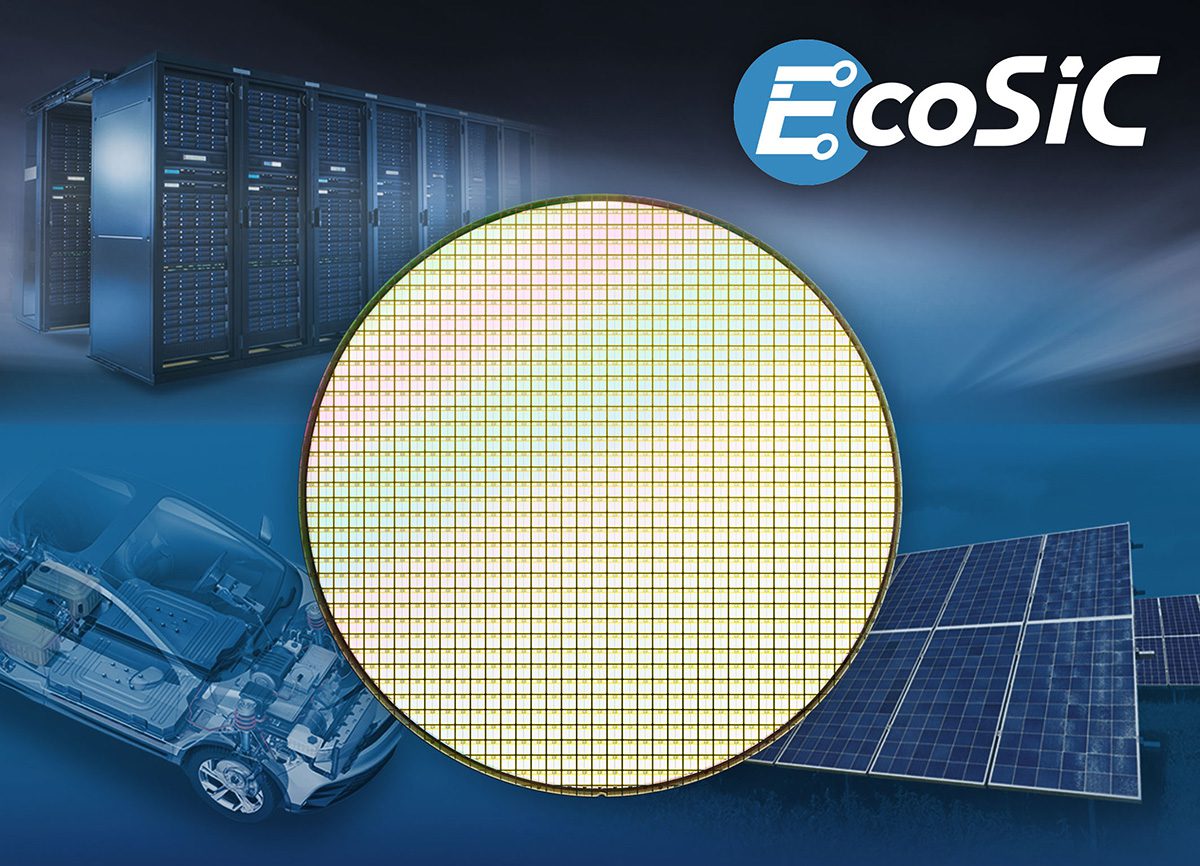
Key Takeaways:
- ROHM’s newly developed 5th Generation SiC MOSFETs, branded EcoSiC, demonstrate a significant 30% reduction in ON resistance.
- This crucial improvement is observed during high-temperature operation (Tj=175°C), directly enhancing efficiency in electric vehicle (EV) power systems.
- The innovation stems from advanced structural enhancements and optimized manufacturing processes, maintaining equivalent breakdown voltage and chip size.
- These high-performance EcoSiC devices are poised to revolutionize xEV traction inverters, onboard chargers (OBCs), DC-DC converters, and electric compressors.
- Samples of discrete devices and modules are slated for availability in July 2026, marking a pivotal step for future EV power electronics.
Revolutionising EV Power: ROHM’s EcoSiC Technology Achieves New Benchmark
ROHM Semiconductor, a global leader in power semiconductor technology, has announced a significant breakthrough in electric vehicle (EV) power electronics with its 5th Generation SiC MOSFETs, operating under the innovative EcoSiC brand. This latest iteration delivers an approximately 30% lower ON resistance during high-temperature operation compared to its 4th Generation predecessors, setting a new standard for efficiency and performance in automotive and industrial applications.

The remarkable reduction in ON resistance, specifically measured at a junction temperature (Tj) of 175°C, is a testament to ROHM’s continuous pursuit of advanced material science and engineering. This improvement has been achieved through sophisticated structural enhancements and meticulous optimization of the manufacturing process, rather than simply by altering chip geometry or scaling down device dimensions. This method ensures robust performance while pushing the boundaries of SiC technology.
The Critical Role of SiC MOSFETs in Electric Vehicles
Silicon Carbide (SiC) Metal-Oxide-Semiconductor Field-Effect Transistors (MOSFETs) are increasingly becoming the cornerstone of high-efficiency power conversion systems in electric vehicles. Unlike traditional silicon-based devices, SiC offers superior properties such as higher breakdown voltage, faster switching speeds, and significantly lower energy losses, especially at elevated temperatures. These characteristics make SiC MOSFETs indispensable for the demanding environments of EV powertrains.
In an electric vehicle, SiC MOSFETs are integral to various critical subsystems. They play a pivotal role in the traction inverter, which converts DC power from the battery into AC power to drive the electric motor. They are also vital components in onboard chargers (OBCs) that manage the charging process, and DC-DC converters responsible for stepping down high voltage from the main battery to supply lower voltage auxiliary systems.

Understanding On-Resistance and its Impact on EV Performance
The concept of ON resistance (RDS(on)) is fundamental to the efficiency of any power semiconductor. It represents the resistance encountered by current flowing through the device when it is in its ‘on’ or conducting state. A lower ON resistance translates directly to reduced power loss in the form of heat, as per Joule’s Law (P = I²R).
For EV traction inverters, the significance of low ON resistance cannot be overstated. These devices operate under extreme conditions, often experiencing peak loads where current flow is maximal. It is precisely during these peak load conditions that SiC MOSFETs run hottest, making the temperature-dependent ON resistance a critical performance metric.
ROHM’s achievement of a 30% reduction in ON resistance at Tj=175°C directly addresses this challenge. When power semiconductors operate at high temperatures, their intrinsic resistance tends to increase. By mitigating this rise, the new EcoSiC devices significantly reduce conduction losses per switching cycle, leading to a cooler and more efficient operation of the entire power system.
Benefits for EV Design and Efficiency
This substantial reduction in conduction loss offers multifaceted benefits for electric vehicle design. Firstly, it allows for either smaller packaging of the power electronics or higher continuous power output from the same chip area, providing greater flexibility for vehicle manufacturers. Smaller packaging can lead to more compact and lighter power modules, contributing to overall vehicle weight reduction and increased interior space.
Secondly, improved efficiency directly impacts the vehicle’s range. Less energy lost as heat means more energy is available to drive the vehicle, extending the driving distance on a single charge. Furthermore, reduced heat generation simplifies thermal management systems, potentially leading to smaller, lighter, and less complex cooling solutions, which in turn reduces manufacturing costs and improves reliability.
The ability of these new EcoSiC devices to operate more efficiently at high temperatures also enhances the overall robustness and reliability of EV power systems. Components under less thermal stress tend to have a longer operational lifespan, which is a critical consideration for automotive applications requiring decades of dependable performance.
Target Applications: Driving the Next Generation of xEVs
The 5th Generation EcoSiC devices are specifically engineered to meet the stringent demands of next-generation xEVs (hybrid, plug-in hybrid, and battery electric vehicles). Their superior performance at high temperatures makes them ideal for the heart of the EV powertrain: the traction inverter. Here, they enable more efficient power delivery to the electric motor, directly influencing acceleration, top speed, and energy consumption.
Beyond traction inverters, these advanced SiC MOSFETs are also designed for use in onboard chargers (OBCs). Higher efficiency in OBCs means faster and more effective charging cycles, reducing the time vehicles spend plugged in. Similarly, in DC-DC converters, they ensure stable and efficient power delivery to various vehicle subsystems, from infotainment to power steering.
Electric compressors, increasingly found in modern EVs for air conditioning and heat pump systems, will also benefit from the enhanced efficiency offered by ROHM’s new EcoSiC devices. These components require robust and efficient power management, which the 5th Generation SiC MOSFETs are well-equipped to provide, contributing to overall vehicle energy savings and comfort.
ROHM’s Legacy in SiC Technology and Future Rollout
ROHM Semiconductor has a long-standing history as a pioneer in SiC technology, having commenced the world’s first mass production of SiC MOSFETs in 2010. This foundational experience has positioned the company at the forefront of power semiconductor innovation, consistently pushing the boundaries of what is possible with SiC materials.
The 4th Generation SiC MOSFETs, which began sampling in June 2020, have already seen widespread adoption across numerous automotive and industrial applications. This robust market presence and proven reliability set a high bar for the new generation.
The 5th Generation EcoSiC devices are designed to target these same critical segments but with significantly improved high-temperature efficiency, addressing the evolving demands for greater power density and energy efficiency in the electric mobility sector.
ROHM has been actively shipping 5th Generation bare dies since 2025, allowing early integration into advanced power modules by select partners. The full development of these innovative devices was successfully completed in March 2026, marking a critical milestone.
Looking ahead, discrete device and module samples of the 5th Generation EcoSiC devices are scheduled for release in July 2026. The company also has plans to introduce additional breakdown voltage and package options in the future, further broadening the applicability and market reach of this advanced SiC technology. This phased rollout ensures a steady supply chain and allows for comprehensive testing and integration into various next-generation EV platforms.
Source: ROHM Semiconductor
Frequently Asked Questions (FAQ)
What are ROHM’s 5th Generation SiC MOSFETs?
ROHM’s 5th Generation SiC MOSFETs are advanced power semiconductor devices, marketed under the EcoSiC brand. They are designed for high-efficiency power conversion in demanding applications, particularly within the electric vehicle industry, offering superior performance compared to previous generations.
How much is the on-resistance reduced in the new EcoSiC devices?
The new 5th Generation EcoSiC devices achieve an approximately 30% lower ON resistance during high-temperature operation (Tj=175°C) when compared to ROHM’s 4th Generation SiC MOSFETs, significantly boosting energy efficiency.
Why is lower on-resistance at high temperatures important for EVs?
Lower ON resistance at high temperatures reduces conduction losses, meaning less energy is wasted as heat. This translates to higher efficiency for EV components, potentially extending vehicle range, improving power delivery, and simplifying thermal management systems.
What are the primary applications for these new SiC MOSFETs?
These advanced SiC MOSFETs are primarily targeted at xEV traction inverters, onboard chargers (OBCs), DC-DC converters, and electric compressors. Their enhanced efficiency is crucial for the demanding power conversion needs of these critical EV systems.
When will ROHM’s 5th Generation EcoSiC devices be available?
ROHM has been shipping 5th Generation bare dies since 2025. Full device development was completed in March 2026, and samples for discrete devices and modules are scheduled to be available in July 2026, with further options planned.
How does ROHM achieve this reduction in on-resistance?
The 30% reduction in ON resistance is achieved through sophisticated structural enhancements and optimized manufacturing processes. This means the improvement comes from fundamental material and design advancements, not just by adjusting the chip size.
What is the significance of “EcoSiC” as a brand?
The “EcoSiC” brand name highlights the ecological and economic benefits of these new devices. “Eco” suggests enhanced efficiency and reduced energy consumption, contributing to a greener footprint and lower operating costs in high-power applications like electric vehicles.
What is ROHM’s history in SiC MOSFET production?
ROHM Semiconductor has a pioneering history in SiC technology, initiating the world’s first mass production of SiC MOSFETs in 2010. This long-standing expertise has established ROHM as a key innovator and leading supplier in the global SiC market for automotive and industrial sectors.