
Key Takeaways:
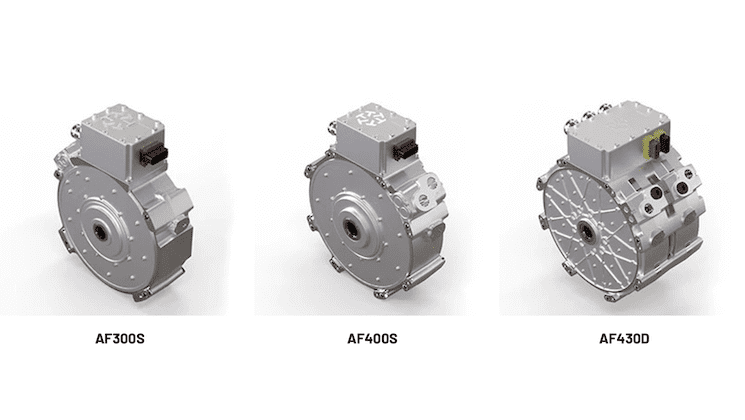
- Turntide Technologies has significantly expanded its axial flux motor lineup with two new high-performance models, the AF300 and AF400.
- These motors offer continuous torque outputs of over 192 Nm and up to 290 Nm, respectively, available in single- and double-stacked configurations for enhanced OEM flexibility.
- The introduction of cast casings for the AF430S and AF430D models marks a critical step towards improving durability, consistency, and cost-efficiency in high-volume production.
- Axial flux motor technology’s compact, low-profile design is crucial for integrating electric powertrains into existing, space-constrained vehicle platforms without requiring extensive redesigns.
- Hybrid retrofits utilising these advanced motors can achieve a significant 10% to 20% reduction in fuel consumption for diesel fleet operators, delivering both environmental and economic benefits.
- Turntide CEO Steven Hornyak highlights a “dual green effect” from hybridization: simultaneously cutting fuel consumption and emissions while improving operational economics.
Turntide Unveils Advanced Axial Flux Motors for Electrification Solutions
Bengaluru, India – Turntide Technologies, a prominent innovator in sustainable motor systems, has announced a significant expansion of its axial flux motor portfolio. This strategic move introduces two new high-performance models, the AF300 and AF400, designed to accelerate the integration of hybrid and electric vehicle (EV) powertrains across various sectors.

The latest additions to Turntide’s lineup underscore a growing industry focus on efficient and compact motor solutions. These advancements are particularly vital for Original Equipment Manufacturers (OEMs) and fleet operators navigating the complex landscape of electrification and hybridization, especially when retrofitting existing machinery.
Boosting Performance: AF300 and AF400 Models Detailed
The newly launched AF300 axial flux motor delivers a continuous torque of more than 192 Newton-meters (Nm), providing robust power for demanding applications. Complementing this, the AF400 model steps up the capability, offering an impressive continuous torque of up to 290 Nm.
Both models are engineered with versatility in mind, available in both single-stacked and double-stacked configurations. This modular approach allows OEMs unparalleled flexibility in tailoring performance output to specific application requirements, all while maintaining the inherent benefits of a compact axial flux form factor.

This expansion reinforces Turntide’s commitment to providing a comprehensive range of axial flux motor technology, addressing diverse power needs within the burgeoning electric and hybrid vehicle markets. The emphasis on high continuous torque figures is crucial for applications where sustained power delivery is paramount.
Enhancing Durability and Production Efficiency with Cast Casings
In parallel with the new motor introductions, Turntide has also advanced its manufacturing processes. The previously announced AF430S (single-stack) and AF430D (double-stack) models are now the first within the portfolio to feature robust cast casings.
According to Turntide, this transition to cast casings significantly enhances the motors’ durability and consistency. Moreover, it plays a critical role in improving production cost efficiency, making these advanced motors more accessible for high-volume manufacturing initiatives.
The design of these cast casings is specifically optimized for mass production, signalling Turntide’s readiness to meet escalating market demand. The company has articulated plans to extend the integration of cast casings across its entire axial flux lineup, promising widespread benefits in terms of reliability and cost-effectiveness for future models.
The Strategic Advantage of Axial Flux Motor Technology
A core differentiator of axial flux motor technology lies in its distinctive low-profile design. This characteristic is particularly advantageous for installation in platforms where space is severely constrained, such as existing commercial vehicles, heavy equipment, or industrial machinery, without necessitating costly and time-consuming platform redesigns.
This ease of integration presents a compelling proposition for OEMs and fleet operators looking to transition their equipment towards hybridization or full electrification. The ability to drop new powertrain components into existing frameworks significantly reduces development cycles and upfront investment, accelerating market adoption.
The compact footprint of axial flux motors minimizes the impact on overall vehicle architecture. This allows for more design freedom, better weight distribution, and often, improved packaging efficiency compared to traditional radial flux motors which typically have a longer axial length for similar power output.
Fueling the Hybrid Shift: Economic and Environmental Gains
The application of these advanced axial flux motors in hybrid retrofits offers substantial benefits for operators of diesel fleets. Depending on the specific application and operational profile, such hybrid systems can lead to a remarkable reduction in fuel consumption, ranging from 10% to 20%.
This percentage translates directly into significant operational cost savings for fleet owners, mitigating the impact of fluctuating fuel prices. Beyond the immediate economic advantages, the reduction in fuel use inherently leads to a proportional decrease in greenhouse gas emissions, contributing to cleaner air and meeting increasingly stringent environmental regulations.
The push for hybridization is gaining considerable traction within the heavy-duty and commercial vehicle segments globally. Operators are seeking practical, cost-effective pathways to improve efficiency and reduce their carbon footprint without completely overhauling their existing asset base.
The “Dual Green Effect” Driving Adoption
Steven Hornyak, CEO of Turntide, articulated the profound impact of hybridization, stating: “Hybridization is gaining momentum because it delivers what we call a dual green effect. It reduces fuel consumption and emissions while improving operating economics at the same time. Turntide’s axial flux motors make it possible to deliver hybrid systems where space and performance have typically been limiting factors.”
This “dual green effect” represents a powerful incentive for businesses and governments alike. It addresses the dual imperatives of environmental sustainability and economic viability, offering a pragmatic solution to decarbonize transportation and industrial sectors.
By overcoming traditional limitations of space and performance, Turntide’s axial flux motor technology positions itself as a critical enabler for this transition. The motors’ ability to provide high power density within a small form factor directly resolves the packaging challenges that often hinder the adoption of electrification in diverse applications.
Exploring Axial Flux Motor Technology Further
For those interested in delving deeper into the mechanics and applications of these innovative motors, Turntide has historically provided resources such as webinars. For instance, a past webinar titled “Why axial flux motors are powering the hybrid shift” was scheduled for May 19, 2026, at 11:00 AM ET, highlighting the company’s commitment to educating the industry on the benefits of this technology.
Understanding the intricacies of axial flux motor design and its advantages in the context of commercial vehicles, electric motor manufacturing, and fleet deployment is becoming increasingly important for stakeholders across the EV ecosystem. The continuous evolution of these powertrain components is a key factor in advancing the broader electrification agenda.
Impact on Commercial Vehicles and EV Infrastructure
The expansion of Turntide’s axial flux motor portfolio has broad implications, particularly for the commercial vehicle sector. Electric trucks and buses, as well as off-highway equipment, stand to benefit significantly from compact, powerful, and efficient motor solutions that can be integrated without extensive platform overhauls.
Improved energy efficiency directly supports the development of more robust EV infrastructure and fleet deployment strategies. As the industry moves towards greater electrification, the availability of advanced, high-performance electric motor design and manufacturing capabilities becomes paramount for meeting global sustainability targets.
Turntide Technologies, through these strategic product enhancements, is reinforcing its position as a key player in the evolution of electric powertrain components. The focus on overcoming spatial constraints and delivering tangible economic benefits through fuel reduction aligns with the pressing needs of today’s evolving transportation landscape.
Frequently Asked Questions About Axial Flux Motors and Hybridization
What are the primary benefits of axial flux motor technology?
Axial flux motors are distinguished by their compact, low-profile design, offering high power density and excellent efficiency. This makes them ideal for integration into space-constrained applications without requiring significant platform redesigns. They provide strong continuous torque, crucial for demanding electric vehicle and hybrid system applications, enhancing overall performance and energy utilization.
How do Turntide’s new AF300 and AF400 models improve EV integration?
The AF300 (over 192 Nm continuous torque) and AF400 (up to 290 Nm continuous torque) offer increased power and versatility. Available in single- and double-stacked configurations, they provide OEMs with flexible performance options. Their compact design facilitates easier integration into existing vehicle architectures, accelerating the adoption of hybrid and electric powertrains across various commercial and industrial sectors.
What is the significance of cast casings in Turntide’s axial flux motors?
The introduction of cast casings, initially for the AF430S and AF430D models, significantly boosts motor durability and consistency. Critically, this design is optimized for high-volume production, leading to improved cost efficiency. Turntide plans to extend cast casings across its entire axial flux lineup, ensuring enhanced reliability and scalability for future generations of these advanced motors.
What is the “dual green effect” of hybridization, as described by Turntide’s CEO?
Turntide CEO Steven Hornyak coined the “dual green effect” to describe the simultaneous benefits of hybridization. It encompasses both environmental advantages, through reduced fuel consumption and lower emissions, and economic advantages, by improving operational economics for fleet operators. This synergistic impact makes hybridization a highly attractive and practical solution for sustainable transport.
How much fuel can fleet operators save with hybrid retrofits using these motors?
For diesel fleet operators, hybrid retrofits incorporating Turntide’s axial flux motors can achieve substantial fuel consumption reductions. Depending on the specific application and duty cycle, savings can range from 10% to 20%. This directly translates to lower operating costs, decreased reliance on fossil fuels, and a significant reduction in the environmental footprint of commercial fleets.
Why are axial flux motors particularly suitable for retrofitting existing equipment?
The low-profile and compact nature of axial flux motors is a key advantage for retrofitting. Many existing commercial vehicles and industrial machines have limited space for new powertrain components. Axial flux motors can be installed into these space-constrained platforms without requiring costly and extensive redesigns, making electrification and hybridization more feasible and economically viable for a wide range of legacy equipment.