
Key Takeaways:
- PolyJoule has launched its third-generation conductive polymer battery chemistry, designed for enhanced safety and performance.
- The new large-format prismatic cell features a proprietary polymer cathode and liquid salt electrolyte, eliminating reactive metals and volatile components.
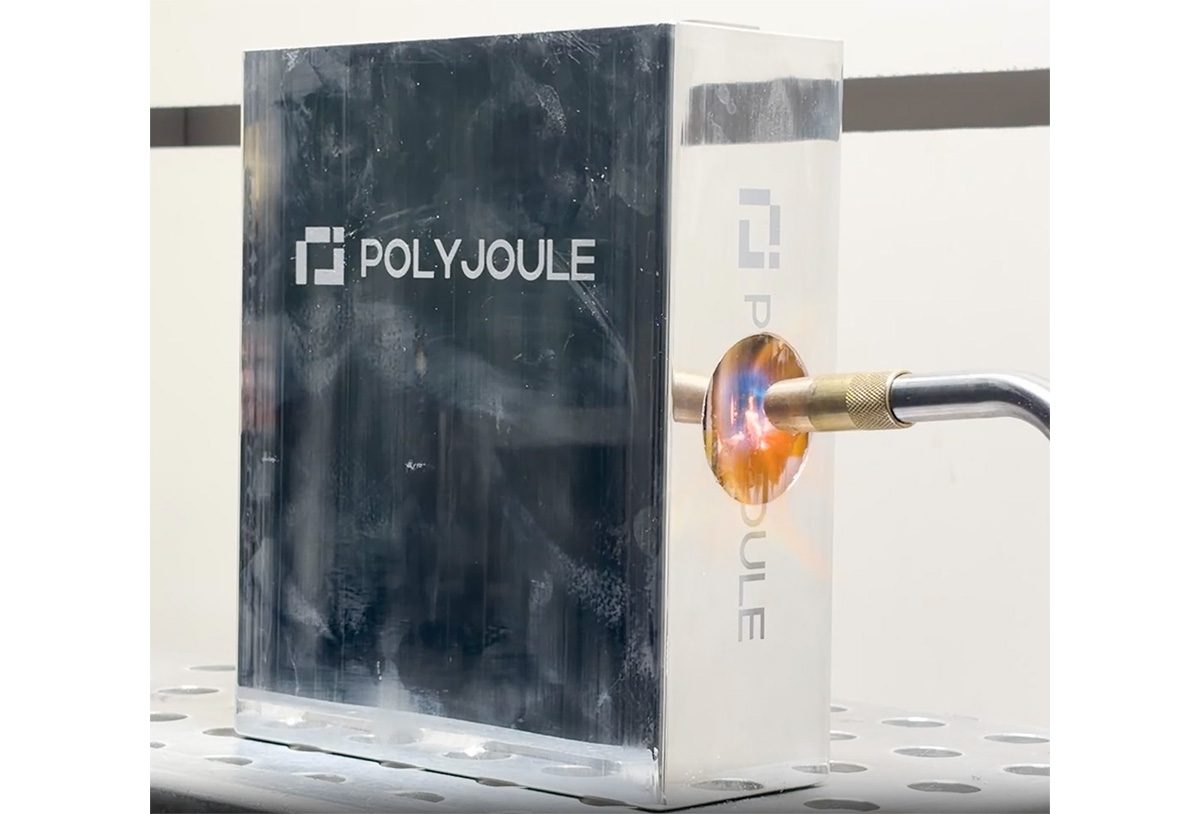
- The technology demonstrates self-extinguishing properties, withstanding direct flame at 3,600 °F, and is the first to achieve UL 9540A validation for non-thermal runaway.
- This innovative conductive polymer battery technology offers a 10x energy density improvement over its predecessor and delivers more than 10,000 cycles.
- Targeting markets with high fire risk, such as commercial buildings, residential installations, and indoor industrial environments, it requires no active thermal management.
- PolyJoule will begin accepting applications from qualified installers later this year for commercial, industrial, and residential energy storage solutions.
Revolutionizing Battery Safety with Polymer Chemistry
In a significant advancement for energy storage, PolyJoule, an MIT spinout, has officially launched its third-generation conductive polymer battery chemistry. This innovative solution is packaged in a new large-format prismatic cell, engineered to address critical safety concerns prevalent with traditional battery technologies.

The core innovation lies in its proprietary polymer cathode combined with a liquid salt electrolyte. This design specifically targets sectors where the inherent fire risk of lithium-ion batteries poses considerable barriers, including dense commercial buildings, residential installations, and various indoor industrial environments.
A Deeper Dive into Conductive Polymer Battery Technology
Unlike conventional battery chemistries—such as lithium-ion, lead-acid, nickel, and sodium-ion—which store charge within metallic crystalline lattices, PolyJoule’s conductive polymer battery technology operates fundamentally differently. It harnesses the power of an organic molecular backbone to hold charge.
This distinct architectural choice is crucial. By removing the reactive metals and volatile liquid electrolytes typically found in other batteries, PolyJoule effectively eliminates the primary culprits responsible for thermal runaway events and subsequent fire propagation. Furthermore, the design inherently prevents the formation of dendrites, a common issue in many battery types that can lead to short circuits and safety hazards.

Unpacking Unparalleled Safety: Self-Extinguishing and UL Validation
The safety features of PolyJoule’s third-generation conductive polymer battery are a cornerstone of its design. A dramatic demonstration highlighted its self-extinguishing behavior when subjected to extreme conditions. A propane blowtorch, generating approximately 3,600 °F (1,982 °C), was applied directly to the cell’s internal components.
During this rigorous test, heat and gas were generated, yet the cell remarkably extinguished itself the very moment the flame was removed. This capability underscores the intrinsic safety of the conductive polymer battery technology, setting a new benchmark for fire resistance in energy storage.
Adding a layer of verifiable trust, PolyJoule has achieved a significant industry milestone. The company states it is the first to validate through UL 9540A testing that its cells do not reach thermal runaway. This certification is critical for widespread adoption, especially in applications where safety compliance is paramount, assuring users and regulators of its robust fire prevention capabilities.
Performance Metrics: Beyond Fire Safety
While safety is a primary differentiator, the third-generation conductive polymer battery technology does not compromise on performance. The new chemistry delivers a substantial 10x energy density improvement when compared to the company’s first-generation offerings.
Moreover, these cells are engineered for longevity, achieving more than 10,000 cycles. This impressive cycle life translates to extended operational lifespan and reduced replacement costs for end-users. A key operational advantage is the elimination of active thermal management requirements, simplifying installations and reducing overall system complexity and maintenance needs.
The Vision Behind the Innovation
The imperative for safer energy storage solutions resonated clearly through statements from PolyJoule’s leadership. Eli Paster, co-founder and CEO, articulated the company’s core philosophy, stating, “Batteries shouldn’t start fires. Batteries shouldn’t spread fires. Batteries shouldn’t catch on fire.” This direct and unequivocal stance encapsulates the driving force behind the development of their fire-safe conductive polymer battery.
Further elaborating on the scientific underpinnings, Timothy Swager, an MIT chemistry professor and PolyJoule co-founder, highlighted a critical aspect of their design. He described the electrolyte as possessing “a vapor pressure a billion times lower than that of the electrolytes used in Li-ion batteries.” This drastically reduced vapor pressure is a fundamental factor contributing to the chemistry’s inherent safety, making it exceptionally secure for deployment in both residential and commercial settings.
Driving Market Adoption: Target Sectors and Availability
PolyJoule is strategically positioning its new conductive polymer battery technology for markets most impacted by the fire risks associated with conventional batteries. This includes energy storage solutions for large-scale commercial infrastructures, vital residential backup systems, and crucial indoor industrial applications where operational safety is non-negotiable.
The company plans to commence accepting applications from qualified solar, battery, and generator installers in select markets later this year. This phased rollout will enable PolyJoule to integrate its advanced energy storage solutions into a variety of commercial, industrial, and residential projects, facilitating a broader transition to safer battery alternatives.
The Future of Energy Storage: Safer Solutions for a Greener World
As the global energy landscape rapidly shifts towards renewable sources and increased electrification, the demand for robust, reliable, and critically, safe energy storage solutions continues to surge. The introduction of PolyJoule’s third-generation conductive polymer battery technology marks a pivotal moment in this evolution.
By offering an alternative that mitigates the significant fire risks associated with prevalent battery chemistries, PolyJoule is not only enhancing safety but also broadening the accessibility of energy storage in previously restricted environments. This innovation holds the potential to accelerate the adoption of sustainable energy practices by providing peace of mind to homeowners, businesses, and industrial operators alike.
Frequently Asked Questions (FAQ)
What makes PolyJoule’s new battery safer than traditional options?
PolyJoule’s third-generation battery uses conductive polymers with an organic molecular backbone and a liquid salt electrolyte, eliminating reactive metals and volatile liquids found in lithium-ion batteries. This design inherently prevents thermal runaway and fire propagation, providing superior safety.
Can this conductive polymer battery truly self-extinguish?
Yes, PolyJoule demonstrated its self-extinguishing capability by applying a propane blowtorch at 3,600 °F directly to the cell. The cell generated heat and gas during the test but extinguished immediately once the flame was removed.
Has the battery undergone any independent safety validation?
PolyJoule is the first company to validate through UL 9540A testing that its cells do not reach thermal runaway. This certification confirms the battery’s robust safety features and compliance with stringent industry standards.
What are the key performance benefits of the third-generation battery?
Beyond its safety features, the battery offers significant performance enhancements, including a 10x improvement in energy density over its first generation. It also boasts a long operational life, achieving more than 10,000 charge-discharge cycles.
Does the new battery require complex thermal management systems?
No, a notable advantage of PolyJoule’s third-generation conductive polymer battery technology is that it requires no active thermal management. This simplifies installation, reduces overall system costs, and enhances the practicality of its deployment in various environments.
For what applications is this battery technology best suited?
The battery is primarily targeted at markets where lithium-ion fire risk is a major concern. These include dense commercial buildings, residential energy storage installations, and indoor industrial environments, offering a safer alternative for critical energy needs.
When will PolyJoule’s new batteries be available for purchase?
PolyJoule plans to begin accepting applications from qualified solar, battery, and generator installers in select markets later this year. These applications will cover commercial, industrial, and residential energy storage projects.