
Key Takeaways
- Researchers at Hanyang University have established 2.5 nanometers as the critical minimum thickness for lithium niobium oxide (LNO) coatings to effectively protect cathodes in sulfide-based all-solid-state batteries.
- This precise measurement provides a much-needed quantitative guideline for optimising cathode-electrolyte interfaces, a major hurdle in advancing next-generation battery technology.
- The 2.5 nm LNO coating, applied via rotary powder atomic layer deposition, significantly extended battery cycle life by 43% and reduced interfacial resistance by over 50% compared to uncoated cells.
- While thinner coatings (1.0 nm) showed higher initial capacity, their inferior cycle life and higher resistance underscore the importance of the 2.5 nm threshold for long-term performance and reliability.
- The findings, published in Energy Storage Materials, offer a pathway toward more stable and durable sulfide solid-state batteries, crucial for electric vehicle applications.
SEO Keyword: sulfide solid-state batteries
Breakthrough in Solid-State Battery Cathode Protection
A significant stride in energy storage technology has emerged from Hanyang University, where researchers have identified a precise, quantitative measure for protecting cathode materials in next-generation sulfide solid-state batteries. Their pivotal study establishes 2.5 nanometers as the minimum effective thickness for lithium niobium oxide (LNO) coatings, a discovery set to accelerate the development of more durable and efficient solid-state battery cells.

This breakthrough addresses a critical challenge in the evolution of sulfide solid-state batteries: the chemical reactivity at the cathode interface. Sulfide-based solid electrolytes, while promising for enhanced safety and energy density, tend to react adversely with cathode active materials, forming resistive degradation products that severely shorten a battery’s operational lifespan.
For years, the scientific community has recognised the potential of thin LNO coatings to act as a crucial diffusion barrier against these detrimental side reactions. However, a quantitative lower bound for the required coating thickness, essential for precise engineering and optimisation, remained elusive. This new research provides that much-needed benchmark, offering a practical guideline for engineers and material scientists.
Addressing the Core Challenge of Sulfide Solid-State Batteries
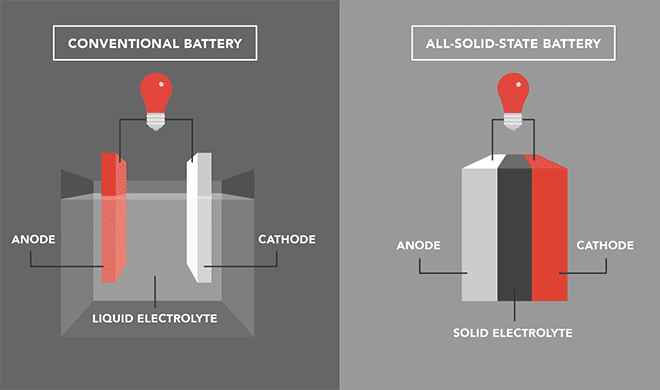
Sulfide solid-state batteries represent a compelling alternative to conventional lithium-ion batteries, promising higher energy density, faster charging capabilities, and significantly improved safety due to the elimination of flammable liquid electrolytes. However, their widespread adoption, particularly in electric vehicles (EVs), has been hampered by issues at the crucial interface between the cathode and the solid electrolyte.

The inherent chemical instability of sulfide solid electrolytes upon direct contact with high-voltage cathode materials, such as NCM811 (lithium nickel cobalt manganese oxide), leads to the formation of an interfacial layer. This layer, typically composed of resistive by-products, impedes lithium-ion transport, increasing the battery’s internal resistance and ultimately degrading its electrochemical performance and cycle life. Mitigating this interfacial degradation is paramount for unlocking the full potential of sulfide solid-state batteries.
Cathode materials like NCM811 are highly sought after for their high energy density, but their reactivity necessitates robust protection. Without an effective barrier, the benefits of sulfide solid electrolytes are diminished by rapid performance decay, making long-term reliability a significant hurdle for commercialisation.
The Hanyang University Methodology: Precision Coating and Analysis
The research team at Hanyang University employed a sophisticated technique known as rotary powder atomic layer deposition (ALD) to apply the LNO coatings onto NCM811 cathode powders. ALD is a highly precise method that allows for atomic-level control over film thickness and composition, making it ideal for creating ultra-thin, uniform protective layers on complex powder morphologies.
Their approach involved a ‘supercycle ALD method,’ which meticulously alternates between lithium and niobium deposition steps, utilising ozone for precise composition control. This meticulous process enabled the team to achieve highly accurate and reproducible coating thicknesses, which were critical for their comparative analysis.
To identify the optimal thickness, LNO coatings were deposited at three distinct thicknesses: 1.0 nm, 2.5 nm, and 5.0 nm. This range allowed the researchers to systematically investigate the trade-offs between initial battery performance and long-term stability, providing a comprehensive understanding of the coating’s impact on critical battery metrics.
Quantitative Findings: Performance and Durability at 2.5 Nanometers
The experimental results revealed a clear and compelling trade-off between initial discharge capacity and sustained cycle life. The thinnest coating, at 1.0 nm, yielded the highest initial discharge capacity, reaching 229 mAh g⁻¹. However, this initial boost came at a significant cost to durability, with cycle life running 28% shorter compared to cells protected with the 2.5 nm coating. Furthermore, the interfacial resistance in the 1.0 nm cells was a substantial 59% higher, indicating inadequate protection against side reactions.
Spectroscopic analysis confirmed these findings, demonstrating that side reactions were effectively suppressed at the 2.5 nm thickness. In contrast, the 1.0 nm coating proved too thin to adequately prevent direct electrolyte contact and subsequent degradation. This underscores the importance of a critical thickness threshold for effective passivation.
The cells featuring the 2.5 nm LNO coating achieved an initial capacity of 216 mAh g⁻¹. While slightly lower than the 1.0 nm coating, this thickness delivered superior long-term performance. Increasing the coating thickness further to 5.0 nm resulted in a slight reduction in initial capacity to 207 mAh g⁻¹ without any meaningful gain in cycle life. This suggests that beyond 2.5 nm, the added coating material begins to impede lithium-ion transport without providing proportional benefits in protection, thus highlighting the optimised balance found at 2.5 nm.
Crucially, when compared against an uncoated cell, the 2.5 nm LNO coating demonstrated remarkable improvements. It extended the cycle life by an impressive 43% and slashed the interfacial resistance to less than half. This dramatic improvement solidifies the significance of the 2.5 nm LNO coating as a robust protective layer for sulfide solid-state battery cathodes.
Expert Perspective and Future Implications
Professor Tae Joo Park, who spearheaded this groundbreaking research, emphasised the practical implications of their findings. He stated, “Our results show that the minimum effective thickness of the LNO protective layer to suppress side reactions in sulfide-based ASSBs is 2.5 nm. This provides a practical guideline for cathode–electrolyte interface optimization in next-generation solid-state batteries.”
This quantitative guideline is invaluable for battery developers. Instead of relying on trial-and-error, engineers now have a precise target for designing and manufacturing more stable and efficient sulfide solid-state batteries. This specificity is crucial for accelerating research and development efforts, moving these advanced battery systems closer to widespread commercialisation, particularly in demanding applications like electric vehicles.
The ability to precisely control the thickness of protective coatings at the nanoscale is a testament to advancements in material science and engineering. This level of control allows for fine-tuning battery components to maximise both initial performance and long-term durability, directly addressing some of the most persistent challenges in battery technology.
Scalability and Manufacturing Outlook
While the Hanyang team’s findings are profoundly impactful at the laboratory scale, they also acknowledge the broader challenges of integrating such advanced techniques into large-scale manufacturing. The researchers note that powder ALD is a promising method for scalable production due to its ability to coat vast quantities of powder materials uniformly.
However, scaling up ALD processes for gigafactory integration—factories capable of producing batteries on a massive scale for the EV market—remains an open challenge. Factors such as throughput, cost-effectiveness, and process optimisation for continuous production lines are key considerations. Despite these hurdles, the fundamental understanding provided by this study paves the way for industrial adaptation and innovation in battery manufacturing processes. As the demand for high-performance and safe EV batteries continues to soar, such research becomes a cornerstone for future production methodologies.
The study, which offers these critical insights into optimising sulfide solid-state batteries, was published in the esteemed journal Energy Storage Materials, further solidifying its credibility and scientific rigor. The collaboration between Hanyang University and the insights shared in Energy Storage Materials underscore the global effort towards advanced energy solutions.
Looking Ahead: The Road to Next-Generation EVs
The advent of efficient and stable sulfide solid-state batteries holds immense promise for revolutionising the electric vehicle industry and broader energy storage landscape. By effectively mitigating cathode-electrolyte interface degradation, this research brings the industry closer to producing batteries with significantly longer lifespans, greater reliability, and enhanced safety features. These attributes are essential for increasing consumer confidence in EVs and accelerating the transition to sustainable transportation.
As research continues, this quantitative understanding of LNO coating thickness will undoubtedly serve as a foundational element for further innovations in solid-state battery material design and fabrication. The path to widely adopted next-generation batteries is paved with such precise scientific breakthroughs, turning theoretical potential into tangible, real-world solutions for a greener future.
FAQ Section
What is the main finding of the Hanyang University study?
The study determined that 2.5 nanometers is the minimum effective thickness for a lithium niobium oxide (LNO) coating to adequately protect cathode materials in sulfide-based all-solid-state batteries, significantly suppressing harmful side reactions and extending battery life.
Why are sulfide solid-state batteries considered a ‘next-generation’ technology?
Sulfide solid-state batteries offer advantages over traditional lithium-ion batteries, including potentially higher energy density, faster charging capabilities, and improved safety due to the use of solid electrolytes instead of flammable liquid ones. This makes them highly attractive for electric vehicles.
What problem does the LNO coating solve in these batteries?
Sulfide solid electrolytes tend to react chemically with cathode active materials, forming resistive degradation products at the interface. The LNO coating acts as a diffusion barrier, preventing this reaction and preserving battery performance and cycle life.
How was the LNO coating applied to the cathode materials?
The researchers used rotary powder atomic layer deposition (ALD), a precise method that allows for atomic-level control over the film thickness and composition. They employed a ‘supercycle ALD method’ alternating lithium and niobium deposition with ozone.
What was the impact of the 2.5 nm coating on battery performance?
Compared to uncoated cells, the 2.5 nm LNO coating extended battery cycle life by 43% and reduced interfacial resistance by over 50%. While a 1.0 nm coating showed higher initial capacity, its long-term performance and resistance were significantly worse.
Will this research lead to immediate changes in EV battery production?
The findings provide crucial guidelines for battery development. While rotary powder ALD is promising for scalability, integrating it into gigafactory-level production still presents challenges related to throughput and cost. This research lays a vital foundation for future manufacturing innovations.
Who led this research, and where was it published?
The research was led by Professor Tae Joo Park at Hanyang University. The comprehensive study detailing these findings was published in the scientific journal Energy Storage Materials.