
Key Takeaways
- Sydney Harbour will launch its first dedicated **Sydney Harbour electric ferry** for trial operations by early 2028, with full service commencing on the new Sydney Fish Markets route in 2029.
- The New South Wales government has awarded the contract for the 24-metre battery-electric trial vessel to Tasmanian shipyard Richardson Devine Marine.
- Shoreside charging infrastructure will be established at Barangaroo Wharf to support the ferry’s operations.
- This initiative marks a pivotal step in the NSW government’s strategy to transition its iconic ferry fleet from traditional diesel propulsion to more sustainable, zero-emission alternatives.
- The trial’s performance and service range will be crucial in informing future investments in a broader electric ferry network across Sydney.
Sydney Harbour, a global icon, is poised to welcome a significant advancement in sustainable maritime transport with the introduction of its first dedicated electric ferry. The New South Wales (NSW) government has officially signed contracts with Tasmanian shipyard Richardson Devine Marine for the construction of a state-of-the-art battery-electric trial vessel, signaling a clear commitment to decarbonizing the city’s beloved ferry fleet.
This landmark project anticipates the trial ferry commencing operations by early 2028, marking a crucial phase in evaluating the viability and performance of electric propulsion on one of the world’s busiest waterways. The initiative underscores a broader strategy to embrace cleaner, quieter public transport solutions, aligning with global efforts towards environmental stewardship.

Pioneering a Cleaner Fleet: The Trial Vessel
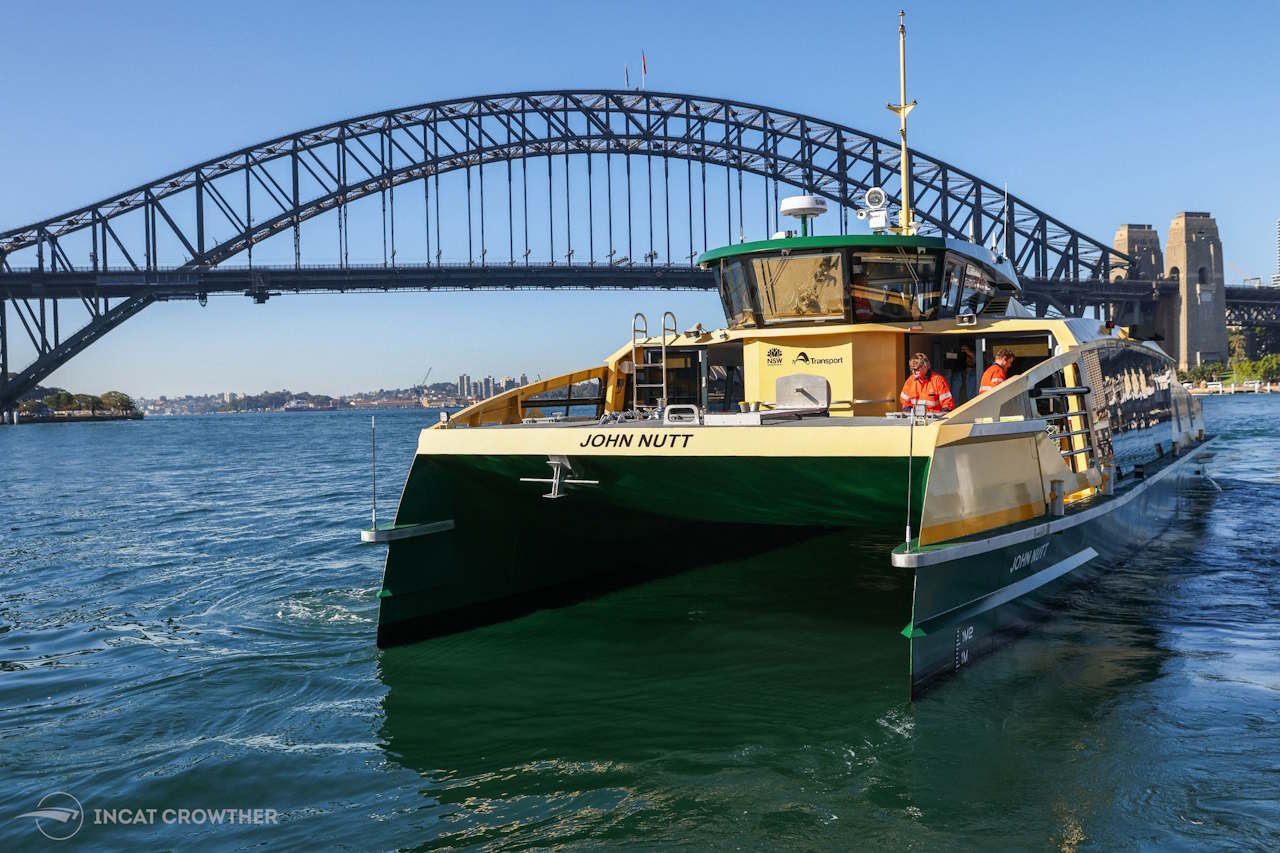
The inaugural electric ferry will be a 24-metre battery-electric vessel, designed as a derivative of the established Parramatta River Class ferries. These successful designs were crafted by Sydney-based naval architects Incat Crowther, known for their innovative and efficient maritime solutions.
This strategic choice leverages proven design principles while integrating advanced electric propulsion technology. Following a comprehensive 12-month trial period commencing in early 2028, the vessel is slated to enter full passenger service in 2029, operating along the newly established Sydney Fish Markets route.
Strategic Infrastructure at Barangaroo
Critical to the successful deployment of the **Sydney Harbour electric ferry** will be the accompanying charging infrastructure. Shoreside charging facilities are planned for installation at Barangaroo Wharf, a central and strategically important hub within Sydney Harbour.
This infrastructure is not merely for the trial ferry but represents a foundational investment that could support a wider network of electric vessels in the future. The ability to efficiently recharge ferries at key operational points is paramount for maintaining service reliability and maximizing uptime.
Government’s Vision for Green Transport
The NSW government views this project as a pivotal moment in the evolution of its public transport system. John Graham, the NSW Minister for Transport, emphasized the long-term vision behind the initiative, stating: “The first trial of an electric ferry on Sydney Harbour is an important moment for our iconic ferry fleet which will transition from diesel propulsion over coming years, informed by this first vessel.”
Minister Graham further highlighted the direct benefits for commuters and the environment: “This Northern Beaches-designed, Australian-built ferry will provide a quieter ride and cleaner air on the Harbour.” This statement underscores the dual advantages of electric ferries: reduced noise pollution and the elimination of localized emissions, contributing to a healthier urban environment.
Informing Future Investment Decisions
The path to a fully electric ferry fleet is being approached with careful consideration. The state government has indicated that any decision regarding further investment in additional electric ferries will hinge on the detailed assessment of this initial trial. Transport for NSW and private ferry operator Transdev Sydney Ferries will meticulously evaluate the performance and service range of the trial vessel.
This data-driven approach ensures that future expansion of the electric fleet is based on proven operational efficiency, reliability, and economic viability. Key metrics will include battery longevity, charging cycle efficiency, energy consumption across varied routes, and overall operational costs compared to traditional diesel vessels.
Evolving Timelines and Broader Commitments
While this current announcement details a specific trial vessel and its 2028-2029 timeline, the aspiration for electric ferries in Sydney has been a progressive journey. Plans to introduce a first electric ferry to Sydney Harbour were initially announced in September 2024. At that time, the first fully electric ferry was projected to join the Parramatta River service in 2026, with subsequent introductions for Manly and inner harbour routes to follow shortly thereafter.
The current contract for the 24-metre trial vessel, targeting a 2028 operational start, reflects a refined and focused approach towards integrating this cutting-edge technology. This phased implementation allows for real-world testing and adaptation, ensuring that the transition to electric propulsion is robust and sustainable.
Australia’s Growing Electric Maritime Sector
The Sydney Harbour project is part of a broader, burgeoning movement towards electric maritime transport across Australia. Just recently, Brisbane-based shipbuilder Aus Ships Group announced a significant partnership with Volvo Penta. This collaboration is dedicated to constructing Australia’s first electric-drive passenger ferry, a vessel already under construction and anticipated to be commissioned by the end of the current year.
This concurrent development highlights a national momentum towards sustainable shipping and passenger transport. The expertise and innovation within Australia’s shipbuilding industry are proving crucial in driving these advancements, positioning the country as a significant player in the global shift to electric vessels.
Tasmania’s Incat: A Global Leader in Electric Ships
Further cementing Australia’s role in electric maritime innovation is Tasmania’s Incat, a globally renowned shipbuilder. Incat has recently completed construction of what is recognized as the world’s largest battery-electric ship, known as Hull 096, at its Prince of Wales Bay shipyard in Hobart.
Beyond this milestone, Incat is also actively engaged in delivering a series of large battery-electric ferries for a Danish operator. This undertaking is part of what is widely considered the world’s largest electrification project at sea, showcasing Incat’s unparalleled expertise and leadership in large-scale electric vessel manufacturing. The involvement of Incat Crowther, the naval architects behind the Sydney trial ferry’s design, further connects the Sydney project to this lineage of world-class electric maritime engineering.
The Broader Impact of Electric Ferries
The introduction of the **Sydney Harbour electric ferry** represents more than just a technological upgrade; it embodies a commitment to enhancing urban liveability and ecological health. Electric ferries offer a suite of benefits that extend beyond mere emissions reduction.
Reduced noise levels contribute to a more peaceful environment for both passengers and marine life, while the absence of diesel fumes significantly improves air quality along the harbour and at ferry terminals. Furthermore, the long-term operational costs of electric ferries can be lower due to reduced fuel consumption and potentially less maintenance compared to their internal combustion engine counterparts, contributing to fiscal sustainability.
As Sydney Harbour prepares for this exciting new chapter, the trial electric ferry serves as a beacon for sustainable public transport, setting a precedent for future developments not just in NSW but across the broader Australian maritime landscape.
FAQ Section
When will the first electric ferry operate in Sydney Harbour?
The first 24-metre battery-electric trial ferry is expected to begin its 12-month operational trial in early 2028. Following this assessment period, it is scheduled to enter full passenger service on the new Sydney Fish Markets route in 2029.
Which company is building the trial electric ferry?
The New South Wales government has awarded the contract for the construction of the trial electric ferry to Richardson Devine Marine, a reputable Tasmanian shipyard. The design is based on the Parramatta River Class ferries by Sydney-based naval architects Incat Crowther.
What is the route for the first electric ferry?
After completing its 12-month trial period, the first electric ferry will enter regular service along the newly established Sydney Fish Markets route, enhancing connectivity and providing a sustainable transport option for this popular destination.
What is the significance of this trial?
This trial is crucial for evaluating the real-world performance and service range of electric ferries in Sydney Harbour’s unique operational environment. The data collected will directly inform the NSW government’s decisions on future investments and the broader transition of its iconic ferry fleet from diesel to electric propulsion.
How will the electric ferry be charged?
Shoreside charging infrastructure is slated for installation at Barangaroo Wharf. This dedicated facility will enable efficient recharging of the battery-electric ferry, ensuring it can maintain its operational schedule and contribute to a reliable public transport network.
Is this the only electric ferry project in Australia?
No, the Sydney Harbour project is part of a growing trend. Brisbane-based Aus Ships Group is building Australia’s first electric-drive passenger ferry in partnership with Volvo Penta, expected to be commissioned by year-end. Additionally, Tasmania’s Incat is a global leader, having built the world’s largest battery-electric ship and delivering for major international projects.
What are the benefits of electric ferries?
Electric ferries offer multiple advantages, including a quieter and smoother ride for passengers, significantly cleaner air by eliminating tailpipe emissions, and a reduced carbon footprint. These benefits contribute to improved urban environments, enhanced public health, and greater sustainability in maritime transport.