
Key Takeaways:
- A UK consortium has successfully developed and validated an end-to-end circular supply chain for recycled rare earth magnets for electric vehicle (EV) motors.
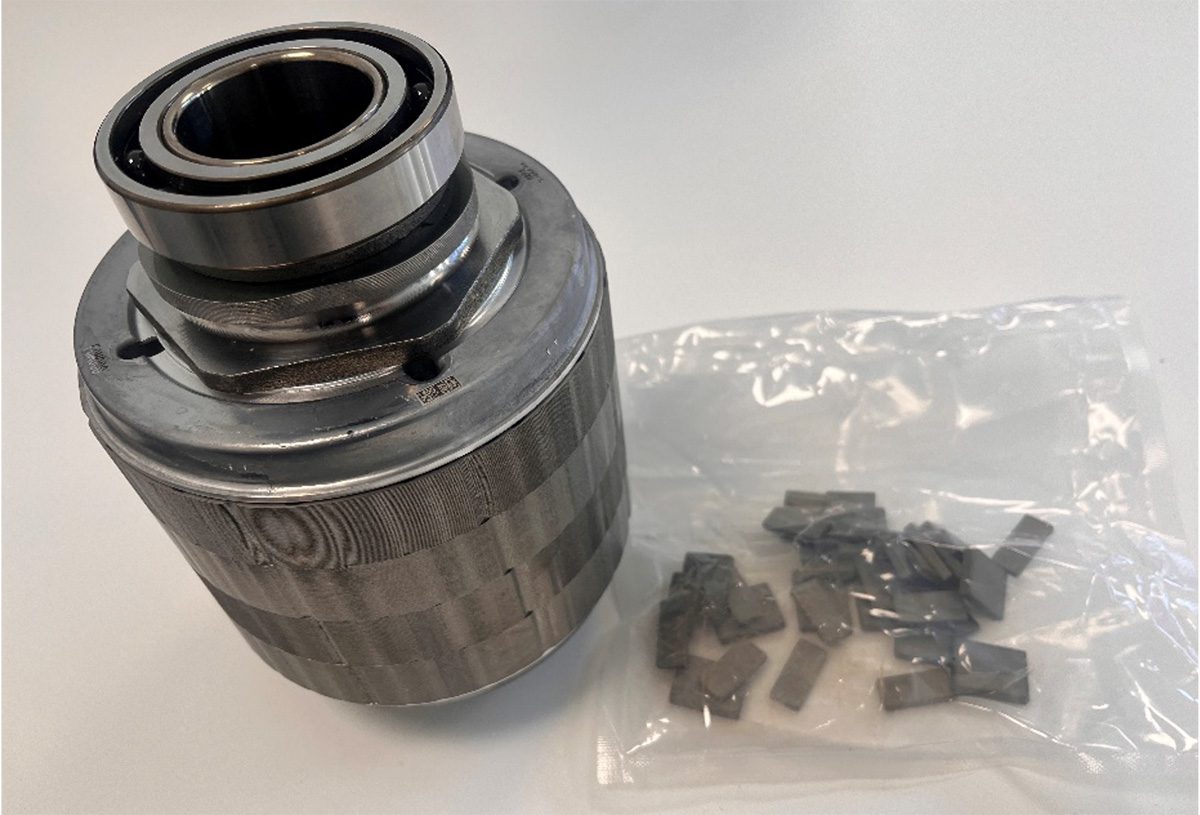
- Ford’s rigorous testing at its Dunton R&D facility confirmed that a rotor built with these recycled magnets passed durability tests, performing comparably to those made with new, mined materials.
- This breakthrough addresses critical supply chain vulnerabilities, particularly for heavy rare earth elements like dysprosium and terbium, which are crucial for high-temperature EV motor performance and are subject to increasing geopolitical controls.
- The project, funded by the UK government, signifies a major step towards sustainable EV manufacturing and reducing reliance on traditional, often geopolitically sensitive, rare earth sources.
- Ionic Technologies, a key partner, is progressing towards an £85 million commercial plant in Belfast with a planned capacity of 400 metric tonnes of magnet rare earth oxides per year.
In a significant stride towards sustainable electric vehicle (EV) manufacturing and enhanced supply chain resilience, a UK-based consortium has successfully established and validated an end-to-end circular rare earth supply chain for EV motor magnets. The groundbreaking achievement culminated in Ford’s rigorous testing of a rotor incorporating these recycled rare earth magnets, which demonstrably met commercial standards at its R&D facility in Dunton, UK. This development marks a pivotal moment for the automotive industry, offering a viable pathway to reduce dependence on virgin rare earth materials.

The successful project underscores a growing global imperative to establish robust, ethically sourced, and environmentally sound material supply chains, especially for critical minerals essential to the green energy transition. With EV adoption accelerating worldwide, the demand for powerful and efficient traction motors—heavily reliant on rare earth permanent magnets—is escalating, making innovations in recycling and circular economy principles more crucial than ever.
A Breakthrough in Circular Economy for EVs
The consortium’s success lies in its comprehensive approach, spanning every stage from material recovery to final product validation. This collaborative effort brought together specialized expertise from several key players, demonstrating a scalable model for industrial circularity.
Pioneering the End-to-End Recycling Process
The intricate supply chain began with Ionic Technologies, a Belfast-based subsidiary of Australia’s Ionic Rare Earths (ASX: IXR). This entity meticulously recycled scrap neodymium-iron-boron (NdFeB) magnets and alloy, transforming them into individually separated rare earth oxides. This process is crucial as it allows for the precise recovery and purification of valuable rare earth elements from end-of-life products or manufacturing waste, laying the foundation for high-quality recycled rare earth magnets.

Following this initial step, Less Common Metals (LCM) took the reins, converting the purified oxides into metal and strip-cast alloy, precisely tailored to magnet specifications. This conversion stage is critical for ensuring the material’s metallurgical integrity and compatibility with subsequent manufacturing processes. The precision at this stage is vital for achieving the desired magnetic properties in the final product.
The manufacturing of the finished magnets was undertaken by GKN at its advanced facility in Radevormwald, Germany. Here, the recycled alloy was processed into high-performance permanent magnets, designed to meet the demanding specifications of automotive applications. The integration of recycled materials into established manufacturing lines without compromise highlights the maturity of the recycling and processing techniques developed by the consortium.
Ford’s Rigorous Validation Process
The ultimate test of the recycled magnets’ viability came at Ford. The automotive giant built two test rotors at its Halewood e-motor plant, integrating the newly manufactured magnets. One of these rotors was then subjected to an exhaustive durability test cycle on a dynamometer at Ford’s R&D facility in Dunton. The results were highly encouraging: the rotor built with recycled rare earth magnets passed the test with performance metrics comparable to those manufactured using production-grade, virgin-mined materials.
This validation from a major global automaker like Ford is a powerful testament to the technical feasibility and commercial readiness of the consortium’s circular supply chain. It moves the concept of rare earth recycling from laboratory experiments to industrial application, setting a new benchmark for sustainable practices in the EV sector.
Achieving Commercial-Grade Purity and Performance
A central tenet of the project’s success was its ability to produce rare earth elements with exceptionally high purity, a non-negotiable requirement for high-performance EV motors. The purity of these materials directly impacts the efficiency and longevity of the magnets, and by extension, the entire electric drivetrain.
Unpacking the Purity Metrics
Ionic Technologies reported impressive purity numbers derived from 100% recycled feedstock. Neodymium oxide (Nd₂O₃) achieved 99.87% purity, dysprosium oxide (Dy₂O₃) reached 99.56%, and terbium oxide (Tb₄O₇) stood at 99.75%. These figures are critical because such high purity levels are essential to prevent impurities from degrading magnetic performance, which could otherwise lead to reduced efficiency or premature failure in EV motors. The batch volumes, which included 120 kg of Nd₂O₃, 10 kg of Dy₂O₃, and 8 kg of Tb₄O₇, also significantly exceeded LCM’s minimum batch requirements, indicating industrial scalability.
Identical Performance to Virgin Materials
Perhaps one of the most compelling aspects of the project’s findings was GKN’s report. The magnet manufacturer confirmed that the recycled alloy flakes behaved identically to virgin material during the magnet manufacturing process. Crucially, they produced the same end specification as magnets made from traditionally sourced materials. This parity in processing and performance eliminates a significant hurdle for widespread adoption, as manufacturers can integrate recycled rare earth magnets without extensive retooling or re-engineering of their production lines.
Addressing Global Supply Chain Vulnerabilities
The timing of this achievement is particularly pertinent given the escalating geopolitical tensions surrounding critical raw materials. The ability to source rare earths domestically or through recycled streams offers strategic advantages, reducing vulnerability to external supply shocks.
The Critical Role of Heavy Rare Earth Elements
Earlier this year, China announced new export controls on rare earth materials, immediately highlighting the precarious nature of Western automotive supply chains. The elements dysprosium and terbium, both successfully produced from recycled scrap in this project, are precisely the heavy rare earth elements most affected by these controls. These elements are indispensable for achieving high-temperature coercivity in EV traction motor magnets. Without them, magnets can lose their magnetic strength at the elevated operating temperatures common in high-performance EV motors, leading to efficiency losses and potential component damage.
Mitigating Geopolitical Risks
For Ford and other major automotive players, establishing a reliable, diversified supply of rare earth elements is a strategic imperative. Dennis Witt, UK Innovation Manager at Ford, articulated this urgency: “Electric vehicle motors rely on high quality rare earth permanent magnets. We proved that recycled rare earth magnets can meet our rigorous commercial standards on the first attempt.” This statement not only validates the technical success but also underscores the strategic importance of such initiatives in securing future EV production. By developing a circular economy for these critical materials, the UK and its partners are actively working to build resilience against potential supply disruptions and market volatility.
Government Support and Future Prospects
The project’s success was significantly bolstered by strategic funding and governmental foresight, demonstrating a commitment to fostering a sustainable domestic rare earth industry.
UK Government’s Strategic Investment
The initiative received crucial funding under the UK Government’s CLIMATES program, an effort backed by the Department for Business and Trade and InnovateUK. Such governmental support is vital for de-risking innovative projects in nascent industries and accelerating their progression from R&D to commercial viability. It signals a national commitment to securing critical material supply chains and promoting green technologies.
Towards Commercial Scale Production
While the current achievement is a significant proof-of-concept, it is not yet mass production. However, plans are firmly in motion for scaling up. Ionic Technologies is actively working towards a Final Investment Decision on an ambitious £85 million commercial plant. Located at Queen’s Island in Belfast, this facility has already received an offer in principle for a substantial £12 million UK government capital grant. The planned capacity for this plant is projected to be 400 metric tonnes of magnet rare earth oxides per year, a volume that would make a tangible impact on reducing reliance on primary rare earth mining and bolstering the circular economy for recycled rare earth magnets.
The Road Ahead: Scaling Sustainable Magnet Production
The momentum generated by this project is already translating into future endeavors. A follow-on project, aptly named CirculaREEconomy, is currently underway. Funded through the Advanced Propulsion Centre UK’s impressive £2 billion DRIVE35 program, this initiative involves the same consortium partners, building upon the foundational success to further refine and scale the circular rare earth supply chain. This continuous investment and collaboration highlight a long-term vision for sustainable EV component manufacturing.
This comprehensive approach, from innovative recycling techniques to governmental backing and industry validation, positions the UK and its partners at the forefront of sustainable EV technology. The development of reliable, high-performance recycled rare earth magnets is not just an environmental win; it’s a strategic economic advantage, ensuring that the future of electric mobility is powered by secure, sustainable, and domestically sourced materials.
FAQ
What is the significance of recycled rare earth magnets for EV motors?
Recycled rare earth magnets are crucial for building a sustainable and resilient supply chain for electric vehicle motors. They reduce reliance on new mining, which has significant environmental impacts, and mitigate geopolitical risks associated with sourcing critical rare earth elements, many of which are controlled by a single dominant supplier. This innovation fosters a circular economy within the EV sector.
Which rare earth elements were successfully recycled in this project?
The project successfully recycled neodymium (Nd₂O₃), dysprosium (Dy₂O₃), and terbium (Tb₄O₇) oxides from scrap NdFeB magnets. These elements, particularly dysprosium and terbium, are vital heavy rare earth elements required for high-temperature performance and coercivity in advanced EV traction motors.
How did Ford validate the performance of the recycled magnets?
Ford built two test rotors, incorporating magnets made from 100% recycled materials, at its Halewood e-motor plant. One of these rotors underwent a rigorous durability test cycle on a dynamometer at Ford’s Dunton R&D facility. It successfully passed, demonstrating performance comparable to rotors built with production-grade magnets made from virgin materials.
What role does the UK government play in this initiative?
The UK government is a key enabler, providing crucial funding through initiatives like the CLIMATES program (via the Department for Business and Trade and InnovateUK) and the Advanced Propulsion Centre UK’s DRIVE35 program. This support helps de-risk and accelerate the development of domestic, sustainable rare earth supply chains, aligning with broader national strategies for green technology and economic resilience.
What are the future plans for commercializing this technology?
Ionic Technologies is planning an £85 million commercial plant at Queen’s Island in Belfast, with an offer in principle for a £12 million UK government capital grant. This facility is projected to have a capacity of 400 metric tonnes of magnet rare earth oxides per year, marking a significant step towards mass production and wider adoption of recycled rare earth magnets in the automotive industry.