
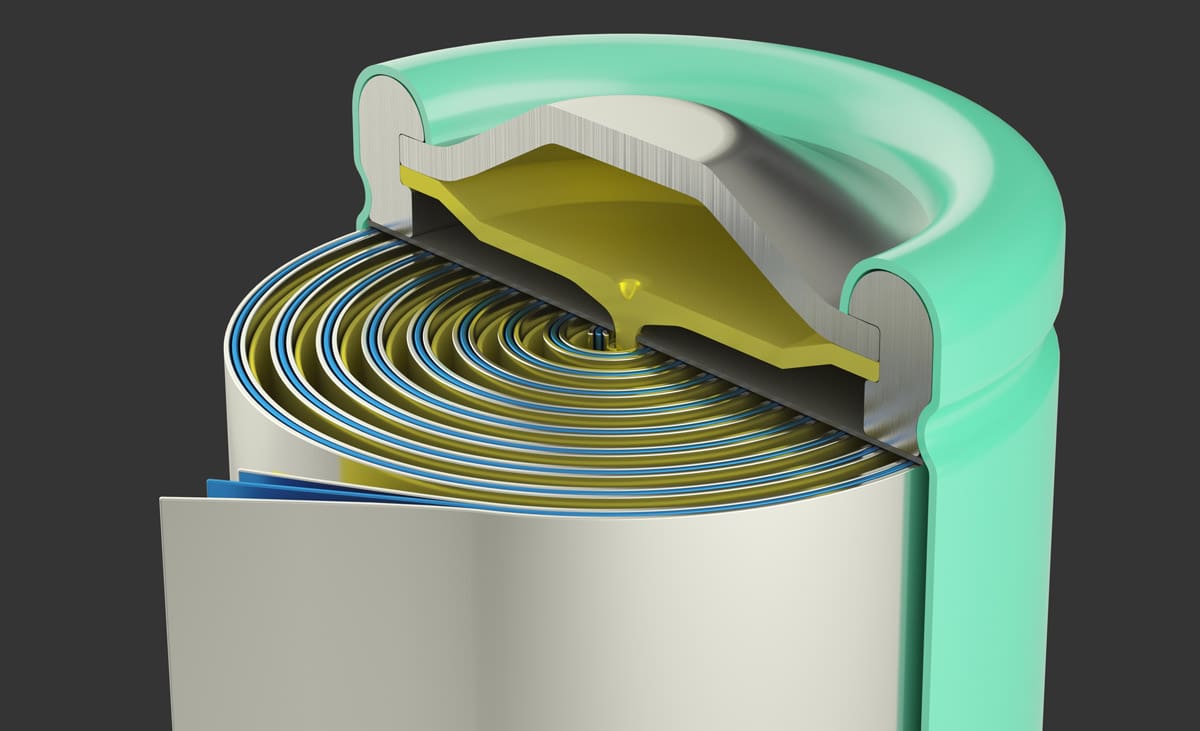
In a significant development for the electric vehicle (EV) battery sector, X-BATT has introduced Glassact, a groundbreaking spherical silicon oxycarbide (SiOC) anode material. This innovative solution aims to more than double the reversible capacity of traditional graphite anodes, setting ambitious performance targets for the industry.
The company has proactively published its performance targets, a move designed to distinguish its claims from the often-optimistic announcements prevalent in the battery materials landscape. This transparency underscores X-BATT’s confidence in its next-generation technology.

Key Takeaways: X-BATT’s Glassact SiOC Anode
- X-BATT’s Glassact SiOC spherical anode targets over 800 mAh/g reversible capacity, exceeding graphite’s performance by more than double.
- The material aims for high charge rates of 8C while retaining over 80% nominal capacity, enabling rapid charging for electric vehicles.
- A critical differentiator is its target of less than 8% cyclic swelling, significantly improving electrode stability compared to pure silicon.
- The anode is designed for exceptional longevity, targeting over 8,000 cycles at greater than 80% depth of discharge.
- Glassact is produced using a proprietary emulsion process compatible with existing industrial equipment, ensuring scalability and domestic production capabilities.
Ambitious Performance Targets Set for Next-Gen Anode
X-BATT’s published targets for the Glassact SiOC spherical anode are notably bold, reflecting a potential paradigm shift in battery chemistry. These targets include a reversible capacity exceeding 800 mAh/g, which significantly outpaces the typical capacity of graphite anodes, often around 372 mAh/g.
Further enhancing its appeal, the material aims for charge rates greater than 8C, while successfully retaining more than 80% of its nominal capacity. This metric is crucial for the rapid charging capabilities demanded by modern electric vehicles, addressing a key consumer concern.
Dimensional stability is another paramount focus, with X-BATT targeting less than 8% cyclic swelling. This addresses a major challenge faced by other silicon-based anode technologies. Additionally, the company envisions a cycle life of greater than 8,000 cycles at over 80% depth of discharge, promising exceptional longevity for battery packs.

It is important to note that these figures represent X-BATT’s stated targets and have not yet undergone independent validation. The company’s decision to openly declare these goals offers a clear benchmark for future evaluation and potential verification by the industry.
Understanding Silicon Oxycarbide (SiOC) Technology
The core innovation behind Glassact lies in its silicon oxycarbide (SiOC) composition. SiOC ceramics are a class of materials known for their exceptional thermal and chemical stability, which are critical properties for high-performance battery components.
Unlike pure silicon, which experiences dramatic volume expansion (up to 300-400%) during lithiation (the process where lithium ions are inserted into the anode during charging), SiOC exhibits far greater structural integrity. This expansion in pure silicon leads to significant stress on the electrode structure, causing pulverization, loss of electrical contact, and ultimately, rapid capacity fade and shortened battery life.
X-BATT’s SiOC material is engineered to mitigate these issues. The target of less than 8% swelling highlights its superior dimensional stability compared to pure silicon, positioning it as a more robust and reliable alternative for long-term battery performance.
While the theoretical capacity of pure silicon is higher than SiOC, the practical limitations imposed by silicon’s expansion make SiOC a more viable and stable high-capacity anode material. The ability to achieve more than double graphite’s capacity while maintaining stability represents a significant engineering achievement.
The Architecture of Glassact: Spherical Morphology and Internal Structure
The manufacturing process for Glassact involves shaping a proprietary pre-ceramic resin into near-perfect microspheres. These precisely formed spheres boast a tight size distribution, ensuring consistent performance and simplified integration into existing battery manufacturing lines.
These microspheres are then converted into ceramic in low-temperature, short-residence pyrolysis furnaces. This controlled conversion process is crucial for establishing the unique internal architecture of the anode material.
Internally, Glassact features a conductive carbon scaffold that supports a glassy ceramic matrix. This intricate design is specifically engineered to efficiently handle lithium storage and transportation while simultaneously maintaining a stable electrolyte interface. The protective outer shell further contributes to this stability, shielding the inner structure from direct interaction with the electrolyte.
The spherical morphology and low surface area of the Glassact particles play a vital role in limiting electrolyte decomposition. Electrolyte degradation is a common mechanism for capacity fade in silicon-based anodes, as parasitic reactions consume active lithium and form a resistive solid-electrolyte interphase (SEI) layer. By minimizing surface area, X-BATT aims to significantly enhance the long-term stability and efficiency of its anode.
Scalability and Domestic Production Advantages
A key aspect of X-BATT’s announcement is the emphasis on the material’s production method and its strategic implications. The company states that Glassact is domestically produced using an emulsion process. This process is compatible with equipment that is already proven and widely utilized in adjacent industries.
This compatibility with existing industrial infrastructure presents a significant scalability advantage. It suggests that X-BATT could potentially ramp up production of its SiOC anode material more rapidly and cost-effectively than technologies requiring entirely new or highly specialized manufacturing facilities.
Furthermore, the domestic production aspect addresses growing concerns about supply chain resilience and national security in the burgeoning EV battery market. By manufacturing the material within the country, X-BATT contributes to strengthening the domestic battery ecosystem, reducing reliance on potentially volatile international supply chains, and supporting local economic development.
Implications for the Electric Vehicle Industry
The successful development and commercialization of advanced anode materials like X-BATT’s Glassact SiOC spherical anode hold profound implications for the electric vehicle industry. Higher energy density, enabled by an anode with double the capacity of graphite, directly translates to longer driving ranges for EVs, alleviating range anxiety among consumers.
The targeted 8C charge rates promise significantly faster charging times, bringing EV charging closer to the convenience of refueling a gasoline vehicle. This improvement in charging speed is a critical factor in accelerating the mainstream adoption of electric vehicles globally.
Moreover, the exceptional cycle life target of 8,000 cycles suggests a substantial increase in battery longevity. This not only improves the overall total cost of ownership for EV owners but also has positive environmental implications by reducing the frequency of battery replacement and extending the useful life of electric vehicles.
As the global demand for sustainable transportation intensifies, innovations in battery technology are paramount. X-BATT’s Glassact SiOC anode represents a promising step towards achieving higher performance, more durable, and more convenient electric vehicles, potentially reshaping the future landscape of e-mobility.
FAQ Section
What is X-BATT’s Glassact SiOC spherical anode?
The Glassact SiOC spherical anode is a new battery material developed by X-BATT, designed to significantly improve the performance of lithium-ion batteries by offering more than double the reversible capacity of traditional graphite anodes, alongside enhanced stability and longevity.
What are the key performance targets for Glassact?
X-BATT targets over 800 mAh/g reversible capacity, charge rates exceeding 8C, less than 8% cyclic swelling, and a cycle life of over 8,000 cycles at greater than 80% depth of discharge. These targets aim to boost EV range, charging speed, and battery lifespan.
How does SiOC compare to pure silicon as an anode material?
While pure silicon has higher theoretical capacity, it suffers from severe volume expansion during charging, leading to battery degradation. SiOC, like X-BATT’s Glassact, offers superior dimensional stability and thermal properties, mitigating swelling and providing a more practical and stable high-capacity anode, despite having slightly lower theoretical capacity than pure silicon.
Why is ‘cyclic swelling’ a critical factor for battery anodes?
Cyclic swelling refers to the volume change an anode undergoes during charge-discharge cycles. Excessive swelling, common in pure silicon, stresses the electrode structure, leading to cracking, loss of electrical contact, and rapid capacity fade. X-BATT’s target of less than 8% swelling in Glassact is crucial for long-term battery stability and durability.
What are the benefits of the spherical morphology and low surface area of Glassact?
The near-perfect spherical morphology and low surface area of Glassact microspheres help limit electrolyte decomposition. This is vital because electrolyte degradation can consume active lithium and form a resistive layer, reducing battery capacity and lifespan. These features contribute to enhanced stability and efficiency.
How is X-BATT ensuring the scalability and supply chain of Glassact?
X-BATT produces Glassact domestically using an emulsion process that is compatible with existing industrial equipment. This approach offers significant advantages for rapid production scaling and contributes to strengthening domestic supply chains for critical EV battery components, reducing reliance on external sources.