
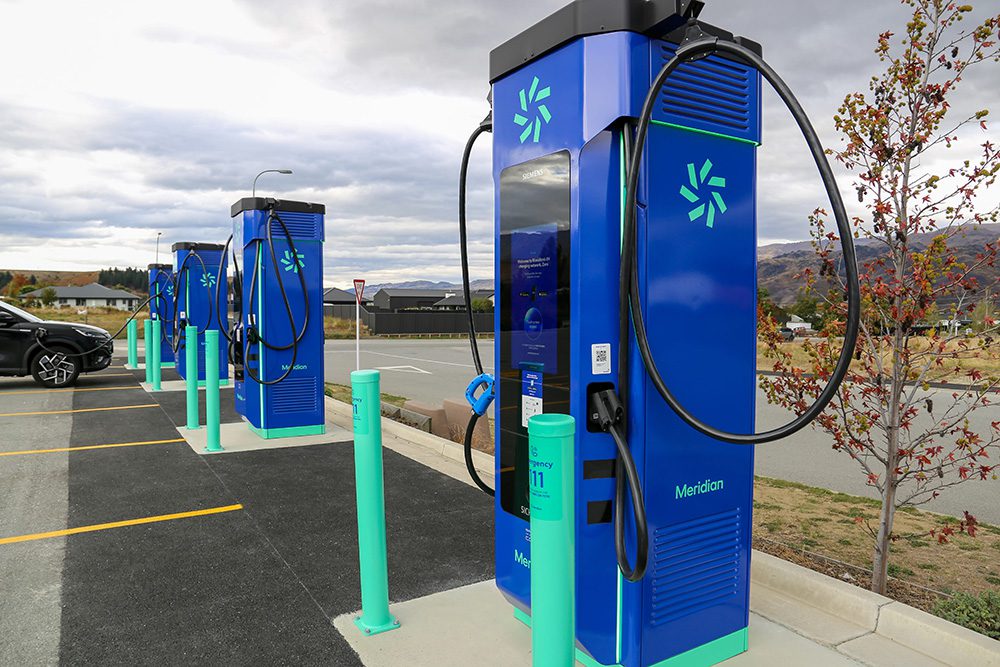
Meridian, a leading New Zealand EV charging provider, has officially reached a significant milestone, installing its 500th public charging point across the nation. This achievement underscores the company’s strategic commitment to bolstering electric vehicle infrastructure and enhancing accessibility for a growing community of EV drivers throughout New Zealand.
The expansion comes at a pivotal time, as global fuel supply uncertainties continue to drive a marked increase in interest and adoption of electric vehicles. Meridian’s efforts are directly addressing critical infrastructure gaps, particularly in underserved regions, laying the groundwork for a more robust and widespread EV charging network.

Key Takeaways
- Meridian has installed its 500th public EV charging point in New Zealand, significantly expanding the national infrastructure.
- The company has strategically focused on increasing charging access in the South Island over the past year and plans further expansion in the central and upper North Island.
- New Zealand currently faces a ratio of approximately 80 EVs per charge point, highlighting the urgent need for increased infrastructure compared to the global average of 11 EVs per charge point.
- Interest in electric vehicles has surged, with weekly users increasing by 75% and app registrations rising by 70% since December 2025.
- Meridian aims to roll out an additional 900 public charge points by 2030, targeting a total of at least 1,400 points to meet escalating demand and build New Zealand’s largest EV charging network.
Strategic Expansion Across New Zealand’s Diverse Landscape
The installation of the 500th public charging point represents a substantial leap forward for electric mobility in New Zealand. These crucial stations have been strategically deployed in various locations across the country, enhancing connectivity for EV users. Notable sites include Roxburgh, Haast, Mossburn, Dunedin South, Oamaru, Culverden, Rakaia, Rangiora, Punakaiki, and Tokoroa.
Over the past 12 months, Meridian has concentrated its efforts on the South Island, systematically filling critical charging gaps to ensure seamless electric journeys across its picturesque landscapes. This focus has been instrumental in alleviating range anxiety for many, making electric vehicle travel a more viable and convenient option for residents and tourists alike.
Looking ahead, the **New Zealand EV charging provider Meridian** is setting its sights on further expansion into the central and upper North Island. This next phase of development will target key regions such as Manawatū, Hawke’s Bay, Bay of Plenty, Waikato, Auckland, and Northland, ensuring comprehensive coverage and supporting the growth of the EV ecosystem in these populous areas.

Addressing the Charging Infrastructure Gap
Meridian’s ongoing expansion is critical when contextualizing New Zealand’s current EV infrastructure landscape. According to company data, New Zealand presently has approximately 80 electric vehicles per public charge point. This figure stands in stark contrast to the global average, which is reported to be around 11 EVs per charge point.
This disparity highlights a significant opportunity and an urgent need for accelerated infrastructure development. By strategically deploying new charging points, Meridian is directly working to improve this ratio, aiming to provide a more convenient and accessible **New Zealand EV charging network** for all drivers. The goal is to bring New Zealand’s infrastructure more in line with international benchmarks, fostering greater confidence in EV ownership.
Surge in EV Adoption and Driver Interest
The impetus for Meridian’s rapid expansion is further reinforced by a notable surge in interest and adoption of electric vehicles across New Zealand. Uncertainty surrounding global fuel supplies has played a significant role in motivating consumers to explore alternative, more sustainable transportation options.
This increased interest is reflected in tangible usage statistics. Since December 2025, Meridian has observed a substantial 75% increase in weekly users of its charging network. Concurrently, weekly app registrations for its services have also climbed by an impressive 70%, indicating a growing user base actively seeking and utilizing EV charging solutions provided by the **New Zealand EV charging provider Meridian**.
Leadership Vision for a Connected Future
Richard Sandford, Head of Energy at Meridian, articulated the company’s ambitious vision for the future of electric mobility in New Zealand. His statement underscores the strategic imperative behind their infrastructure investments.
“We want to build New Zealand’s largest EV charging network, and we’re continuing to expand coverage,” said Sandford. He further elaborated on their methodical approach, stating, “We’ve focused on filling gaps across New Zealand’s charging network. The case for EVs has never been stronger, and electric journeys are getting easier almost by the day.” This perspective highlights Meridian’s commitment to not only expanding quantity but also enhancing the quality and reliability of the charging experience.
The Road Ahead: Targeting 1,400 Public Charge Points by 2030
Looking towards the future, Meridian has laid out an ambitious roadmap for continued growth. The company plans to roll out an additional 900 public charge points by the year 2030. This significant expansion will dramatically increase the accessibility of EV charging infrastructure across New Zealand.
This projected growth will lead to a network of at least 1,400 public charging points operated by Meridian, assuming the current 500 are maintained and expanded upon. Such a robust **New Zealand EV charging network** is vital for supporting the nation’s climate goals and facilitating a smooth transition towards a more sustainable transport sector. It signifies a long-term commitment to overcoming infrastructure challenges and promoting widespread EV adoption.
The cumulative effect of these efforts by the **New Zealand EV charging provider Meridian** is expected to significantly reduce range anxiety, encourage more drivers to switch to electric vehicles, and ultimately contribute to a greener, more sustainable future for New Zealand’s transport sector. The strategic placement of these new charge points will ensure that both long-distance travel and urban commutes become increasingly practical and convenient for EV owners.
FAQ Section
Q1: What is the latest milestone achieved by Meridian?
Meridian, a prominent New Zealand EV charging provider, has successfully installed its 500th public charging point across the country, marking a significant expansion of its electric vehicle infrastructure network.
Q2: Where has Meridian primarily focused its recent charging network expansion?
Over the past 12 months, Meridian has primarily focused on expanding charging access within the South Island. However, future plans include significant expansion in the central and upper North Island regions.
Q3: How many EVs currently share a public charging point in New Zealand compared to the global average?
New Zealand currently has approximately 80 electric vehicles per public charge point. This contrasts sharply with the global average, which stands at about 11 electric vehicles per charge point, indicating a substantial need for further infrastructure development.
Q4: Has interest in electric vehicles increased in New Zealand recently?
Yes, interest in electric vehicles has notably increased. Since December 2025, Meridian has reported a 75% increase in weekly users of its charging network and a 70% increase in weekly app registrations.
Q5: What are Meridian’s future expansion plans for its charging network?
Meridian plans to deploy an additional 900 public charge points across New Zealand by 2030. This ambitious target aims to significantly enhance the national EV charging network and support the growing number of electric vehicles on the road.
Q6: What is Meridian’s overarching goal for its EV charging network?
Meridian aims to build New Zealand’s largest EV charging network, continuously expanding coverage to fill existing gaps and make electric journeys easier and more accessible nationwide for all EV drivers.